
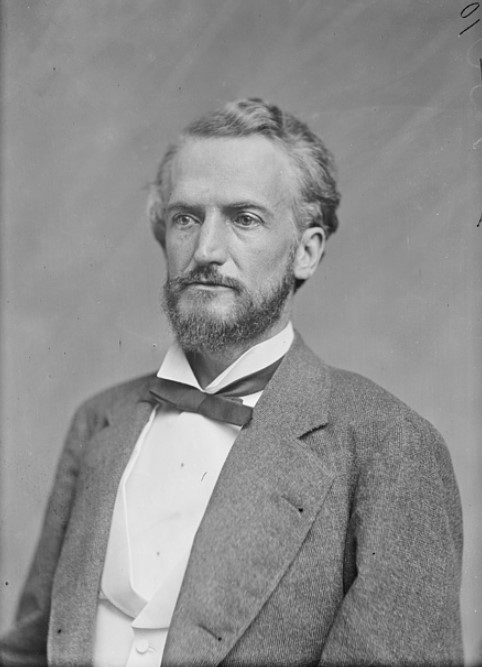
Historical · U.S. House · Alabama · District 6
Burwell Lewis
Former U.S. Representative · Alabama District 6 · 1875–1881 · Democratic
Burwell Lewis represented Alabama's District 6 in the United States House of Representatives (1875–1881) for the Democratic party. The page below collects sourced biographical facts, term history, committee roles, and provenance for Lewis.
Bioguide ID: L000272
Key facts
- Full name
- Burwell Lewis
- State
- Alabama
- District
- District 6
- Party
- Democratic
- House service
- 1875–1881
- First House term
- 1875
- Status
- Left office
- Current term ends
- —
- Born
- 1838
- Bioguide ID
- L000272
- Committee assignments
- —
- Dataset version
- 1.20260606
Biographical narrative
866 words · sourced from the Wikipedia REST extract
Burwell Boykin Lewis was a notable figure in American politics during the late 19th century, serving as a U.S. Representative for Alabama's 6th congressional district. A member of the Democratic Party, Lewis's political career spanned two terms in the U.S. House of Representatives, where he engaged in legislative activities following a background in law and military service. His tenure in Congress was marked by a commitment to his constituents in Alabama, and he later transitioned to a significant role in education as the president of the University of Alabama.
Early life and career
Burwell Boykin Lewis was born on July 7, 1838, in Montgomery, Alabama. His early life was shaped by the experiences of loss and relocation, as he moved with his parents to Mobile, Alabama, where both of his parents passed away during his childhood. Following this tragic event, Lewis was sent to live with an uncle in Montevallo, Alabama, located in Shelby County. It was in Montevallo that he received his early education, attending private schools that laid the foundation for his future academic pursuits.
After completing his education in Montevallo, Lewis moved to Tuscaloosa to further his studies at the University of Alabama. His time at the university was instrumental in shaping his intellectual and professional aspirations. Following his academic endeavors, he relocated to Selma, Alabama, where he began studying law. In 1859, he was admitted to the bar and commenced his legal practice in Montevallo, establishing himself as a lawyer in the region.
With the onset of the American Civil War, Lewis enlisted in the Confederate States Army, joining the Second Alabama Cavalry. His military service was a significant aspect of his early adult life, and he rose to the rank of captain during his time in the army. This experience not only influenced his personal development but also shaped his perspectives on leadership and governance, which would later inform his political career.
House tenure
Lewis's political career began in earnest when he was elected to the Alabama House of Representatives, serving from 1870 to 1872. This position marked his entry into public service, allowing him to engage with local governance and the legislative process. After his tenure in the state legislature, he moved back to Tuscaloosa, where he became involved in various business activities, further broadening his experience in leadership and management.
In 1875, Lewis was elected to the United States House of Representatives, initially representing Alabama's at-large congressional district. This election came during a period of significant political change in the United States, as the country was still grappling with the aftermath of the Civil War and the complexities of Reconstruction. Although he faced challenges in his political journey, including an unsuccessful bid for re-election in 1876, Lewis persevered and was elected to represent Alabama's 6th congressional district in 1878. He officially began his service in March 1879.
During his time in Congress, Lewis participated in the legislative process during a period marked by significant social and political changes. His service in the House of Representatives lasted until October 1880, when he resigned from his position to accept the role of president of the University of Alabama in Tuscaloosa. This transition from a legislative role to an educational leadership position reflects Lewis's commitment to public service and his desire to contribute to the development of higher education in Alabama.
Legislative focus and committees
While specific details regarding the legislative focus and committee assignments of Burwell Lewis during his time in Congress are not extensively documented, it is evident that his background in law and his experiences as a soldier and state legislator informed his approach to governance. As a member of the Democratic Party, Lewis would have been involved in discussions and debates pertinent to the interests of his constituents, particularly in the context of post-Civil War America.
The late 19th century was a time of significant transformation in the United States, with issues such as civil rights, economic development, and education taking center stage. Lewis's legal background likely provided him with a unique perspective on the legislative challenges of the time, particularly as they pertained to the rights of individuals and the responsibilities of government. His experiences in the Alabama House of Representatives would have further equipped him with insights into local governance and the needs of his constituents.
After his resignation from Congress, Lewis's commitment to education became a defining aspect of his later career. As president of the University of Alabama, he played a crucial role in shaping the institution's direction and policies during a formative period in its history. His leadership in education underscored his belief in the importance of knowledge and learning as foundational elements for societal progress.
Burwell Boykin Lewis passed away on October 11, 1885, in Tuscaloosa, leaving behind a legacy that intertwined public service, legal practice, and educational leadership. His contributions to both the political and academic spheres in Alabama reflect a life dedicated to the betterment of his community and the advancement of education in the state. Through his roles as a legislator and university president, Lewis exemplified the interconnectedness of governance and education, highlighting the importance of both in shaping the future of Alabama and the nation.
Notable legislation
Sponsored and co-sponsored legislation for Burwell Lewis is pending operator curation. The biographical narrative above carries the same provenance trail until per-bill rows are written.
Sources
- [1]https://en.wikipedia.org/wiki/Burwell_Boykin_LewisWikipedia · retrieved 2026-06-06
Notable quotes
Sourced quotes for Burwell Lewis are pending operator curation. Narrative-scope provenance remains attached below.
Sources
- [1]https://en.wikipedia.org/wiki/Burwell_Boykin_LewisWikipedia · retrieved 2026-06-06
Key positions
Curated policy positions for Burwell Lewis are pending operator review. The biographical narrative above carries the same provenance trail until per-topic positions are written.
Sources
- [1]https://en.wikipedia.org/wiki/Burwell_Boykin_LewisWikipedia · retrieved 2026-06-06
Terms served
- 1875–1877U.S. House · Term 1 · Democratic
- 1879–1881U.S. House · Term 2 · Democratic
Sources & provenance
Every attributable claim above carries a per-section [N] marker that resolves to the corresponding URL below. Each entry records the upstream provider, the canonical URL, and the timestamp at which the source was retrieved by the ingest pipeline.
Key facts
- https://bioguide.congress.gov/search/bio/L000272bioguide · retrieved 2026-06-06
- https://www.govtrack.us/congress/members/406772govtrack · retrieved 2026-06-06
Biographical narrative
- https://en.wikipedia.org/wiki/Burwell_Boykin_Lewiswikipedia · retrieved 2026-06-06
Find your representative
Every U.S. state elects representatives by district. Browse Alabama’s delegation, the full former-representative roster, or explore the role and term length.
Related on The Candidate
- Preceded by Joseph SlossEarlier holder of the Alabama District 6 House seat · Democratic.Open
- Succeeded by John MartinLater holder of the Alabama District 6 House seat · Democratic.Open
- Alfred BuckFormer U.S. Representative · Alabama District 1 · RepublicanOpen
- Benjamin TurnerFormer U.S. Representative · Alabama District 1 · RepublicanOpen
- Bradley ByrneFormer U.S. Representative · Alabama District 1 · RepublicanOpen
- Edmund DarganFormer U.S. Representative · Alabama District 1 · DemocraticOpen