
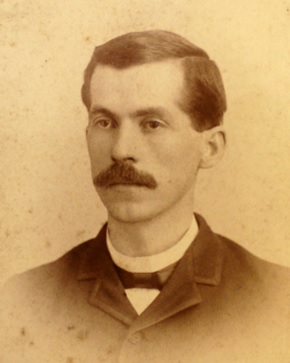
Historical · U.S. House · Alabama · District 8
Archibald Carmichael
Former U.S. Representative · Alabama District 8 · 1933–1937 · Democratic
Archibald Carmichael represented Alabama's District 8 in the United States House of Representatives (1933–1937) for the Democratic party. The page below collects sourced biographical facts, term history, committee roles, and provenance for Carmichael.
Bioguide ID: C000159
Key facts
- Full name
- Archibald Carmichael
- State
- Alabama
- District
- District 8
- Party
- Democratic
- House service
- 1933–1937
- First House term
- 1933
- Status
- Left office
- Current term ends
- —
- Born
- 1864
- Bioguide ID
- C000159
- Committee assignments
- —
- Dataset version
- 1.20260605
Biographical narrative
831 words · sourced from the Wikipedia REST extract
Archibald Carmichael was a Democratic politician who served as a U.S. Representative for Alabama's 8th congressional district from 1933 to 1937. His political career spanned several decades, during which he held various positions at both the state and national levels. Carmichael's tenure in Congress coincided with significant legislative developments, including the passage of the Social Security Act. After leaving office, he returned to Alabama, where he continued his legal practice until his death.
Early life and career
Archibald Hill Carmichael was born on June 17, 1864, in Dale County, Alabama, near the community of Sylvan Grove. He was the son of Jesse Malcolm Carmichael, a veteran of the Civil War who lost a hand during the Battle of Antietam and later served as Alabama's Secretary of State. Growing up in a politically active family, Carmichael received his education in public schools before attending the University of Alabama School of Law, where he graduated in 1886. That same year, he was admitted to the bar and began practicing law in Tuscumbia, Alabama.
In 1890, Carmichael married Annie Sugg, and together they became active members of their community. His early career included a significant role as the solicitor for the 8th judicial district of Alabama, a position he held from 1890 to 1894. His involvement in politics deepened when he was elected as a delegate to the Alabama state constitutional convention in 1901, which was responsible for drafting the current Alabama constitution, one of the longest state constitutions in the United States.
Carmichael's political career continued to flourish as he served in the Alabama House of Representatives from 1907 to 1911 and again from 1915 to 1919. During his time in the legislature, he held the position of Speaker of the House in both 1907 and 1911. His commitment to the Democratic Party was evident through his participation as a delegate in several Democratic National Conventions, including those held in 1916, 1928, and 1932.
In addition to his legislative roles, Carmichael was deeply involved in educational matters at both the state and local levels. He held multiple elected positions simultaneously, including serving in the Alabama State Senate from 1919 to 1923, on the Alabama State Board of Education from 1919 to 1947, and on the local Tuscumbia Board of Education from 1920 to 1947. His dedication to education was further exemplified by his appointment as a trustee of the University of Alabama, a role he maintained from 1924 until 1947.
House tenure
Carmichael's entry into the U.S. House of Representatives began with a special election held on November 7, 1933, to fill the unexpired term of Edward B. Almon, who had passed away while in office. Following this initial election, Carmichael was subsequently elected to a full term in the 74th Congress, serving from 1935 to 1937. His congressional career occurred during a period marked by significant national challenges, including the Great Depression, which necessitated a robust legislative response.
During his time in Congress, Carmichael participated in the legislative process that led to the enactment of the Social Security Act, a landmark piece of legislation that established a social insurance program designed to provide financial assistance to the elderly and unemployed. This act represented a significant shift in the role of the federal government in providing social welfare and was a cornerstone of President Franklin D. Roosevelt's New Deal initiatives.
Despite his involvement in these pivotal legislative developments, Carmichael chose not to seek re-election after his term ended in January 1937. His decision to step away from the political arena marked the conclusion of his time in the U.S. House of Representatives, but it did not signify the end of his public service.
Legislative focus and committees
During his tenure in the House of Representatives, Archibald Carmichael's legislative focus aligned with the broader goals of the Democratic Party and the New Deal policies of the Roosevelt administration. His participation in the passage of the Social Security Act highlighted his commitment to addressing the economic challenges faced by many Americans during the Great Depression. This legislation aimed to provide a safety net for vulnerable populations, reflecting a significant expansion of the federal government's role in social welfare.
While specific details regarding the committees on which Carmichael served are not provided, it can be inferred that his background in law and his extensive experience in state politics likely influenced his contributions to various legislative discussions and initiatives. His prior roles in the Alabama legislature and his involvement in educational matters may have also shaped his perspectives on issues related to education, labor, and social services.
After leaving Congress, Carmichael returned to Alabama, where he resumed his legal practice. He remained active in his community and continued to influence local affairs until his passing on July 15, 1947, in Tuscumbia, Alabama, at the age of 83. His long career in public service, spanning both state and national levels, reflects a commitment to the political and educational development of Alabama and the United States.
Notable legislation
Sponsored and co-sponsored legislation for Archibald Carmichael is pending operator curation. The biographical narrative above carries the same provenance trail until per-bill rows are written.
Sources
- [1]https://en.wikipedia.org/wiki/Archibald_H._CarmichaelWikipedia · retrieved 2026-06-05
Notable quotes
Sourced quotes for Archibald Carmichael are pending operator curation. Narrative-scope provenance remains attached below.
Sources
- [1]https://en.wikipedia.org/wiki/Archibald_H._CarmichaelWikipedia · retrieved 2026-06-05
Key positions
Curated policy positions for Archibald Carmichael are pending operator review. The biographical narrative above carries the same provenance trail until per-topic positions are written.
Sources
- [1]https://en.wikipedia.org/wiki/Archibald_H._CarmichaelWikipedia · retrieved 2026-06-05
Terms served
- 1933–1935U.S. House · Term 1 · Democratic
- 1935–1937U.S. House · Term 2 · Democratic
Sources & provenance
Every attributable claim above carries a per-section [N] marker that resolves to the corresponding URL below. Each entry records the upstream provider, the canonical URL, and the timestamp at which the source was retrieved by the ingest pipeline.
Key facts
- https://bioguide.congress.gov/search/bio/C000159bioguide · retrieved 2026-06-05
- https://www.govtrack.us/congress/members/402308govtrack · retrieved 2026-06-05
Biographical narrative
- https://en.wikipedia.org/wiki/Archibald_H._Carmichaelwikipedia · retrieved 2026-06-05
Find your representative
Every U.S. state elects representatives by district. Browse Alabama’s delegation, the full former-representative roster, or explore the role and term length.
Related on The Candidate
- Preceded by Christopher HarrisEarlier holder of the Alabama District 8 House seat · Democratic.Open
- Alfred BuckFormer U.S. Representative · Alabama District 1 · RepublicanOpen
- Benjamin TurnerFormer U.S. Representative · Alabama District 1 · RepublicanOpen
- Bradley ByrneFormer U.S. Representative · Alabama District 1 · RepublicanOpen
- Edmund DarganFormer U.S. Representative · Alabama District 1 · DemocraticOpen
- Democratic PartyFederal candidates and office holders on the Democratic line.Open