
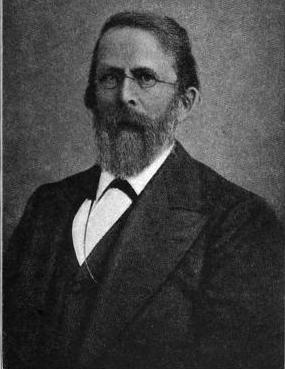
Historical · U.S. House · Alabama · District 8
William Garth
Former U.S. Representative · Alabama District 8 · 1877–1879 · Democratic
William Garth represented Alabama's District 8 in the United States House of Representatives (1877–1879) for the Democratic party. The page below collects sourced biographical facts, term history, committee roles, and provenance for Garth.
Bioguide ID: G000086
Key facts
- Full name
- William Garth
- State
- Alabama
- District
- District 8
- Party
- Democratic
- House service
- 1877–1879
- First House term
- 1877
- Status
- Left office
- Current term ends
- —
- Born
- 1828
- Bioguide ID
- G000086
- Committee assignments
- —
- Dataset version
- 1.20260606
Biographical narrative
1,005 words · sourced from the Wikipedia REST extract
William Garth was an American politician and lawyer who served as a U.S. Representative for Alabama's 8th congressional district from 1877 to 1879. A member of the Democratic Party, Garth's political career was marked by his alignment with the principles of Jeffersonian democracy. His tenure in the House of Representatives was characterized by his support for various legislative measures, including the Posse Comitatus Act. Following his congressional service, he returned to his legal practice and held various positions in the community, including a role in banking.
Early life and career
William Garth was born on October 28, 1828, in Morgan County, Alabama. He was the third of five children in the family of Jesse Winston Garth, a politician, and Unity Spottswood Dandridge Garth. His familial connections were notable; through his father, he was a cousin of the prominent Founding Father Patrick Henry. On his mother's side, Garth was linked to historical figures such as Governor Alexander Spotswood and First Ladies Martha Washington and Dolley Madison, reflecting a lineage intertwined with American political history.
Garth's early life was marked by personal loss, as his mother passed away during his childhood. Following this, he spent a significant portion of his formative years in Virginia, where he received a classical education. He attended Lagrange College in Virginia and later graduated from Emory & Henry College in 1843. His academic pursuits continued at the University of Virginia School of Law, where he honed his legal skills. Upon completing his studies, Garth was admitted to the Alabama State Bar, marking the beginning of his professional career in law.
In addition to his legal education, Garth's early adulthood was shaped by his involvement in the Mexican-American War, where he volunteered to serve. This experience contributed to his understanding of military and civic responsibilities. After the war, he began practicing law in Decatur, Alabama, before relocating to Huntsville in 1855, where he continued his legal career. His practice flourished, and he became a well-respected attorney in the region.
During the American Civil War, Garth served as a lieutenant colonel in the Confederate States Army, where he was under the command of General James Longstreet. His military service was cut short due to health issues, specifically typhoid fever, which led to his discharge. Following the war, Garth returned to Huntsville and resumed his law practice, navigating the challenges of a post-war society. He also played a role in overseeing the Memphis and Charleston Railroad during the conflict, further demonstrating his involvement in significant regional matters.
House tenure
Garth's political career took a significant turn when he was elected to the United States House of Representatives, serving Alabama's 8th congressional district. His term began on March 4, 1877, and concluded on March 3, 1879. As a member of the Democratic Party, Garth aligned himself with the party's principles and values, which were often rooted in the ideas of limited government and individual liberties. His political ideology was described as "Jeffersonian," reflecting a commitment to the foundational beliefs of the Democratic Party as articulated by Thomas Jefferson.
During his time in Congress, Garth participated in various legislative discussions and decisions. Notably, he voted in favor of the Posse Comitatus Act, a significant piece of legislation that limited the use of federal military personnel in domestic law enforcement. This act was emblematic of the post-Civil War era's concerns regarding civil liberties and the role of the military in civilian affairs. Garth's support for such measures illustrated his engagement with the pressing issues of his time.
Despite his contributions, Garth faced electoral challenges after his initial term. He lost his bid for re-election to Greenback candidate William M. Lowe, who garnered support from Republican voters, indicating a shift in the political landscape of the district. This defeat marked the end of Garth's congressional career, as he did not return to the House in subsequent elections.
Legislative focus and committees
Throughout his tenure in the House of Representatives, Garth's legislative focus reflected the priorities and concerns of his constituents in Alabama's 8th district. His support for the Posse Comitatus Act highlighted his commitment to civil rights and the protection of individual liberties in the aftermath of the Civil War. This legislative focus was consistent with the broader Democratic Party agenda during this period, which sought to balance federal authority with states' rights.
Garth's involvement in congressional committees and legislative discussions would have provided him with opportunities to influence policy and advocate for the interests of his district. However, specific details regarding the committees he served on or the breadth of his legislative initiatives are not extensively documented. His alignment with the Democratic Party's principles likely guided his contributions to discussions on economic and social issues relevant to his constituents.
After his congressional service, Garth returned to Huntsville, where he continued to practice law. His legal career remained a central aspect of his professional life, allowing him to maintain a connection with the community he had represented. Additionally, he took on leadership roles in local institutions, including a position as president of the First National Bank, further establishing his influence in the region.
Garth's personal life also played a role in his public persona. He married Maria Eliza Fearn on June 25, 1855, and they had one son together. His family life, along with his professional endeavors, contributed to his standing in the community. Garth was known to be active in his church, serving as a vestryman and senior warden, which reflected his commitment to civic engagement and community service.
William Garth passed away on February 25, 1912, in Huntsville, Alabama, at the age of 83. His death followed an accident that resulted in a dislocated shoulder, which ultimately led to his decline in health. He was laid to rest at Maple Hill Cemetery, leaving behind a legacy as a lawyer, politician, and community leader in Alabama. His life and career encapsulate a period of significant change in American history, marked by the challenges of reconstruction and the evolving political landscape of the late 19th century.
Notable legislation
Sponsored and co-sponsored legislation for William Garth is pending operator curation. The biographical narrative above carries the same provenance trail until per-bill rows are written.
Sources
- [1]https://en.wikipedia.org/wiki/William_Willis_GarthWikipedia · retrieved 2026-06-06
Notable quotes
Sourced quotes for William Garth are pending operator curation. Narrative-scope provenance remains attached below.
Sources
- [1]https://en.wikipedia.org/wiki/William_Willis_GarthWikipedia · retrieved 2026-06-06
Key positions
Curated policy positions for William Garth are pending operator review. The biographical narrative above carries the same provenance trail until per-topic positions are written.
Sources
- [1]https://en.wikipedia.org/wiki/William_Willis_GarthWikipedia · retrieved 2026-06-06
Terms served
- 1877–1879U.S. House · Term 1 · Democratic
Sources & provenance
Every attributable claim above carries a per-section [N] marker that resolves to the corresponding URL below. Each entry records the upstream provider, the canonical URL, and the timestamp at which the source was retrieved by the ingest pipeline.
Key facts
- https://bioguide.congress.gov/search/bio/G000086bioguide · retrieved 2026-06-06
- https://www.govtrack.us/congress/members/404458govtrack · retrieved 2026-06-06
Biographical narrative
- https://en.wikipedia.org/wiki/William_Willis_Garthwikipedia · retrieved 2026-06-06
Find your representative
Every U.S. state elects representatives by district. Browse Alabama’s delegation, the full former-representative roster, or explore the role and term length.
Related on The Candidate
- Succeeded by William LoweLater holder of the Alabama District 8 House seat · National Greenbacker.Open
- Alfred BuckFormer U.S. Representative · Alabama District 1 · RepublicanOpen
- Benjamin TurnerFormer U.S. Representative · Alabama District 1 · RepublicanOpen
- Bradley ByrneFormer U.S. Representative · Alabama District 1 · RepublicanOpen
- Edmund DarganFormer U.S. Representative · Alabama District 1 · DemocraticOpen
- Democratic PartyFederal candidates and office holders on the Democratic line.Open