
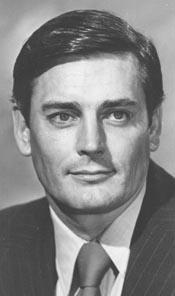
Historical · U.S. House · Arkansas · District 1
Bill Alexander Jr.
Former U.S. Representative · Arkansas District 1 · 1969–1993 · Democratic
Bill Alexander Jr. represented Arkansas's District 1 in the United States House of Representatives (1969–1993) for the Democratic party. The page below collects sourced biographical facts, term history, committee roles, and provenance for Jr..
Bioguide ID: A000103
Key facts
- Full name
- Bill Alexander Jr.
- State
- Arkansas
- District
- District 1
- Party
- Democratic
- House service
- 1969–1993
- First House term
- 1969
- Status
- Left office
- Current term ends
- —
- Born
- 1934
- Bioguide ID
- A000103
- Committee assignments
- —
- Dataset version
- 1.20260605
Biographical narrative
931 words · sourced from the Wikipedia REST extract
William Vollie Alexander Jr. is a retired American politician who served as a U.S. Representative for Arkansas's 1st congressional district from 1969 until 1993. A member of the Democratic Party, Alexander held significant leadership roles during his tenure, including the position of Chief Deputy Majority Whip. His long career in the House of Representatives was marked by his involvement in various legislative issues, particularly those related to agriculture, energy, and foreign trade.
Early life and career
William Vollie Alexander Jr. was born on January 16, 1934, in Memphis, Tennessee, to Spencer and William Vollie Alexander. He spent his formative years in Osceola, Arkansas, where he completed his education at Osceola High School in 1951. During his high school years, he achieved the rank of Eagle Scout, reflecting an early commitment to community and leadership.
Following high school, Alexander pursued higher education at the University of Arkansas at Fayetteville. While there, he became a member of the Kappa Sigma fraternity, which provided him with opportunities for social engagement and networking. He later transferred to Southwestern at Memphis University, now known as Rhodes College, where he earned a Bachelor of Arts degree in 1957. Alexander continued his academic journey by attending Vanderbilt University Law School in Nashville, where he received his Bachelor of Laws (LL.B.) degree in 1960.
After completing his legal education, Alexander began his professional career by clerking for Judge Marion S. Boyd of the United States District Court for the Western District of Tennessee. He then served in the U.S. Army Judge Advocate General's (JAG) Corps, where he gained valuable experience in military law. Following his military service, Alexander returned to civilian life and practiced law in both Memphis and Osceola. His career also included roles as a commissioner on the Arkansas Waterways Commission and as secretary of the Osceola Port Authority, positions that allowed him to engage with local infrastructure and economic development issues.
House tenure
In 1968, Alexander entered the political arena by running for the U.S. House of Representatives as a Democrat. He successfully won election to represent Arkansas's 1st congressional district, succeeding the long-serving incumbent Ezekiel C. "Took" Gathings, who had retired after three decades in office. Alexander's initial election marked the beginning of a lengthy congressional career, as he was subsequently re-elected eleven additional times, demonstrating a sustained level of support from his constituents.
Throughout his tenure in the House, which lasted until January 3, 1993, Alexander held various leadership roles within the Democratic Party. Notably, he served as Chief Deputy Majority Whip from 1981 to 1987, a position that placed him in a key role in the party's legislative strategy and coordination. His leadership responsibilities included rallying support for party initiatives and ensuring party discipline during votes.
In addition to his leadership role, Alexander was a member of the House Appropriations Committee, where he played an active part in shaping budgetary decisions and funding allocations. His work on this committee allowed him to focus on critical issues affecting his constituents and the nation, particularly in areas such as agriculture, energy, and foreign trade. These sectors were particularly relevant to Arkansas's economy, and Alexander's efforts in Congress aimed to address the needs and concerns of his district.
Despite his long and successful career, Alexander faced challenges in the later years of his tenure. In 1992, a report by the Arkansas Democrat-Gazette raised allegations regarding the misuse of campaign funds. Although the transactions in question were later determined to be legal, the controversy impacted his political standing. As a result, Alexander lost his bid for re-nomination to Blanche Lambert, a former staff assistant who subsequently won the general election in November of that year.
Legislative focus and committees
During his time in Congress, Alexander's legislative focus was primarily centered on issues that were critical to his constituents and the broader national interest. As a member of the House Appropriations Committee, he was involved in the allocation of federal funds across various sectors, which included agriculture, energy, and foreign trade. These areas were particularly significant for Arkansas, a state with a strong agricultural base and interests in energy production and trade.
In the realm of agriculture, Alexander worked on policies that supported farmers and agricultural businesses, recognizing the importance of this sector to the state's economy. His efforts likely included advocating for federal assistance programs and promoting legislation that aimed to enhance agricultural productivity and sustainability.
Energy policy was another key area of focus for Alexander. Given the evolving landscape of energy production and consumption during his tenure, he was involved in discussions and decisions that addressed energy needs, conservation, and the development of alternative energy sources. His work in this area reflected a broader national concern for energy independence and environmental sustainability.
Foreign trade was also a significant aspect of Alexander's legislative agenda. As a representative from a district with agricultural interests, he understood the importance of international markets for Arkansas's products. His involvement in trade-related issues likely included efforts to promote Arkansas goods abroad and to negotiate favorable trade agreements that would benefit local producers.
Overall, Alexander's legislative career was characterized by a commitment to addressing the needs of his constituents through active participation in key committees and leadership roles. His long service in the House of Representatives allowed him to build relationships and influence policy in ways that aligned with the interests of Arkansas's 1st congressional district.
After concluding his congressional career, Alexander and his wife, Debi, settled in Reston, Virginia, where they continue to reside. His legacy as a long-serving member of Congress remains a part of Arkansas's political history.
Notable legislation
Sponsored and co-sponsored legislation for Bill Alexander Jr. is pending operator curation. The biographical narrative above carries the same provenance trail until per-bill rows are written.
Sources
- [1]https://en.wikipedia.org/wiki/Bill_Alexander_(American_politician)Wikipedia · retrieved 2026-06-05
Notable quotes
Sourced quotes for Bill Alexander Jr. are pending operator curation. Narrative-scope provenance remains attached below.
Sources
- [1]https://en.wikipedia.org/wiki/Bill_Alexander_(American_politician)Wikipedia · retrieved 2026-06-05
Key positions
Curated policy positions for Bill Alexander Jr. are pending operator review. The biographical narrative above carries the same provenance trail until per-topic positions are written.
Sources
- [1]https://en.wikipedia.org/wiki/Bill_Alexander_(American_politician)Wikipedia · retrieved 2026-06-05
Terms served
- 1969–1971U.S. House · Term 1 · Democratic
- 1971–1973U.S. House · Term 2 · Democratic
- 1973–1975U.S. House · Term 3 · Democratic
- 1975–1977U.S. House · Term 4 · Democratic
- 1977–1979U.S. House · Term 5 · Democratic
- 1979–1981U.S. House · Term 6 · Democratic
- 1981–1983U.S. House · Term 7 · Democratic
- 1983–1985U.S. House · Term 8 · Democratic
- 1985–1987U.S. House · Term 9 · Democratic
- 1987–1989U.S. House · Term 10 · Democratic
- 1989–1991U.S. House · Term 11 · Democratic
- 1991–1993U.S. House · Term 12 · Democratic
Sources & provenance
Every attributable claim above carries a per-section [N] marker that resolves to the corresponding URL below. Each entry records the upstream provider, the canonical URL, and the timestamp at which the source was retrieved by the ingest pipeline.
Key facts
- https://bioguide.congress.gov/search/bio/A000103bioguide · retrieved 2026-06-05
- https://www.govtrack.us/congress/members/400761govtrack · retrieved 2026-06-05
Biographical narrative
- https://en.wikipedia.org/wiki/Bill_Alexander_(American_politician)wikipedia · retrieved 2026-06-05
Find your representative
Every U.S. state elects representatives by district. Browse Arkansas’s delegation, the full former-representative roster, or explore the role and term length.
Related on The Candidate
- Preceded by Ezekiel GathingsEarlier holder of the Arkansas District 1 House seat · Democratic.Open
- Succeeded by Marion BerryLater holder of the Arkansas District 1 House seat · Democratic.Open
- Alfred GreenwoodFormer U.S. Representative · Arkansas District 1 · DemocraticOpen
- Archibald YellFormer U.S. Representative · Arkansas District 1 · DemocraticOpen
- Asa HodgesFormer U.S. Representative · Arkansas District 1 · RepublicanOpen
- Edward CrossFormer U.S. Representative · Arkansas District 1 · DemocraticOpen