
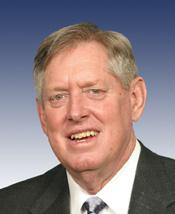
Historical · U.S. House · Arkansas · District 1
Marion Berry
Former U.S. Representative · Arkansas District 1 · 1997–2011 · Democratic
Marion Berry represented Arkansas's District 1 in the United States House of Representatives (1997–2011) for the Democratic party. The page below collects sourced biographical facts, term history, committee roles, and provenance for Berry.
Bioguide ID: B000420
Key facts
- Full name
- Marion Berry
- State
- Arkansas
- District
- District 1
- Party
- Democratic
- House service
- 1997–2011
- First House term
- 1997
- Status
- Left office
- Current term ends
- —
- Born
- 1942
- Bioguide ID
- B000420
- Committee assignments
- —
- Dataset version
- 1.20260605
Biographical narrative
887 words · sourced from the Wikipedia REST extract
Marion Berry was an American politician who served as the U.S. Representative for Arkansas's 1st congressional district from 1997 until 2011. A member of the Democratic Party, Berry's political career was marked by his involvement in various agricultural and healthcare initiatives, reflecting his background as a farmer and pharmacist. He was known for his moderate stance within the Democratic Party and was a member of the Blue Dog Coalition, which represents centrist Democrats. Berry's tenure in Congress included significant committee assignments and participation in various caucuses, where he focused on issues pertinent to his constituents and the broader national landscape.
Early life and career
Marion Berry was born on August 27, 1942, in Stuttgart, Arkansas. He grew up in the nearby community of Bayou Meto, located in the Arkansas Delta, where he was raised in a family that operated a rice farm. His parents encouraged him to pursue a career outside of agriculture, leading him to Little Rock, Arkansas, where he attended the University of Arkansas. There, he earned a degree in pharmacy and subsequently worked as a pharmacist for two years.
In 1967, Berry returned to his roots, taking over the family farming business where he cultivated soybeans and rice. This venture became a significant part of his life, and he continued to manage the farm until his passing in 2023. Under his stewardship, the family farm reportedly accumulated a net worth exceeding $1 million. Berry's early political involvement began in 1976 when he was elected as a city alderman in Gillett, Arkansas. His political career further advanced when he was appointed by Governor Bill Clinton to the Arkansas Soil and Water Conservation Commission in 1986, a role he held until 1994. Additionally, he served in the White House Domestic Policy Council and as a special assistant to the President for Agricultural Trade and Food Assistance during the Clinton administration from 1993 to 1996.
House tenure
Marion Berry's congressional career began when he was elected to the U.S. House of Representatives in 1996, succeeding Blanche Lincoln, who vacated the seat. His victory in the Democratic primary was narrow, as he secured approximately 52% of the vote against more progressive candidates. In the general election, Berry won with about 53% of the vote against Republican opponent Warren Dupwe, marking a continuation of the district's historical trend of electing Democrats. Berry's electoral success was attributed to his strong campaigning efforts, particularly in rural areas of the district.
During his time in Congress, Berry was re-elected multiple times, enjoying significant support from his constituents. His re-election campaigns were often characterized by substantial margins, including a notable 67% to 33% victory in 2004. In 2008, he ran unopposed, benefiting from a favorable political climate despite the challenges faced by many Democrats during that election cycle. However, after serving seven terms, Berry announced that he would not seek re-election in 2010, citing personal reasons.
Legislative focus and committees
Throughout his tenure in the House of Representatives, Marion Berry was actively involved in various legislative committees and caucuses, reflecting his interests and the needs of his constituents. He served on the House Appropriations Committee, where he was a member of several subcommittees, including those focused on Energy and Water Development, Homeland Security, and Transportation, Housing and Urban Development, and Related Agencies. His role on the Appropriations Committee allowed him to influence funding decisions that impacted his district and the nation.
Berry was also engaged in health care policy, co-founding the Democrats' Prescription Drug Task Force and serving as co-chair of the House Democratic Health Care Task Force and the House Affordable Medicine Task Force. His commitment to health care issues was evident in his participation in the House-Senate conference committee on the Medicare prescription drug bill in 2003, where he expressed concerns regarding the administration's healthcare policies. Berry voted in favor of the Democratic health care reform bill during its initial House vote and supported other significant legislative measures, including the Troubled Assets Relief Program and the American Recovery and Reinvestment Act.
In addition to his committee work, Berry was involved in various caucuses, including the Congressional Soybean Caucus and the New Madrid Working Group, where he co-chaired initiatives aimed at addressing agricultural and regional concerns. His political stance was often characterized as moderate, and he was known as a Blue Dog Democrat, which influenced his voting patterns on key issues. For instance, he voted against the 2001 tax cuts and was one of the few Democrats to oppose the Patient Protection and Affordable Care Act in 2010.
Berry's legislative actions sometimes drew attention and controversy. He supported the removal of the trade embargo with Cuba to enhance market opportunities for Arkansas agricultural products. However, he faced criticism for his backing of a proposal to allow the dumping of nuclear waste from Entergy Corporation reactors into the Arkansas River. His outspoken nature was also evident in his interactions on the House floor, where he made headlines for his remarks directed at fellow representatives.
Marion Berry's political career was marked by his dedication to his constituents and his active participation in shaping policies that affected agriculture, health care, and regional development. After concluding his service in Congress in January 2011, he continued to be recognized for his contributions to Arkansas and American politics until his passing on May 19, 2023.
Notable legislation
Sponsored and co-sponsored legislation for Marion Berry is pending operator curation. The biographical narrative above carries the same provenance trail until per-bill rows are written.
Sources
- [1]https://en.wikipedia.org/wiki/Marion_BerryWikipedia · retrieved 2026-06-05
Notable quotes
Sourced quotes for Marion Berry are pending operator curation. Narrative-scope provenance remains attached below.
Sources
- [1]https://en.wikipedia.org/wiki/Marion_BerryWikipedia · retrieved 2026-06-05
Key positions
Curated policy positions for Marion Berry are pending operator review. The biographical narrative above carries the same provenance trail until per-topic positions are written.
Sources
- [1]https://en.wikipedia.org/wiki/Marion_BerryWikipedia · retrieved 2026-06-05
Terms served
- 1997–1999U.S. House · Term 1 · Democratic
- 1999–2001U.S. House · Term 2 · Democratic
- 2001–2003U.S. House · Term 3 · Democratic
- 2003–2005U.S. House · Term 4 · Democratic
- 2005–2007U.S. House · Term 5 · Democratic
- 2007–2009U.S. House · Term 6 · Democratic
- 2009–2011U.S. House · Term 7 · Democratic
Sources & provenance
Every attributable claim above carries a per-section [N] marker that resolves to the corresponding URL below. Each entry records the upstream provider, the canonical URL, and the timestamp at which the source was retrieved by the ingest pipeline.
Key facts
- https://bioguide.congress.gov/search/bio/B000420bioguide · retrieved 2026-06-05
- http://www.house.gov/berry/house.gov · retrieved 2026-06-05
Biographical narrative
- https://en.wikipedia.org/wiki/Marion_Berrywikipedia · retrieved 2026-06-05
Find your representative
Every U.S. state elects representatives by district. Browse Arkansas’s delegation, the full former-representative roster, or explore the role and term length.
Related on The Candidate
- Preceded by Bill Alexander Jr.Earlier holder of the Arkansas District 1 House seat · Democratic.Open
- Alfred GreenwoodFormer U.S. Representative · Arkansas District 1 · DemocraticOpen
- Archibald YellFormer U.S. Representative · Arkansas District 1 · DemocraticOpen
- Asa HodgesFormer U.S. Representative · Arkansas District 1 · RepublicanOpen
- Democratic PartyFederal candidates and office holders on the Democratic line.Open
- Representatives from ArkansasEvery former U.S. Representative who has represented Arkansas.Open