
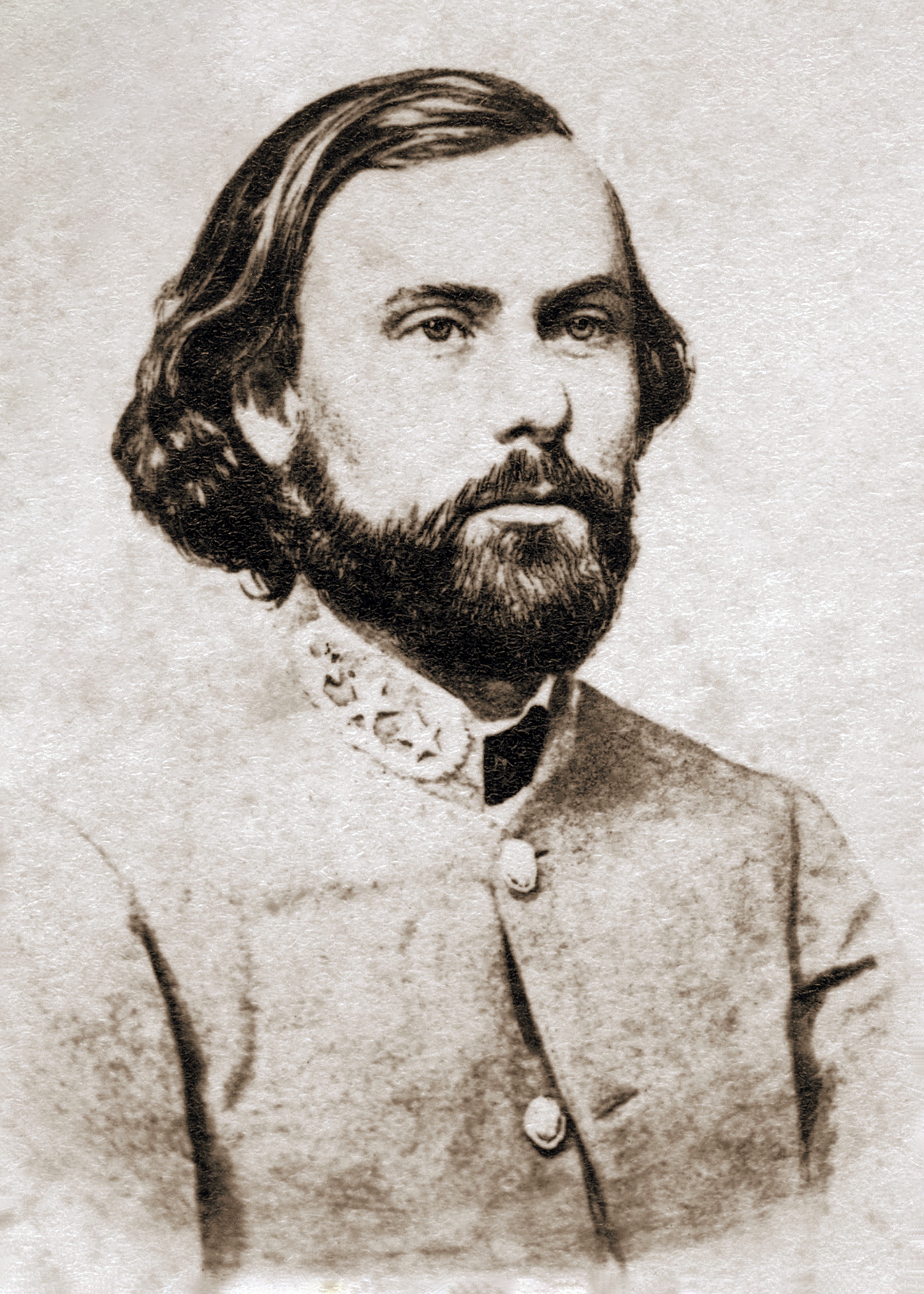
Historical · U.S. House · Arkansas · District 1
Thomas Hindman
Former U.S. Representative · Arkansas District 1 · 1859–1861 · Democratic
Thomas Hindman represented Arkansas's District 1 in the United States House of Representatives (1859–1861) for the Democratic party. The page below collects sourced biographical facts, term history, committee roles, and provenance for Hindman.
Bioguide ID: H000628
Key facts
- Full name
- Thomas Hindman
- State
- Arkansas
- District
- District 1
- Party
- Democratic
- House service
- 1859–1861
- First House term
- 1859
- Status
- Left office
- Current term ends
- —
- Born
- 1828
- Bioguide ID
- H000628
- Committee assignments
- —
- Dataset version
- 1.20260606
Biographical narrative
983 words · sourced from the Wikipedia REST extract
Thomas Hindman was a prominent American lawyer and politician who served as a U.S. Representative for Arkansas's 1st congressional district. A member of the Democratic Party, Hindman's political career unfolded during a tumultuous period in American history, marked by the tensions leading up to the Civil War. He was born on January 28, 1828, in Knoxville, Tennessee, and his life was characterized by significant military service, political involvement, and a controversial legacy that included his support for slavery and secession. Hindman’s tenure in the U.S. House of Representatives began in 1859 and concluded in 1861, shortly before the outbreak of the Civil War, after which he became a senior officer in the Confederate Army. His life ended tragically in 1868 when he was assassinated, a victim of the political strife of the Reconstruction era.
Early life and career
Thomas Carmichael Hindman Jr. was born into a family with deep roots in American history. His father, Thomas C. Hindman Sr., served in the 39th United States Infantry during the War of 1812, and the family was of English and Scottish descent. Hindman was the fifth of six children, and his family moved several times during his early years, eventually settling in Jacksonville, Alabama, in 1841. There, his father engaged in business dealings with the Cherokee people, earning their trust and becoming an Indian agent. This role required extensive travel, including participation in the Cherokee removal, known as the Trail of Tears, which would have exposed young Hindman to the complexities of American expansion and its impact on Indigenous populations.
Due to limited educational opportunities in Jacksonville, Hindman was sent to New York to live with relatives, where he attended the Lawrenceville Classical Institute in New Jersey. His education there emphasized classical studies, mathematics, history, and public speaking, which likely shaped his later career in law and politics. Hindman graduated as salutatorian in 1843, demonstrating his academic prowess.
After returning to Mississippi, where his family had relocated, Hindman began farming cotton and studying law under the mentorship of a respected local attorney, Orlando Davis. The onset of the Mexican–American War in 1846 ignited Hindman's patriotic fervor, leading him to enlist in the military. His desire for glory and belief in the righteousness of the U.S. cause motivated him to join the conflict, which would further define his character and ambitions.
House tenure
Hindman's political career began in earnest when he was elected to the Mississippi House of Representatives in 1853. His term lasted until 1854, after which he relocated to Helena, Arkansas. This move was strategic, as he sought greater political opportunities in Arkansas, where he opposed the Know-Nothing Party and the established political figures of the Conway-Johnson dynasty. His political ideology was firmly rooted in support for slavery and the rights of slaveholders, which aligned with the prevailing sentiments in the region during that era.
In 1858, Hindman was elected to the United States House of Representatives, marking the beginning of his congressional career. His term commenced in 1859, during a period fraught with national tension over issues such as slavery and states' rights. Hindman’s alignment with the Democratic Party and his advocacy for pro-slavery policies positioned him as a significant figure in the political landscape of the time. His support for secession became increasingly pronounced as the nation approached the Civil War, reflecting the deep divisions within American society.
Hindman's tenure in the House was relatively brief, concluding on March 3, 1861, just months before Arkansas seceded from the Union. His departure from Congress coincided with the rising tensions that would soon erupt into armed conflict. The political environment of the time was characterized by fierce debates over the future of slavery in the United States, and Hindman's views placed him firmly on the side of those advocating for the preservation of the institution.
Legislative focus and committees
During his time in the House of Representatives, Hindman was known for his strong advocacy of pro-slavery legislation and his opposition to the growing anti-slavery sentiment that was gaining traction in the North. His political activities were closely tied to the interests of his constituents in Arkansas, many of whom were slaveholders or supported the institution of slavery. This alignment with local interests was crucial for his political survival and success.
Hindman's legislative focus was primarily on issues related to slavery and states' rights, reflecting the broader national debate that was intensifying during his time in office. His commitment to these issues would later influence his military career, as he joined the Confederate Army when Arkansas seceded from the Union. Hindman's transition from politics to military leadership was marked by his appointment as a senior officer in the Confederate States Army, where he commanded the 2nd Arkansas Infantry Regiment and later rose to the rank of major general.
In the military, Hindman's leadership was characterized by a mix of strategic acumen and controversial decisions. His command of the Trans-Mississippi Department included overseeing military operations in Arkansas, Missouri, the Indian Territory, and parts of Louisiana. While he was successful in fortifying the region, his policies often faced criticism for being legally questionable and unpopular among both military personnel and civilians.
Hindman's military career was marked by significant battles, including the Battle of Shiloh, where he was wounded. His experiences in the military further solidified his reputation as a contentious figure, both in political and military spheres. After the war, he returned to Arkansas, where he resumed his political ambitions, opposing the Reconstruction government that followed the Civil War.
Hindman's life came to a tragic end when he was assassinated in 1868, a victim of the political violence that characterized the Reconstruction era. His death underscored the enduring divisions in American society and the challenges faced by those who had supported the Confederacy. Despite the controversies surrounding his legacy, Hindman's life remains a reflection of the complexities of American history during a pivotal time.
Notable legislation
Sponsored and co-sponsored legislation for Thomas Hindman is pending operator curation. The biographical narrative above carries the same provenance trail until per-bill rows are written.
Sources
- [1]https://en.wikipedia.org/wiki/Thomas_C._HindmanWikipedia · retrieved 2026-06-06
Notable quotes
Sourced quotes for Thomas Hindman are pending operator curation. Narrative-scope provenance remains attached below.
Sources
- [1]https://en.wikipedia.org/wiki/Thomas_C._HindmanWikipedia · retrieved 2026-06-06
Key positions
Curated policy positions for Thomas Hindman are pending operator review. The biographical narrative above carries the same provenance trail until per-topic positions are written.
Sources
- [1]https://en.wikipedia.org/wiki/Thomas_C._HindmanWikipedia · retrieved 2026-06-06
Terms served
- 1859–1861U.S. House · Term 1 · Democratic
Sources & provenance
Every attributable claim above carries a per-section [N] marker that resolves to the corresponding URL below. Each entry records the upstream provider, the canonical URL, and the timestamp at which the source was retrieved by the ingest pipeline.
Key facts
- https://bioguide.congress.gov/search/bio/H000628bioguide · retrieved 2026-06-06
- https://www.govtrack.us/congress/members/405485govtrack · retrieved 2026-06-06
Biographical narrative
- https://en.wikipedia.org/wiki/Thomas_C._Hindmanwikipedia · retrieved 2026-06-06
Find your representative
Every U.S. state elects representatives by district. Browse Arkansas’s delegation, the full former-representative roster, or explore the role and term length.
Related on The Candidate
- Preceded by Alfred GreenwoodEarlier holder of the Arkansas District 1 House seat · Democratic.Open
- Succeeded by Logan RootsLater holder of the Arkansas District 1 House seat · Republican.Open
- Archibald YellFormer U.S. Representative · Arkansas District 1 · DemocraticOpen
- Asa HodgesFormer U.S. Representative · Arkansas District 1 · RepublicanOpen
- Bill Alexander Jr.Former U.S. Representative · Arkansas District 1 · DemocraticOpen
- Democratic PartyFederal candidates and office holders on the Democratic line.Open