
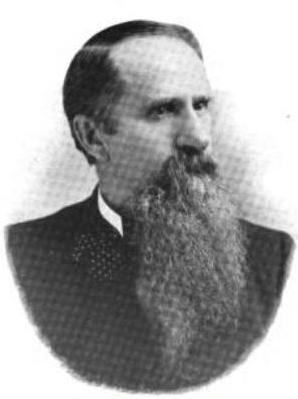
Historical · U.S. House · Arkansas · District 1
William Cate
Former U.S. Representative · Arkansas District 1 · 1889–1893 · Democratic
William Cate represented Arkansas's District 1 in the United States House of Representatives (1889–1893) for the Democratic party. The page below collects sourced biographical facts, term history, committee roles, and provenance for Cate.
Bioguide ID: C000249
Key facts
- Full name
- William Cate
- State
- Arkansas
- District
- District 1
- Party
- Democratic
- House service
- 1889–1893
- First House term
- 1889
- Status
- Left office
- Current term ends
- —
- Born
- 1839
- Bioguide ID
- C000249
- Committee assignments
- —
- Dataset version
- 1.20260606
Biographical narrative
828 words · sourced from the Wikipedia REST extract
William Cate was a U.S. Representative from Arkansas, serving two non-consecutive terms in the late 19th century. A member of the Democratic Party, Cate's political career was marked by significant events, including an election challenge that led to his temporary removal from office. He was also a lawyer and judge, contributing to the legal and political landscape of Arkansas during his lifetime.
Early life and career
William Henderson Cate was born on November 11, 1839, near Murfreesboro, Tennessee. He was the son of Noah Cate, a Baptist minister, and Margaret M. (Henderson) Cate. Cate received his early education in common schools and attended an academy in Abingdon, Virginia. He graduated from the University of Tennessee at Knoxville in 1857, which laid the foundation for his future endeavors in law and politics.
In 1868, Cate married Virginia E. Warner from Craighead County, Arkansas. The couple had one son. Before fully embarking on his legal career, Cate taught school while simultaneously studying law. His legal education and subsequent admission to the bar in Arkansas followed his relocation to Jonesboro in 1865. He began practicing law in 1866 and represented clients, including significant railroad companies such as the Iron Mountain and Southern Railroad and the St. Louis, Arkansas, and Texas Railroad.
House tenure
Cate's political career began in earnest when he was elected to the Arkansas House of Representatives as a Democrat in 1870. He represented the first district, which encompassed several counties, including Craighead, Cross, Jackson, Mississippi, and Poinsett. Cate was seated in the 18th Arkansas General Assembly on January 2, 1871, and was re-elected for the 19th Arkansas General Assembly, serving alongside other representatives. During his tenure in the state legislature, he was active on the Agriculture and Cities and Corporations committees.
In addition to his legislative work, Cate was elected as the prosecuting attorney for the Second Judicial Circuit in 1878. Following the death of Circuit Judge James Frierson, he was appointed by Governor James H. Berry to fill the remainder of the term as circuit judge on March 17, 1884. Cate won election to a full term later that year. His legal career continued to flourish, as he organized the Bank of Jonesboro in 1887 and served on the Board of Visitors of the University of Arkansas in Fayetteville.
Cate's congressional career began when he ran for a seat in the U.S. House of Representatives in 1888. He faced Lewis Featherstone, a candidate from the Union Labor party, and won the election by a narrow margin of fewer than 1,000 votes. He was sworn in as a member of the Fifty-first Congress on March 4, 1889. However, his tenure was cut short when an investigation into election fraud led to his removal from office. The House Committee on Elections ruled in favor of Featherstone, determining that he had won the election by 86 votes.
Following his removal, Cate returned to his judicial duties as a circuit judge after being appointed to fill the remainder of a term on October 30, 1890. He continued to serve in this capacity until he decided to run for Congress again.
In the 1890 election, Cate challenged Featherstone once more and won decisively, with a vote count that confirmed his victory without contest from Featherstone. He was elected to the Fifty-second Congress, serving from March 4, 1891, until March 3, 1893. During this term, Cate was a member of the Railways and Canals Committee, where he introduced legislation aimed at improving infrastructure, including a proposal for a railroad bridge across the Black River and a levee on the Mississippi River. After completing his second term, he chose not to seek renomination for the Fifty-third Congress.
Legislative focus and committees
Throughout his time in Congress, Cate's legislative focus was primarily on infrastructure and transportation, reflecting the needs of his constituents in Arkansas. His involvement in the Railways and Canals Committee allowed him to advocate for projects that would enhance the region's connectivity and economic development. The introduction of bills related to the construction of a railroad bridge and levee indicated his commitment to addressing the practical concerns of his district, particularly in terms of transportation and flood management.
Cate's legislative efforts were part of a broader context of late 19th-century American politics, which often emphasized the importance of infrastructure as a means of fostering economic growth and improving the quality of life for citizens. His work in Congress was marked by a pragmatic approach to governance, focusing on tangible improvements that could benefit his constituents.
After leaving Congress, Cate returned to Jonesboro, Arkansas, where he resumed his legal practice. He continued to be involved in the community until his death on August 23, 1899, in Toledo, Ohio, due to cancer. He was interred at the City Cemetery in Jonesboro, Arkansas. Cate's life and career reflect the complexities of American politics during a transformative period, as well as the challenges and opportunities faced by public servants in the late 19th century.
Notable legislation
Sponsored and co-sponsored legislation for William Cate is pending operator curation. The biographical narrative above carries the same provenance trail until per-bill rows are written.
Sources
- [1]https://en.wikipedia.org/wiki/William_H._CateWikipedia · retrieved 2026-06-06
Notable quotes
Sourced quotes for William Cate are pending operator curation. Narrative-scope provenance remains attached below.
Sources
- [1]https://en.wikipedia.org/wiki/William_H._CateWikipedia · retrieved 2026-06-06
Key positions
Curated policy positions for William Cate are pending operator review. The biographical narrative above carries the same provenance trail until per-topic positions are written.
Sources
- [1]https://en.wikipedia.org/wiki/William_H._CateWikipedia · retrieved 2026-06-06
Terms served
- 1889–1891U.S. House · Term 1 · Democratic
- 1891–1893U.S. House · Term 2 · Democratic
Sources & provenance
Every attributable claim above carries a per-section [N] marker that resolves to the corresponding URL below. Each entry records the upstream provider, the canonical URL, and the timestamp at which the source was retrieved by the ingest pipeline.
Key facts
- https://bioguide.congress.gov/search/bio/C000249bioguide · retrieved 2026-06-06
- https://www.govtrack.us/congress/members/402393govtrack · retrieved 2026-06-06
Biographical narrative
- https://en.wikipedia.org/wiki/William_H._Catewikipedia · retrieved 2026-06-06
Find your representative
Every U.S. state elects representatives by district. Browse Arkansas’s delegation, the full former-representative roster, or explore the role and term length.
Related on The Candidate
- Preceded by Poindexter DunnEarlier holder of the Arkansas District 1 House seat · Democratic.Open
- Succeeded by Philip McCulloch Jr.Later holder of the Arkansas District 1 House seat · Democratic.Open
- Alfred GreenwoodFormer U.S. Representative · Arkansas District 1 · DemocraticOpen
- Archibald YellFormer U.S. Representative · Arkansas District 1 · DemocraticOpen
- Asa HodgesFormer U.S. Representative · Arkansas District 1 · RepublicanOpen
- Bill Alexander Jr.Former U.S. Representative · Arkansas District 1 · DemocraticOpen