
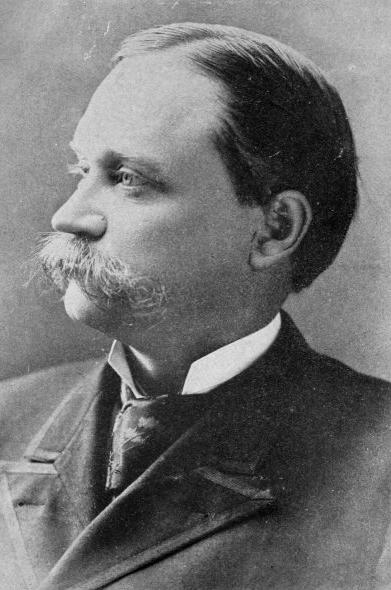
Historical · U.S. House · Arkansas · District 2
Clifton Breckinridge
Former U.S. Representative · Arkansas District 2 · 1883–1895 · Democratic
Clifton Breckinridge represented Arkansas's District 2 in the United States House of Representatives (1883–1895) for the Democratic party. The page below collects sourced biographical facts, term history, committee roles, and provenance for Breckinridge.
Bioguide ID: B000784
Key facts
- Full name
- Clifton Breckinridge
- State
- Arkansas
- District
- District 2
- Party
- Democratic
- House service
- 1883–1895
- First House term
- 1883
- Status
- Left office
- Current term ends
- —
- Born
- 1846
- Bioguide ID
- B000784
- Committee assignments
- —
- Dataset version
- 1.20260606
Biographical narrative
898 words · sourced from the Wikipedia REST extract
Clifton Breckinridge was an American politician who served as a U.S. Representative from Arkansas's 2nd congressional district. A member of the Democratic Party, Breckinridge's political career spanned over a decade, during which he was involved in significant legislative activities and faced notable controversies. He also held various roles outside of Congress, including a diplomatic position as Minister to Russia. Breckinridge was born into a prominent political family and was shaped by his experiences during the Civil War, which influenced his later career in public service.
Early life and career
Clifton Breckinridge was born on November 22, 1846, near Lexington, Kentucky. He was the son of John Cabell Breckinridge and Mary Cyrene Burch Breckinridge. His family was well-established in American politics; his grandfather, John Breckinridge, served as Attorney General under President Thomas Jefferson, while his father held several significant positions, including Vice President of the United States and a Confederate general during the Civil War. This political lineage set the stage for Clifton's future involvement in public service.
During his youth, Breckinridge attended rural schools in Kentucky. At the age of 15, he enlisted in the Confederate Army alongside his father when the Civil War broke out. He later served as a midshipman in the Confederate Navy, gaining military experience that would inform his later views on governance and leadership.
After the war, Breckinridge pursued higher education at Washington College in Lexington, Virginia, where he studied for three years. The college's president, Confederate General Robert E. Lee, encouraged him to consider a career in public service. Following his education, Breckinridge joined his older brother in managing a cotton plantation near Pine Bluff, Arkansas. He engaged in cotton planting and commission business for thirteen years, establishing himself in the agricultural sector. In 1876, he married Katherine Carson, the daughter of a wealthy Mississippi family, and together they had four children.
Breckinridge's entry into politics began with his election as an alderman in the Pine Bluff City Council, marking the start of his public service career.
House tenure
Clifton Breckinridge was elected to the United States House of Representatives in 1882, officially taking his seat in 1883. As a member of the Democratic Party, he was supported by John G. Carlisle, the newly elected Speaker of the House and a family friend, who ensured that Breckinridge secured a position on the influential Committee on Ways and Means. His initial terms in Congress were marked by re-elections in 1884 and 1886, reflecting a degree of political stability and support within his constituency.
However, Breckinridge's political career faced significant challenges following the 1888 election, which became embroiled in controversy. Allegations of voting fraud arose when armed individuals disrupted a predominantly black voting precinct in Conway County, Arkansas, stealing a ballot box that contained votes for his Republican opponent, John M. Clayton. This incident led to a congressional investigation, and Clayton contested the election results. Tragically, Clayton was shot and killed shortly thereafter, leading to a vacancy in the congressional seat. Breckinridge was not implicated in any wrongdoing related to the election fraud or Clayton's assassination and was subsequently elected to fill the vacant seat in 1890.
Breckinridge continued to serve in Congress, being re-elected in 1890 and 1892. During his tenure, he became involved in significant legislative efforts, including the repeal of the Sherman Silver Purchase Act and the adoption of the Wilson–Gorman Tariff Act. His reputation within Congress improved following the controversies of the "Clayton Affair," and he was regarded as a respected member of the House. His support for President Grover Cleveland's defense of the gold standard during the Panic of 1893-1894, however, alienated him from many Arkansas farmers who favored free silver. This disconnect ultimately led to his defeat in the Democratic primary to John S. Little, who went on to win the general election.
Legislative focus and committees
After resigning from the House of Representatives in 1894 before the end of his term, Breckinridge accepted President Cleveland's nomination as Minister to Russia, a diplomatic role he held until 1897. In this capacity, he was responsible for reporting on Russian foreign policy and its implications for U.S. interests. Breckinridge's warnings regarding deteriorating relations between Russia and China due to Russian expansionism did not lead to any changes in U.S. foreign policy, which was characterized by a prevailing isolationist stance at the time. His tenure as Minister involved addressing routine trade and immigration issues, although he struggled with the ceremonial aspects of diplomacy, particularly during the lavish coronation of Tsar Nicholas II and Empress Alexandra Fyodorovna in 1896.
Following his diplomatic service, Breckinridge returned to Arkansas but was later appointed by President William McKinley to the Dawes Commission in 1900. This commission was tasked with distributing individual allotments of tribal land to the Cherokee in Indian Territory. Breckinridge and his fellow commissioners faced allegations of fraud in acquiring Indian lands, but an investigation by the Department of Justice cleared him of any illegal actions. He remained with the commission until 1905.
Clifton Breckinridge's political career was marked by both achievements and controversies, reflecting the complexities of American politics during the late 19th century. His legacy includes his contributions to legislative processes and his involvement in significant historical events, both in Congress and as a diplomat. Breckinridge passed away on December 3, 1932, leaving behind a multifaceted legacy shaped by his family's political heritage and his own public service.
Notable legislation
Sponsored and co-sponsored legislation for Clifton Breckinridge is pending operator curation. The biographical narrative above carries the same provenance trail until per-bill rows are written.
Sources
- [1]https://en.wikipedia.org/wiki/Clifton_R._BreckinridgeWikipedia · retrieved 2026-06-06
Notable quotes
Sourced quotes for Clifton Breckinridge are pending operator curation. Narrative-scope provenance remains attached below.
Sources
- [1]https://en.wikipedia.org/wiki/Clifton_R._BreckinridgeWikipedia · retrieved 2026-06-06
Key positions
Curated policy positions for Clifton Breckinridge are pending operator review. The biographical narrative above carries the same provenance trail until per-topic positions are written.
Sources
- [1]https://en.wikipedia.org/wiki/Clifton_R._BreckinridgeWikipedia · retrieved 2026-06-06
Terms served
- 1883–1885U.S. House · Term 1 · Democratic
- 1885–1887U.S. House · Term 2 · Democratic
- 1887–1889U.S. House · Term 3 · Democratic
- 1889–1891U.S. House · Term 4 · Democratic
- 1891–1893U.S. House · Term 5 · Democratic
- 1893–1895U.S. House · Term 6 · Democratic
Sources & provenance
Every attributable claim above carries a per-section [N] marker that resolves to the corresponding URL below. Each entry records the upstream provider, the canonical URL, and the timestamp at which the source was retrieved by the ingest pipeline.
Key facts
- https://bioguide.congress.gov/search/bio/B000784bioguide · retrieved 2026-06-06
- https://www.govtrack.us/congress/members/401742govtrack · retrieved 2026-06-06
Biographical narrative
- https://en.wikipedia.org/wiki/Clifton_R._Breckinridgewikipedia · retrieved 2026-06-06
Find your representative
Every U.S. state elects representatives by district. Browse Arkansas’s delegation, the full former-representative roster, or explore the role and term length.
Related on The Candidate
- Preceded by William SlemonsEarlier holder of the Arkansas District 2 House seat · Democratic.Open
- Succeeded by Stephen Brundidge Jr.Later holder of the Arkansas District 2 House seat · Democratic.Open
- Alfred GreenwoodFormer U.S. Representative · Arkansas District 1 · DemocraticOpen
- Archibald YellFormer U.S. Representative · Arkansas District 1 · DemocraticOpen
- Asa HodgesFormer U.S. Representative · Arkansas District 1 · RepublicanOpen
- Bill Alexander Jr.Former U.S. Representative · Arkansas District 1 · DemocraticOpen