
Historical · U.S. House · Arkansas · District 2
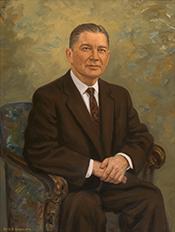
Wilbur Mills
Former U.S. Representative · Arkansas District 2 · 1939–1977 · Democratic
Wilbur Mills represented Arkansas's District 2 in the United States House of Representatives (1939–1977) for the Democratic party. The page below collects sourced biographical facts, term history, committee roles, and provenance for Mills.
Bioguide ID: M000778
Key facts
- Full name
- Wilbur Mills
- State
- Arkansas
- District
- District 2
- Party
- Democratic
- House service
- 1939–1977
- First House term
- 1939
- Status
- Left office
- Current term ends
- —
- Born
- 1909
- Bioguide ID
- M000778
- Committee assignments
- —
- Dataset version
- 1.20260605
Biographical narrative
1,005 words · sourced from the Wikipedia REST extract
Wilbur D. Mills was a prominent American politician and lawyer who served as a Democratic U.S. Representative for Arkansas's 2nd congressional district from 1939 until his retirement in 1977. Renowned for his lengthy tenure in Congress, Mills held significant influence, particularly during his time as chairman of the House Ways and Means Committee from 1958 to 1974. His legislative contributions included pivotal roles in the establishment of Medicare and Medicaid, as well as the Tax Reform Act of 1969. Mills's career was marked by both legislative achievements and personal challenges, which ultimately led to his decision not to seek re-election.
Early life and career
Wilbur Daigh Mills was born on May 24, 1909, in Kensett, Arkansas, to Abbie Lois Daigh Mills and Ardra Pickens Mills. His father was a significant figure in the local education system, serving as the first superintendent of the public school and later as chairman of the school board. Under his father's leadership, Kensett became notable for being the first public school in Arkansas to integrate. Mills attended public schools in Kensett and graduated as valedictorian from Searcy High School, located in the county seat of White County. He then pursued higher education at Hendrix College in Conway, Arkansas, where he graduated as salutatorian.
Following his undergraduate studies, Mills attended Harvard Law School, where he studied constitutional law under the esteemed professor Felix Frankfurter. After completing his education, Mills returned to Arkansas during the Great Depression to manage his father's bank and assist with a local store. He was admitted to the Arkansas Bar Association in 1933, marking the beginning of his legal career.
Mills's political journey began when he was elected as the 29th county judge of White County, a position he held from 1935 to 1939. During his tenure, he initiated a small county-funded health program that provided medical assistance to indigent residents. This program, which included a modest fund for medical bills and low-cost hospital treatment, laid the groundwork for Mills's later involvement in healthcare legislation at the national level.
House tenure
Mills's political career advanced significantly when he won election to the U.S. House of Representatives in 1938, making him the youngest person ever elected from Arkansas at that time. He took office in 1939 and would go on to serve a total of 19 consecutive terms in Congress, a remarkable achievement that underscored his political acumen and the trust placed in him by his constituents.
Throughout his tenure, Mills became known for his leadership role as chairman of the House Ways and Means Committee, a position he held for 17 years, making him the longest-serving individual in that role in U.S. history. His influence in Congress was substantial, and he was often referred to as "the most powerful man in Washington." Mills's leadership on the committee allowed him to shape significant legislation, particularly in the areas of taxation and social welfare.
Mills's political stances were complex. He was a signatory to the 1956 Southern Manifesto, which opposed the Supreme Court's decision in Brown v. Board of Education that mandated the desegregation of public schools. However, it is important to note that Mills did not personally identify as a segregationist. He maintained a reputation for advocating inclusion, and his close aide was a Black man, which reflected a more nuanced approach to race relations than his political affiliations might suggest.
During his time in Congress, Mills played a critical role in the creation of the Highway Trust Fund, which facilitated economic development through improved infrastructure. He was instrumental in the establishment of the Kerr-Mills Health Insurance legislation, which served as a precursor to Medicare. Mills's most notable legislative achievements include his work on Medicare and Medicaid, where he initially expressed concerns about the financial implications of such programs but ultimately recognized their necessity for the American public.
Mills was also a key figure in tax reform, serving as a leading expert in this area. He was the architect of the Tax Reform Act of 1969, which aimed to create a more equitable tax system by lowering rates for lower-income individuals while increasing rates for wealthier taxpayers. His approach to fiscal policy emphasized the importance of maintaining a balanced budget while ensuring adequate funding for essential government programs.
Legislative focus and committees
Mills's legislative focus encompassed a wide range of issues, reflecting his commitment to both fiscal responsibility and social welfare. He was a strong advocate for Social Security and disability programs, working to expand coverage to include farmers and public employees. His support for unemployment compensation and national health insurance further illustrated his dedication to addressing the needs of vulnerable populations.
In 1967, during a period of escalating military involvement in Vietnam, Mills confronted President Lyndon B. Johnson regarding proposed tax increases. He insisted that any tax hikes be accompanied by equivalent cuts in federal spending, a stance that led to a balanced federal budget during Johnson's final fiscal year in office. This negotiation highlighted Mills's ability to navigate complex political landscapes while advocating for fiscal prudence.
Mills's career faced challenges in the 1970s, particularly following two public incidents involving a stripper named Fanne Foxe. These events led to significant scrutiny and ultimately prompted Mills to step down from his position as chairman of the Ways and Means Committee. He subsequently sought treatment for alcoholism and chose not to run for re-election in 1976, despite having received substantial support in previous elections.
After leaving Congress, Mills returned to the practice of law and became involved in efforts to address alcoholism and substance abuse. He helped establish the Wilbur D. Mills Center for Alcoholism and Drug Treatment, contributing to the development of similar centers across the country and supporting their fundraising initiatives.
Wilbur D. Mills passed away on May 2, 1992, leaving behind a legacy marked by significant legislative achievements and a complex personal narrative. His contributions to American politics, particularly in the areas of healthcare and taxation, continue to be recognized as influential in shaping the landscape of social welfare in the United States.
Notable legislation
Sponsored and co-sponsored legislation for Wilbur Mills is pending operator curation. The biographical narrative above carries the same provenance trail until per-bill rows are written.
Sources
- [1]https://en.wikipedia.org/wiki/Wilbur_MillsWikipedia · retrieved 2026-06-05
Notable quotes
Sourced quotes for Wilbur Mills are pending operator curation. Narrative-scope provenance remains attached below.
Sources
- [1]https://en.wikipedia.org/wiki/Wilbur_MillsWikipedia · retrieved 2026-06-05
Key positions
Curated policy positions for Wilbur Mills are pending operator review. The biographical narrative above carries the same provenance trail until per-topic positions are written.
Sources
- [1]https://en.wikipedia.org/wiki/Wilbur_MillsWikipedia · retrieved 2026-06-05
Terms served
- 1939–1941U.S. House · Term 1 · Democratic
- 1941–1943U.S. House · Term 2 · Democratic
- 1943–1945U.S. House · Term 3 · Democratic
- 1945–1947U.S. House · Term 4 · Democratic
- 1947–1949U.S. House · Term 5 · Democratic
- 1949–1951U.S. House · Term 6 · Democratic
- 1951–1953U.S. House · Term 7 · Democratic
- 1953–1955U.S. House · Term 8 · Democratic
- 1955–1957U.S. House · Term 9 · Democratic
- 1957–1959U.S. House · Term 10 · Democratic
- 1959–1961U.S. House · Term 11 · Democratic
- 1961–1963U.S. House · Term 12 · Democratic
- 1963–1965U.S. House · Term 13 · Democratic
- 1965–1967U.S. House · Term 14 · Democratic
- 1967–1969U.S. House · Term 15 · Democratic
- 1969–1971U.S. House · Term 16 · Democratic
- 1971–1973U.S. House · Term 17 · Democratic
- 1973–1975U.S. House · Term 18 · Democratic
- 1975–1977U.S. House · Term 19 · Democratic
Sources & provenance
Every attributable claim above carries a per-section [N] marker that resolves to the corresponding URL below. Each entry records the upstream provider, the canonical URL, and the timestamp at which the source was retrieved by the ingest pipeline.
Key facts
- https://bioguide.congress.gov/search/bio/M000778bioguide · retrieved 2026-06-05
- https://www.govtrack.us/congress/members/407756govtrack · retrieved 2026-06-05
Biographical narrative
- https://en.wikipedia.org/wiki/Wilbur_Millswikipedia · retrieved 2026-06-05
Find your representative
Every U.S. state elects representatives by district. Browse Arkansas’s delegation, the full former-representative roster, or explore the role and term length.
Related on The Candidate
- Preceded by Pearl OldfieldEarlier holder of the Arkansas District 2 House seat · Democratic.Open
- Succeeded by James Tucker Jr.Later holder of the Arkansas District 2 House seat · Democratic.Open
- Alfred GreenwoodFormer U.S. Representative · Arkansas District 1 · DemocraticOpen
- Archibald YellFormer U.S. Representative · Arkansas District 1 · DemocraticOpen
- Asa HodgesFormer U.S. Representative · Arkansas District 1 · RepublicanOpen
- Bill Alexander Jr.Former U.S. Representative · Arkansas District 1 · DemocraticOpen