
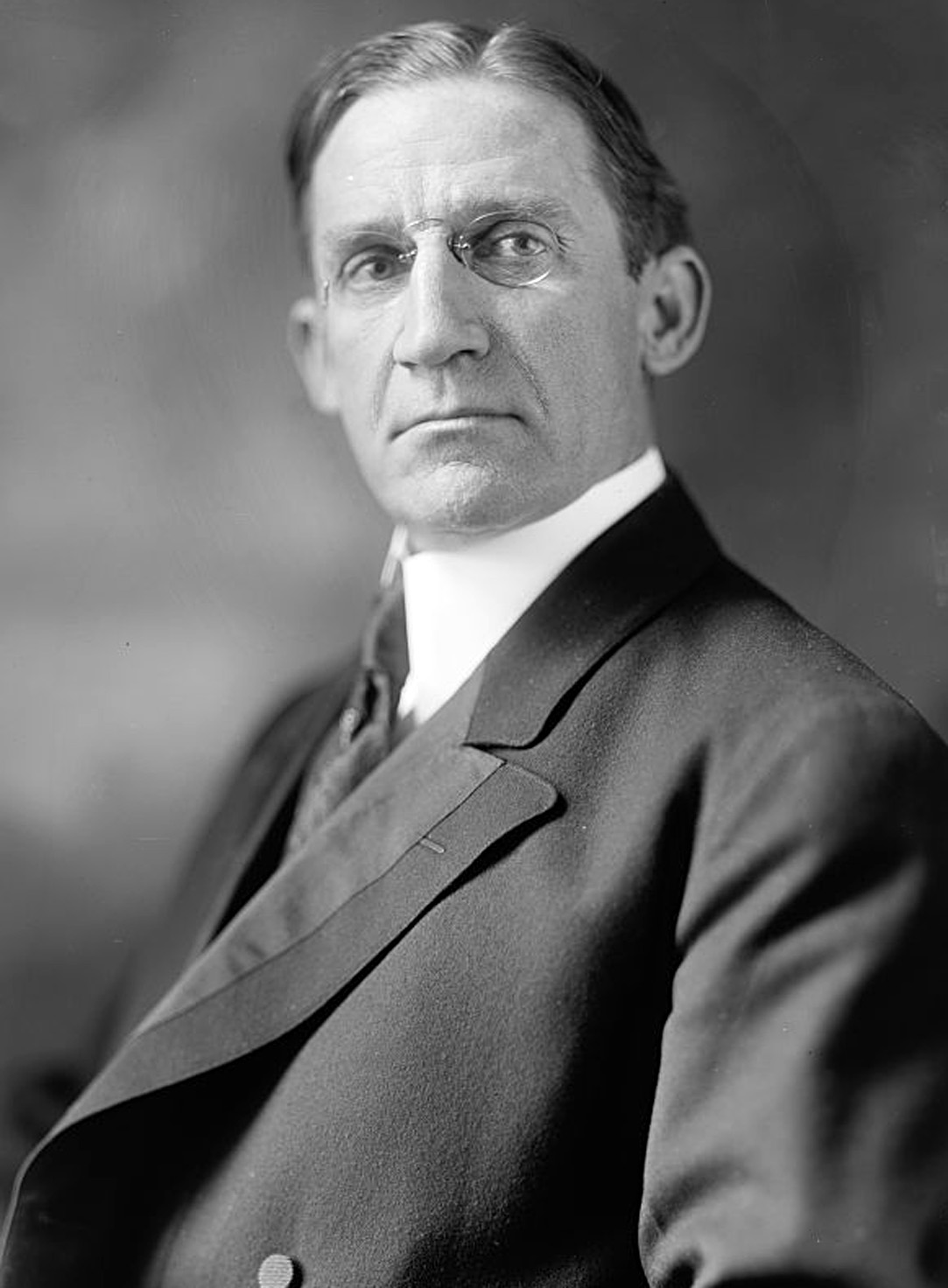
Historical · U.S. House · Arkansas · District 7
William Goodwin
Former U.S. Representative · Arkansas District 7 · 1911–1921 · Democratic
William Goodwin represented Arkansas's District 7 in the United States House of Representatives (1911–1921) for the Democratic party. The page below collects sourced biographical facts, term history, committee roles, and provenance for Goodwin.
Bioguide ID: G000304
Key facts
- Full name
- William Goodwin
- State
- Arkansas
- District
- District 7
- Party
- Democratic
- House service
- 1911–1921
- First House term
- 1911
- Status
- Left office
- Current term ends
- —
- Born
- 1866
- Bioguide ID
- G000304
- Committee assignments
- —
- Dataset version
- 1.20260606
Biographical narrative
808 words · sourced from the Wikipedia REST extract
William Goodwin was an American lawyer and politician who served as a U.S. Representative for Arkansas's 7th congressional district from 1911 to 1921. A member of the Democratic Party, Goodwin's political career spanned a decade during which he was elected to five consecutive terms in the House of Representatives. His legislative work occurred during a transformative period in American history, marked by significant social and political changes. After his congressional tenure, Goodwin returned to his legal practice in Warren, Arkansas, where he continued to contribute to his community until his passing in 1937.
Early life and career
William Goodwin was born on May 2, 1866, in Warren, Arkansas. His early education took place in various institutions, including public schools and specialized academies. He attended the Farmers' Academy near Duluth, Georgia, which provided him with foundational knowledge and skills. Following this, he furthered his education at Cooledge's Preparatory School and Moore's College in Atlanta, Georgia. Goodwin also pursued higher education at the Universities of Arkansas and Mississippi, where he studied law, laying the groundwork for his future career in the legal and political arenas.
After completing his legal studies, Goodwin was admitted to the bar in 1894, allowing him to begin practicing law in his hometown of Warren, Arkansas. His legal career coincided with his growing interest in public service. In 1895, he was elected to the Arkansas House of Representatives, marking the beginning of his political journey. His legislative experience continued as he served in the Arkansas Senate from 1905 to 1909, where he gained valuable insights into the workings of state governance and legislative processes.
In addition to his roles in the state legislature, Goodwin was involved in higher education governance. He served as a member of the board of trustees for the University of Arkansas at Fayetteville from 1907 to 1911. This position allowed him to influence educational policies and contribute to the development of higher education in the state.
House tenure
Goodwin's congressional career began when he was elected as a Democrat to the Sixty-second Congress, which commenced on March 4, 1911. He successfully secured re-election to the four subsequent Congresses, serving until March 3, 1921. His tenure in the House of Representatives spanned a critical decade in American history, encompassing events such as World War I and the onset of the Progressive Era, which brought about significant social reforms.
During his time in Congress, Goodwin participated in various legislative activities and discussions that shaped national policy. While specific details of his legislative initiatives and positions are not provided, it is known that he was part of a larger Democratic majority during a period when the party sought to implement reforms addressing issues such as labor rights, women's suffrage, and economic regulation. His involvement in these discussions would have placed him at the center of significant legislative debates of the time.
Goodwin's political career in the House came to an end when he was an unsuccessful candidate for renomination in 1920. He lost the primary election to Tilman Parks, marking a transition in his professional life. Despite this setback, Goodwin's five terms in the House of Representatives established him as a notable figure in Arkansas politics during the early 20th century.
Legislative focus and committees
While specific details regarding the committees on which Goodwin served or the particular legislative issues he championed are not available, his role as a U.S. Representative would have involved participation in various committees and subcommittees that addressed a range of national concerns. Members of Congress typically engage in committee work that aligns with their interests and the needs of their constituents, which often includes areas such as education, infrastructure, agriculture, and public health.
Given Goodwin's background in law and his previous experience in state government, it is likely that he contributed to discussions and decisions related to legal and regulatory matters. His time as a member of the Arkansas Senate and the House of Representatives would have equipped him with insights into both state and federal legislative processes, enabling him to advocate effectively for his constituents in Arkansas.
After his congressional career, Goodwin returned to Warren, Arkansas, where he resumed his legal practice. He continued to engage with his community and contribute to local affairs until his death on August 9, 1937. Goodwin was interred in Oak Lawn Cemetery in Warren, leaving behind a legacy of public service that spanned both state and federal levels of government.
In summary, William Goodwin's life and career reflect the journey of a dedicated public servant who navigated the complexities of American politics during a significant era. His contributions to the legal field and his tenure in the U.S. House of Representatives underscore the importance of local representation in shaping national policy. Through his work, Goodwin played a role in the broader narrative of American governance during the early 20th century.
Notable legislation
Sponsored and co-sponsored legislation for William Goodwin is pending operator curation. The biographical narrative above carries the same provenance trail until per-bill rows are written.
Sources
- [1]https://en.wikipedia.org/wiki/William_S._GoodwinWikipedia · retrieved 2026-06-06
Notable quotes
Sourced quotes for William Goodwin are pending operator curation. Narrative-scope provenance remains attached below.
Sources
- [1]https://en.wikipedia.org/wiki/William_S._GoodwinWikipedia · retrieved 2026-06-06
Key positions
Curated policy positions for William Goodwin are pending operator review. The biographical narrative above carries the same provenance trail until per-topic positions are written.
Sources
- [1]https://en.wikipedia.org/wiki/William_S._GoodwinWikipedia · retrieved 2026-06-06
Terms served
- 1911–1913U.S. House · Term 1 · Democratic
- 1913–1915U.S. House · Term 2 · Democratic
- 1915–1917U.S. House · Term 3 · Democratic
- 1917–1919U.S. House · Term 4 · Democratic
- 1919–1921U.S. House · Term 5 · Democratic
Sources & provenance
Every attributable claim above carries a per-section [N] marker that resolves to the corresponding URL below. Each entry records the upstream provider, the canonical URL, and the timestamp at which the source was retrieved by the ingest pipeline.
Key facts
- https://bioguide.congress.gov/search/bio/G000304bioguide · retrieved 2026-06-06
- https://www.govtrack.us/congress/members/404663govtrack · retrieved 2026-06-06
Biographical narrative
- https://en.wikipedia.org/wiki/William_S._Goodwinwikipedia · retrieved 2026-06-06
Find your representative
Every U.S. state elects representatives by district. Browse Arkansas’s delegation, the full former-representative roster, or explore the role and term length.
Related on The Candidate
- Preceded by Robert WallaceEarlier holder of the Arkansas District 7 House seat · Democratic.Open
- Succeeded by Tilman ParksLater holder of the Arkansas District 7 House seat · Democratic.Open
- Alfred GreenwoodFormer U.S. Representative · Arkansas District 1 · DemocraticOpen
- Archibald YellFormer U.S. Representative · Arkansas District 1 · DemocraticOpen
- Asa HodgesFormer U.S. Representative · Arkansas District 1 · RepublicanOpen
- Bill Alexander Jr.Former U.S. Representative · Arkansas District 1 · DemocraticOpen