
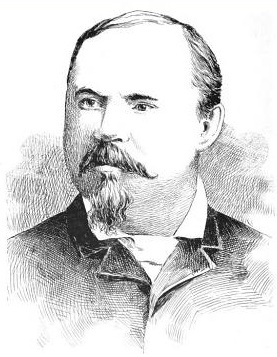
Historical · U.S. House · Arkansas · At-Large
William Hynes
Former U.S. Representative · Arkansas At-Large · 1873–1875 · Liberal Republican
William Hynes represented Arkansas's At-Large in the United States House of Representatives (1873–1875) for the Liberal Republican party. The page below collects sourced biographical facts, term history, committee roles, and provenance for Hynes.
Bioguide ID: H001027
Key facts
- Full name
- William Hynes
- State
- Arkansas
- District
- At-Large
- Party
- Liberal Republican
- House service
- 1873–1875
- First House term
- 1873
- Status
- Left office
- Current term ends
- —
- Born
- 1843
- Bioguide ID
- H001027
- Committee assignments
- —
- Dataset version
- 1.20260606
Biographical narrative
924 words · sourced from the Wikipedia REST extract
William Hynes was an American politician, lawyer, and newspaperman who served as a U.S. Representative for Arkansas's at-large congressional district during the early 1870s. A member of the Liberal Republican Party, Hynes was known for his involvement in significant legislative actions during his single term in Congress. His life journey began in Ireland, and he navigated various roles in journalism and law before entering the political arena. Hynes's tenure in the House of Representatives was marked by his support for civil rights legislation, reflecting his commitment to social justice during a transformative period in American history.
Early life and career
William Hynes was born on March 31, 1843, in Kilkee, County Clare, Ireland. His early life was shaped by the loss of his father, who passed away when Hynes was just eleven years old. In 1854, seeking better opportunities, Hynes's family immigrated to the United States, settling in Springfield, Massachusetts. This move marked the beginning of Hynes's journey in a new country, where he would eventually pursue a career in law and politics.
Hynes received his education in the public schools of Springfield, where he demonstrated an early interest in the written word. After completing an apprenticeship at the Springfield Republican newspaper, he became a printer, which laid the groundwork for his future endeavors in journalism. His career in the media provided him with valuable insights into the political landscape of the time and honed his communication skills.
Tragedy struck again in 1864 when Hynes's mother died, prompting him to relocate to Nashville, Tennessee. There, he began studying law under the guidance of attorney John O'Neill. His legal education continued at Columbian University’s law school in Washington, D.C., now known as George Washington University Law School. While pursuing his studies, Hynes also worked as a newspaper reporter and served as a secretary to Benjamin F. Rice, a United States senator from Arkansas. This experience not only enriched his legal knowledge but also deepened his understanding of the political process.
Hynes graduated from law school in 1870 and was subsequently admitted to the bar. He began practicing law in Little Rock, Arkansas, where he established his legal career. His connection to Senator Rice and his experiences in Washington, D.C., influenced his political affiliations and aspirations, leading him to become involved in the Liberal Republican movement.
House tenure
William Hynes's political career took a significant turn when he was elected as a Liberal Republican to the 43rd Congress, serving from March 4, 1873, to March 3, 1875. His election marked a notable moment in Arkansas's political landscape, as he represented the state during a time of considerable change and upheaval following the Civil War. Hynes's affiliation with the Liberal Republican Party, which emerged in the early 1870s as a faction advocating for civil service reform and a more moderate approach to Reconstruction, reflected his evolving political ideology.
During his time in Congress, Hynes was recognized for his willingness to cross party lines on critical issues. Notably, he was the only non-Republican member to vote in favor of the Civil Rights Act of 1875, which aimed to guarantee equal rights for all citizens, particularly in public accommodations and transportation. This vote underscored his commitment to civil rights and indicated a progressive stance for a politician of his era.
Despite his active participation in Congress, Hynes faced challenges in securing re-election. He ran for a second term in the 44th Congress but was unsuccessful in his bid. His single term in the House of Representatives was characterized by his efforts to address pressing social issues, but the political climate of the time proved difficult for candidates outside the dominant Republican Party.
Legislative focus and committees
Throughout his congressional tenure, Hynes's legislative focus was primarily on civil rights and social justice issues. His support for the Civil Rights Act of 1875 highlighted his dedication to promoting equality and protecting the rights of marginalized groups during a period when such issues were contentious and often met with resistance. Hynes's alignment with the Liberal Republican movement positioned him as a proponent of reform, advocating for policies that sought to rectify injustices stemming from the Civil War and Reconstruction.
While specific details regarding Hynes's committee assignments during his time in Congress are not extensively documented, his legislative actions indicate a commitment to addressing the needs of his constituents and the broader American populace. His involvement in significant civil rights legislation suggests that he was engaged with the pressing social issues of his time, reflecting the values of the Liberal Republican Party.
After his congressional career, Hynes relocated to Chicago in 1876, where he resumed the practice of law. His return to the legal profession marked a shift in his focus, and he eventually rejoined the Democratic Party, indicating a further evolution in his political beliefs. Hynes remained active in various social and political movements, including the Irish Home Rule movement, which sought to secure greater autonomy for Ireland from British rule.
William Hynes retired from practicing law in 1910 and subsequently moved to Los Angeles, California. He lived there until his death on April 2, 1915. His life journey, from his early years in Ireland to his political involvement in the United States, reflects the experiences of many immigrants who sought to make a difference in their new homeland. Hynes's contributions to civil rights and his engagement in the political landscape of the 19th century remain a part of his legacy. He was interred in Calvary Cemetery, vault H, leaving behind a history marked by advocacy and public service.
Notable legislation
Sponsored and co-sponsored legislation for William Hynes is pending operator curation. The biographical narrative above carries the same provenance trail until per-bill rows are written.
Sources
- [1]https://en.wikipedia.org/wiki/William_Joseph_HynesWikipedia · retrieved 2026-06-06
Notable quotes
Sourced quotes for William Hynes are pending operator curation. Narrative-scope provenance remains attached below.
Sources
- [1]https://en.wikipedia.org/wiki/William_Joseph_HynesWikipedia · retrieved 2026-06-06
Key positions
Curated policy positions for William Hynes are pending operator review. The biographical narrative above carries the same provenance trail until per-topic positions are written.
Sources
- [1]https://en.wikipedia.org/wiki/William_Joseph_HynesWikipedia · retrieved 2026-06-06
Terms served
- 1873–1875U.S. House · Term 1 · Liberal Republican
Sources & provenance
Every attributable claim above carries a per-section [N] marker that resolves to the corresponding URL below. Each entry records the upstream provider, the canonical URL, and the timestamp at which the source was retrieved by the ingest pipeline.
Key facts
- https://bioguide.congress.gov/search/bio/H001027bioguide · retrieved 2026-06-06
- https://www.govtrack.us/congress/members/405862govtrack · retrieved 2026-06-06
Biographical narrative
- https://en.wikipedia.org/wiki/William_Joseph_Hyneswikipedia · retrieved 2026-06-06
Find your representative
Every U.S. state elects representatives by district. Browse Arkansas’s delegation, the full former-representative roster, or explore the role and term length.
Related on The Candidate
- Preceded by Henry ConwayEarlier holder of the Arkansas At-Large House seat.Open
- Alfred GreenwoodFormer U.S. Representative · Arkansas District 1 · DemocraticOpen
- Archibald YellFormer U.S. Representative · Arkansas District 1 · DemocraticOpen
- Asa HodgesFormer U.S. Representative · Arkansas District 1 · RepublicanOpen
- Bill Alexander Jr.Former U.S. Representative · Arkansas District 1 · DemocraticOpen
- Representatives from ArkansasEvery former U.S. Representative who has represented Arkansas.Open