
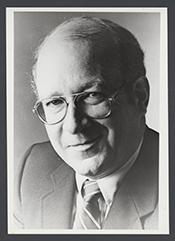
Historical · U.S. House · Arizona · District 1
John Rhodes III
Former U.S. Representative · Arizona District 1 · 1987–1993 · Republican
John Rhodes III represented Arizona's District 1 in the United States House of Representatives (1987–1993) for the Republican party. The page below collects sourced biographical facts, term history, committee roles, and provenance for III.
Bioguide ID: R000189
Key facts
- Full name
- John Rhodes III
- State
- Arizona
- District
- District 1
- Party
- Republican
- House service
- 1987–1993
- First House term
- 1987
- Status
- Left office
- Current term ends
- —
- Born
- 1943
- Bioguide ID
- R000189
- Committee assignments
- —
- Dataset version
- 1.20260605
Biographical narrative
917 words · sourced from the Wikipedia REST extract
John J. Rhodes III was an American politician who served as a Republican U.S. Representative for Arizona's 1st congressional district from 1987 until 1993. He was the son of John Jacob Rhodes, a long-serving congressman, and followed in his father's political footsteps, becoming a prominent figure in Arizona politics. Rhodes's tenure in the House of Representatives was marked by significant electoral victories and challenges, ultimately culminating in his defeat in 1992. His career was characterized by a commitment to public service, which began in his youth and continued through various roles in education and local governance.
Early life and career
John J. Rhodes III was born on September 8, 1943, in Mesa, Arizona. He was raised in a politically active family, as his father, John Jacob Rhodes, served as a U.S. Representative for Arizona's 1st congressional district from 1953 to 1983. This familial connection to politics provided Rhodes with a unique perspective on governance and public service from an early age. He spent a significant portion of his youth in Washington, D.C., where he was exposed to the workings of the federal government.
Rhodes pursued his education with dedication, graduating from the Landon School in Bethesda, Maryland, in 1961. He continued his studies at Yale University, where he earned an A.B. degree in 1965. Following his undergraduate education, he attended the University of Arizona College of Law, receiving his Juris Doctor (J.D.) in 1968. After completing his legal education, Rhodes was admitted to the Arizona State Bar and began practicing law in Mesa.
In 1968, Rhodes joined the United States Army, where he served in Vietnam. He held the rank of captain before leaving the military in 1970. His military service contributed to his understanding of national issues and the challenges faced by veterans, which would later inform his legislative priorities.
Rhodes's political involvement began at the local level. He served as the Republican district chairman from 1972 to 1982, where he played a key role in local party organization and strategy. Additionally, he was a member of the Mesa Board of Education from 1973 to 1976, contributing to educational policy and governance. He also served on the Central Arizona Water Conservation District from 1983 to 1986, where he focused on water management issues crucial to the region.
House tenure
Rhodes's entry into the U.S. House of Representatives came after the election of his father's successor, John McCain, to the United States Senate. In 1986, Rhodes entered the Republican primary for his father's former seat in Arizona's 1st congressional district. Despite his name recognition and political lineage, he faced a competitive four-way primary. Rhodes secured the Republican nomination by a narrow margin, winning by approximately 5,000 votes without achieving a majority. However, he went on to win the general election decisively, receiving 71 percent of the vote.
During his time in Congress, Rhodes was re-elected with relative ease. He won his second term in 1988 and faced no Democratic challenger in the 1990 election, reflecting the strong Republican leanings of his district. His tenure was characterized by a focus on local issues and a commitment to the constituents of Arizona's 1st district.
As Rhodes approached the 1992 election, he appeared to be a strong candidate for re-election. The district had become even more Republican due to redistricting, which shifted several majority-Hispanic neighborhoods to the neighboring 2nd District. However, he faced a formidable Democratic challenger, Sam Coppersmith, who effectively criticized Rhodes for ethical lapses during his time in office. In a surprising turn of events, Coppersmith defeated Rhodes by a margin of just over six points, marking one of the significant upsets in Arizona's political history.
Following his defeat, Rhodes remained in Washington, D.C., where he continued to engage with political and civic matters. His departure from Congress marked the end of a notable chapter in Arizona's political landscape, as he had followed in the footsteps of his father while establishing his own identity as a legislator.
Legislative focus and committees
During his time in the House of Representatives, Rhodes was involved in various legislative initiatives and served on multiple committees. His legislative focus reflected the interests and needs of his constituents, particularly in areas such as education, water management, and veteran affairs. Rhodes's background in law and local governance informed his approach to policymaking, as he sought to address the challenges facing Arizona and its residents.
One notable aspect of Rhodes's legislative record was his vote against the Abandoned Shipwrecks Act of 1987. This legislation aimed to assert U.S. title to certain abandoned shipwrecks located in submerged lands under state jurisdiction, allowing states to manage these cultural and historical resources. Despite his opposition to the bill, it was ultimately signed into law by President Ronald Reagan.
Rhodes's committee assignments and legislative activities contributed to his understanding of the complexities of federal governance and the importance of collaboration across party lines. His experiences in Congress allowed him to engage with a wide range of issues, from local concerns to broader national policies.
In summary, John J. Rhodes III's career as a U.S. Representative was marked by significant electoral successes and challenges. His background, education, and prior public service roles shaped his approach to governance and legislation. Despite the eventual defeat in his bid for a fourth term, Rhodes left a lasting impact on Arizona politics and the communities he served. He passed away on January 20, 2011, after a period of health complications, leaving behind a legacy of public service and commitment to his constituents.
Notable legislation
Sponsored and co-sponsored legislation for John Rhodes III is pending operator curation. The biographical narrative above carries the same provenance trail until per-bill rows are written.
Sources
- [1]https://en.wikipedia.org/wiki/Jay_Rhodes_(politician)Wikipedia · retrieved 2026-06-05
Notable quotes
Sourced quotes for John Rhodes III are pending operator curation. Narrative-scope provenance remains attached below.
Sources
- [1]https://en.wikipedia.org/wiki/Jay_Rhodes_(politician)Wikipedia · retrieved 2026-06-05
Key positions
Curated policy positions for John Rhodes III are pending operator review. The biographical narrative above carries the same provenance trail until per-topic positions are written.
Sources
- [1]https://en.wikipedia.org/wiki/Jay_Rhodes_(politician)Wikipedia · retrieved 2026-06-05
Terms served
- 1987–1989U.S. House · Term 1 · Republican
- 1989–1991U.S. House · Term 2 · Republican
- 1991–1993U.S. House · Term 3 · Republican
Sources & provenance
Every attributable claim above carries a per-section [N] marker that resolves to the corresponding URL below. Each entry records the upstream provider, the canonical URL, and the timestamp at which the source was retrieved by the ingest pipeline.
Key facts
- https://bioguide.congress.gov/search/bio/R000189bioguide · retrieved 2026-06-05
- https://www.govtrack.us/congress/members/409165govtrack · retrieved 2026-06-05
Biographical narrative
- https://en.wikipedia.org/wiki/Jay_Rhodes_(politician)wikipedia · retrieved 2026-06-05
Find your representative
Every U.S. state elects representatives by district. Browse Arizona’s delegation, the full former-representative roster, or explore the role and term length.
Related on The Candidate
- Preceded by John RhodesEarlier holder of the Arizona District 1 House seat · Republican.Open
- Succeeded by Samuel CoppersmithLater holder of the Arizona District 1 House seat · Democratic.Open
- John MurdockFormer U.S. Representative · Arizona District 1 · DemocraticOpen
- Rick RenziFormer U.S. Representative · Arizona District 1 · RepublicanOpen
- Republican PartyFederal candidates and office holders on the Republican line.Open
- Representatives from ArizonaEvery former U.S. Representative who has represented Arizona.Open