
Historical · U.S. House · California · District 1
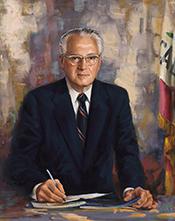
Harold Johnson
Former U.S. Representative · California District 1 · 1959–1981 · Democratic
Harold Johnson represented California's District 1 in the United States House of Representatives (1959–1981) for the Democratic party. The page below collects sourced biographical facts, term history, committee roles, and provenance for Johnson.
Bioguide ID: J000135
Key facts
- Full name
- Harold Johnson
- State
- California
- District
- District 1
- Party
- Democratic
- House service
- 1959–1981
- First House term
- 1959
- Status
- Left office
- Current term ends
- —
- Born
- 1907
- Bioguide ID
- J000135
- Committee assignments
- —
- Dataset version
- 1.20260605
Biographical narrative
920 words · sourced from the Wikipedia REST extract
Harold T. Johnson, commonly known as "Bizz" Johnson, was an American businessman and politician who served as a United States Congressman representing California's 1st congressional district from 1959 until 1981. A member of the Democratic Party, Johnson had a long and impactful political career, spanning over two decades in the U.S. House of Representatives. His tenure was marked by significant contributions to infrastructure and transportation legislation, as well as his involvement in various local and state political roles prior to his congressional service.
Early life and career
Harold T. Johnson was born on December 2, 1907, in Broderick, California. He earned the nickname "Bizz" at a young age, reportedly when he was just four years old. His uncle likened his leadership qualities to those of Otto von Bismarck, the German statesman. Johnson attended public schools in Roseville, California, and later pursued higher education at the University of Nevada. His early career began in the private sector, where he worked for the Pacific Fruit Express Company. He started as a clerk and eventually advanced to a supervisory role, demonstrating his capabilities in management and leadership.
Johnson's political career began in 1941 when he was elected as a trustee of the Roseville school board. His involvement in local governance continued as he was elected to the Roseville city council in 1943 and subsequently served as the mayor of Roseville. In 1948, he was elected to the California State Senate, where he represented Placer, Nevada, and Sierra counties. During his time in the state legislature, Johnson was instrumental in advocating for the construction of a four-lane highway across the Sierra Nevada, which would later become part of Interstate 80. He also played a key role in ensuring that the 1960 Winter Olympics were hosted in Squaw Valley, California, further establishing his reputation as a dedicated public servant.
House tenure
Johnson was elected to the U.S. House of Representatives in 1958, beginning a lengthy career that would last until 1981. Over the course of his eleven terms in office, he became known for his strong advocacy for infrastructure projects and transportation initiatives. In 1977, he was appointed chairman of the Committee on Public Works and Transportation, a position that allowed him to influence significant legislation related to public infrastructure.
Throughout his congressional career, Johnson was a proponent of the Auburn Dam project on the American River, although this initiative ultimately did not come to fruition. He was recognized for his tenacity as a negotiator, often standing firm in discussions, particularly regarding the management of Washington Union Station, where he resisted efforts to transfer control from the Interior Department to the Transportation Department.
Johnson's electoral history reflects his ability to maintain support within his district, even as it began to shift towards more conservative political leanings. He consistently won reelection by comfortable margins, demonstrating his effectiveness as a representative and his connection with constituents. However, his tenure came to an end in 1980 when he lost his reelection bid to Republican state assemblyman Eugene A. Chappie. This defeat was attributed in part to the broader political climate, including the strong victory of former California Governor Ronald Reagan in that year's presidential election. Johnson received only a fraction of the vote in that election, marking a significant shift in his political fortunes.
After leaving office, Johnson remained active in advocating for various uncompleted projects that had been authorized during his time in Congress, continuing to influence public policy even after his formal political career had ended.
Legislative focus and committees
During his time in the U.S. House of Representatives, Johnson's legislative focus was primarily on issues related to public works and transportation. As chairman of the Committee on Public Works and Transportation, he played a crucial role in shaping policies that affected infrastructure development across the nation. His commitment to improving transportation systems was evident in his support for various projects aimed at enhancing the efficiency and safety of public transit.
Johnson's advocacy for the Auburn Dam project exemplified his dedication to infrastructure development. Although the project faced numerous challenges and ultimately did not come to completion, his efforts highlighted the importance he placed on water management and flood control in California. His involvement in such initiatives underscored his understanding of the critical role that infrastructure plays in the economic and social well-being of communities.
In addition to his work on transportation, Johnson's legislative agenda included a focus on local issues that directly impacted his constituents. His background as a businessman and his experience in local government provided him with a unique perspective on the needs of his district. This understanding informed his approach to legislation, as he sought to address the concerns of those he represented.
Johnson's tenure in Congress was characterized by a commitment to public service and a focus on the needs of his constituents. His involvement in various committees and his leadership roles allowed him to influence significant legislation that shaped the landscape of public works and transportation in the United States. His legacy is reflected in the infrastructure projects that were initiated during his time in office, as well as in the continued recognition of his contributions to the community.
In recognition of his impact, several locations and projects have been named in his honor, including the Harold T. Bizz Johnson Expressway and the Bizz Johnson Trail, which exemplify his commitment to enhancing transportation and recreational opportunities in California. Johnson's life and career remain a testament to the influence of dedicated public service on local and national levels.
Notable legislation
Sponsored and co-sponsored legislation for Harold Johnson is pending operator curation. The biographical narrative above carries the same provenance trail until per-bill rows are written.
Sources
- [1]https://en.wikipedia.org/wiki/Bizz_JohnsonWikipedia · retrieved 2026-06-05
Notable quotes
Sourced quotes for Harold Johnson are pending operator curation. Narrative-scope provenance remains attached below.
Sources
- [1]https://en.wikipedia.org/wiki/Bizz_JohnsonWikipedia · retrieved 2026-06-05
Key positions
Curated policy positions for Harold Johnson are pending operator review. The biographical narrative above carries the same provenance trail until per-topic positions are written.
Sources
- [1]https://en.wikipedia.org/wiki/Bizz_JohnsonWikipedia · retrieved 2026-06-05
Terms served
- 1959–1961U.S. House · Term 1 · Democratic
- 1961–1963U.S. House · Term 2 · Democratic
- 1963–1965U.S. House · Term 3 · Democratic
- 1965–1967U.S. House · Term 4 · Democratic
- 1967–1969U.S. House · Term 5 · Democratic
- 1969–1971U.S. House · Term 6 · Democratic
- 1971–1973U.S. House · Term 7 · Democratic
- 1973–1975U.S. House · Term 8 · Democratic
- 1975–1977U.S. House · Term 9 · Democratic
- 1977–1979U.S. House · Term 10 · Democratic
- 1979–1981U.S. House · Term 11 · Democratic
Sources & provenance
Every attributable claim above carries a per-section [N] marker that resolves to the corresponding URL below. Each entry records the upstream provider, the canonical URL, and the timestamp at which the source was retrieved by the ingest pipeline.
Key facts
- https://bioguide.congress.gov/search/bio/J000135bioguide · retrieved 2026-06-05
- https://www.govtrack.us/congress/members/406034govtrack · retrieved 2026-06-05
Biographical narrative
- https://en.wikipedia.org/wiki/Bizz_Johnsonwikipedia · retrieved 2026-06-05
Find your representative
Every U.S. state elects representatives by district. Browse California’s delegation, the full former-representative roster, or explore the role and term length.
Related on The Candidate
- Preceded by Hubert ScudderEarlier holder of the California District 1 House seat · Republican.Open
- Succeeded by Douglas BoscoLater holder of the California District 1 House seat · Democratic.Open
- Barclay HenleyFormer U.S. Representative · California District 1 · DemocraticOpen
- Charles ClaytonFormer U.S. Representative · California District 1 · RepublicanOpen
- Clarence LeaFormer U.S. Representative · California District 1 · DemocraticOpen
- Clement MillerFormer U.S. Representative · California District 1 · DemocraticOpen