
Historical · U.S. House · California · District 14
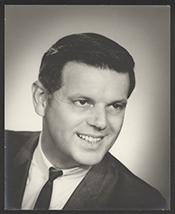
Jerome Waldie
Former U.S. Representative · California District 14 · 1965–1975 · Democratic
Jerome Waldie represented California's District 14 in the United States House of Representatives (1965–1975) for the Democratic party. The page below collects sourced biographical facts, term history, committee roles, and provenance for Waldie.
Bioguide ID: W000035
Key facts
- Full name
- Jerome Waldie
- State
- California
- District
- District 14
- Party
- Democratic
- House service
- 1965–1975
- First House term
- 1965
- Status
- Left office
- Current term ends
- —
- Born
- 1925
- Bioguide ID
- W000035
- Committee assignments
- —
- Dataset version
- 1.20260605
Biographical narrative
895 words · sourced from the Wikipedia REST extract
Jerome R. Waldie was an American politician and lawyer who served as a U.S. Representative for California's 14th congressional district from 1966 to 1975. A member of the Democratic Party, Waldie was known for his advocacy on various issues, including health care reform and his opposition to the Vietnam War. His political career was marked by significant involvement in state and federal legislative processes, as well as a notable stance during the Watergate scandal.
Early life and career
Jerome Russell Waldie was born on February 15, 1925, in Antioch, California. He attended local public schools in Antioch, where he began to develop an interest in civic engagement and leadership. Following his high school education, Waldie enlisted in the United States Army, serving during World War II from 1943 until 1946. His military service would later influence his perspectives on governance and public policy.
After returning from the war, Waldie pursued higher education at the University of California, Berkeley. He earned a Bachelor of Arts degree in political science in 1950, followed by a law degree from the university's Boalt Hall School of Law in 1953. His educational background laid the foundation for his future career in law and politics.
Waldie's political career began in the California State Assembly, where he served as a Democratic member from January 5, 1959, to January 16, 1966. During his time in the Assembly, he quickly rose through the ranks, becoming the Majority Leader in 1961. One of his notable legislative achievements was sponsoring a constitutional amendment that established a full-time state legislature in California, a significant reform aimed at improving the efficiency and effectiveness of state governance.
House tenure
In 1966, Waldie transitioned from state to federal politics when he was elected to the United States House of Representatives. He won a special election to fill the vacancy left by the passing of Representative John F. Baldwin. Waldie's tenure in Congress began on June 7, 1966, and he was subsequently re-elected four times, serving until January 3, 1975. Throughout his five terms, Waldie was known for his active participation in legislative debates and his commitment to representing the interests of his constituents in California.
During his time in Congress, Waldie became an early critic of U.S. involvement in the Vietnam War, reflecting a growing sentiment among many Americans during the 1960s and early 1970s. His opposition to the war was part of a broader movement within the Democratic Party and among various activist groups advocating for peace and a reevaluation of U.S. foreign policy.
Waldie's congressional career was also marked by his involvement in the Watergate scandal, a political crisis that ultimately led to the resignation of President Richard Nixon. Following Nixon's controversial decision to dismiss Watergate Special Prosecutor Archibald Cox in what became known as the "Saturday Night Massacre," Waldie took a decisive stand by introducing a resolution calling for the impeachment of the President. This action positioned him as one of the early advocates for accountability within the House Judiciary Committee. Waldie's support for the articles of impeachment, which he voted in favor of on July 24, 1974, contributed to the committee's recommendation for a full House vote on the matter. This series of events culminated in Nixon's resignation, marking a significant moment in American political history.
In 1974, Waldie chose not to seek re-election to Congress. Instead, he entered the race for the Democratic nomination for Governor of California, competing in the June primary election. However, he was defeated by Jerry Brown, who was then serving as the Secretary of State and would go on to win the gubernatorial election in November.
Legislative focus and committees
Throughout his congressional career, Waldie was involved in various legislative initiatives and served on several committees that shaped his policy focus. His advocacy for health care reform was a prominent aspect of his legislative agenda, reflecting a commitment to improving access to medical services for Americans. Waldie's efforts in this area were part of a larger national dialogue on health care that would continue to evolve in subsequent decades.
In addition to health care, Waldie was active in discussions surrounding civil rights and social justice, aligning with the broader Democratic platform of the time. His legislative work often intersected with issues of equality and fairness, as he sought to address the needs of diverse communities within his district and beyond.
Waldie's participation in the House Judiciary Committee during the Watergate scandal highlighted his engagement with critical constitutional issues and the importance of checks and balances in government. His actions during this period demonstrated a commitment to upholding democratic principles and ensuring accountability among elected officials.
After leaving Congress, Waldie continued to serve the public in various capacities. He was appointed as the chairman of the Federal Mine Safety and Health Review Commission from 1978 to 1979 and later became the executive director of the White House Conference on Aging in 1980. Additionally, he served on the California Agricultural Labor Relations Board from 1981 to 1985, further contributing to public service and advocacy.
Jerome R. Waldie passed away on April 3, 2009, at the age of 84, leaving behind a legacy of public service that spanned several decades and encompassed significant contributions to both state and federal governance. His career reflects a commitment to addressing pressing social issues and advocating for the rights and needs of his constituents.
Notable legislation
Sponsored and co-sponsored legislation for Jerome Waldie is pending operator curation. The biographical narrative above carries the same provenance trail until per-bill rows are written.
Sources
- [1]https://en.wikipedia.org/wiki/Jerome_WaldieWikipedia · retrieved 2026-06-05
Notable quotes
Sourced quotes for Jerome Waldie are pending operator curation. Narrative-scope provenance remains attached below.
Sources
- [1]https://en.wikipedia.org/wiki/Jerome_WaldieWikipedia · retrieved 2026-06-05
Key positions
Curated policy positions for Jerome Waldie are pending operator review. The biographical narrative above carries the same provenance trail until per-topic positions are written.
Sources
- [1]https://en.wikipedia.org/wiki/Jerome_WaldieWikipedia · retrieved 2026-06-05
Terms served
- 1965–1967U.S. House · Term 1 · Democratic
- 1967–1969U.S. House · Term 2 · Democratic
- 1969–1971U.S. House · Term 3 · Democratic
- 1971–1973U.S. House · Term 4 · Democratic
- 1973–1975U.S. House · Term 5 · Democratic
Sources & provenance
Every attributable claim above carries a per-section [N] marker that resolves to the corresponding URL below. Each entry records the upstream provider, the canonical URL, and the timestamp at which the source was retrieved by the ingest pipeline.
Key facts
- https://bioguide.congress.gov/search/bio/W000035bioguide · retrieved 2026-06-05
- https://www.govtrack.us/congress/members/411215govtrack · retrieved 2026-06-05
Biographical narrative
- https://en.wikipedia.org/wiki/Jerome_Waldiewikipedia · retrieved 2026-06-05
Find your representative
Every U.S. state elects representatives by district. Browse California’s delegation, the full former-representative roster, or explore the role and term length.
Related on The Candidate
- Preceded by Helen DouglasEarlier holder of the California District 14 House seat · Democratic.Open
- Succeeded by Norman ShumwayLater holder of the California District 14 House seat · Republican.Open
- Barclay HenleyFormer U.S. Representative · California District 1 · DemocraticOpen
- Charles ClaytonFormer U.S. Representative · California District 1 · RepublicanOpen
- Clarence LeaFormer U.S. Representative · California District 1 · DemocraticOpen
- Clement MillerFormer U.S. Representative · California District 1 · DemocraticOpen