
Historical · U.S. House · California · District 14
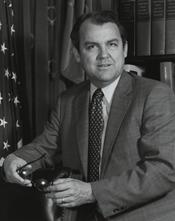
Norman Shumway
Former U.S. Representative · California District 14 · 1979–1991 · Republican
Norman Shumway represented California's District 14 in the United States House of Representatives (1979–1991) for the Republican party. The page below collects sourced biographical facts, term history, committee roles, and provenance for Shumway.
Bioguide ID: S000393
Key facts
- Full name
- Norman Shumway
- State
- California
- District
- District 14
- Party
- Republican
- House service
- 1979–1991
- First House term
- 1979
- Status
- Left office
- Current term ends
- —
- Born
- 1934
- Bioguide ID
- S000393
- Committee assignments
- —
- Dataset version
- 1.20260605
Biographical narrative
943 words · sourced from the Wikipedia REST extract
Norman D. Shumway was an American lawyer and politician who served as a Republican member of the United States House of Representatives for California's 14th congressional district from 1979 to 1991. Throughout his six terms in Congress, he was known for his expertise in international relations, particularly in matters concerning Japan, and he played a significant role in various legislative committees.
Early life and career
Born on July 28, 1934, in Phoenix, Arizona, Norman D. Shumway spent his formative years in California. He graduated from Stockton High School in 1952 and continued his education at Stockton College, where he earned an Associate of Arts degree in 1954. Shumway then pursued a Bachelor of Science degree in political science at the University of Utah, which he completed in 1960. His academic journey culminated in a Juris Doctor degree from the University of California, Hastings College of the Law in 1963.
Before entering the political arena, Shumway built a career in law. He became a partner in a law firm based in Stockton, California, and also contributed to the academic community by teaching legal courses at both San Joaquin Delta College and Humphreys College. His dedication to education was recognized with a lifetime teaching credential in California.
Shumway's political career began in earnest when he was appointed to the San Joaquin County Board of Supervisors by Governor Ronald Reagan in 1974. He was subsequently elected to the Board in both 1974 and 1978, serving as Vice Chairman in 1977 and Chairman in 1978. His experience on the Board of Supervisors provided him with a foundation in public service and governance that would later inform his work in Congress.
House tenure
Shumway's congressional career began when he won election to the United States House of Representatives on November 7, 1978. Representing California's 14th congressional district, he secured his seat by defeating opponents John J. McFall and George Darold Waldron, garnering a majority of the votes. Over the course of his six terms in office, Shumway was re-elected five times, demonstrating a consistent level of support from his constituents. He chose not to seek re-election in 1990, concluding his service in Congress on January 3, 1991.
During his time in the House, Shumway was active in various committees that shaped national policy. He served on the House Committee on Banking, Finance and Urban Affairs, where he held the position of ranking minority member of the Subcommittee on Economic Stabilization. Additionally, he was a member of the Subcommittee on International Trade, Investment and Monetary Policy. His involvement in these committees reflected his interest in economic issues and international relations.
Shumway was also a member of the House Committee on Merchant Marine and Fisheries, where he served as the ranking minority member of the Subcommittee on Oceanography. His work on this committee allowed him to engage with issues related to maritime policy and environmental concerns. Furthermore, he was part of the House Select Committee on Aging, which focused on issues affecting older Americans.
One notable aspect of Shumway's congressional service was his fluency in spoken Japanese. This unique skill set positioned him as a valuable asset in diplomatic relations, particularly with Japan. He was frequently selected to lead delegations to Japan, where he engaged with representatives from the Japanese government, industry, and educational institutions. His participation in forums and seminars addressing trade conflicts, defense matters, and the broader U.S.-Japan relationship underscored his commitment to fostering international cooperation. Shumway's expertise in Japanese culture and language also led to his appointment by President Ronald Reagan to represent the United States at the funeral of former Prime Minister Takeo Miki.
Legislative focus and committees
Throughout his congressional tenure, Shumway's legislative focus encompassed a range of issues, particularly those related to economic policy, international trade, and aging. His role on the House Committee on Banking, Finance and Urban Affairs allowed him to engage with critical economic issues affecting both domestic and international markets. As ranking minority member of the Subcommittee on Economic Stabilization, he contributed to discussions on policies aimed at stabilizing the economy during periods of uncertainty.
Shumway's involvement in international trade matters was further emphasized through his work on the Subcommittee on International Trade, Investment and Monetary Policy. His understanding of global economic dynamics was instrumental in shaping policies that promoted trade and investment opportunities for American businesses.
In addition to his economic and trade-related work, Shumway's participation in the House Select Committee on Aging highlighted his commitment to addressing the needs and concerns of older Americans. This committee focused on legislation and policies that aimed to improve the quality of life for seniors, an increasingly important demographic in the United States.
After leaving Congress, Shumway continued to engage in public service and advocacy. He was appointed by Governor Pete Wilson to the California Public Utilities Commission, where he served as a Commissioner for four years. Additionally, he held various positions on boards and committees, including an appointment by President George H. W. Bush to the board of directors of the Legal Services Corporation.
Shumway's contributions to public life extended beyond his political career. He was actively involved in various organizations, including U.S. English and Goodwill Industries of America, and served on the board of visitors at the J. Reuben Clark Law School at Brigham Young University. His commitment to education and community service was evident throughout his life.
Norman D. Shumway passed away on November 1, 2022, at the age of 88. His legacy includes a post office building in Stockton named in his honor, reflecting his impact on the community he served. His life and career exemplified a dedication to public service, education, and international diplomacy.
Notable legislation
Sponsored and co-sponsored legislation for Norman Shumway is pending operator curation. The biographical narrative above carries the same provenance trail until per-bill rows are written.
Sources
- [1]https://en.wikipedia.org/wiki/Norman_D._ShumwayWikipedia · retrieved 2026-06-05
Notable quotes
Sourced quotes for Norman Shumway are pending operator curation. Narrative-scope provenance remains attached below.
Sources
- [1]https://en.wikipedia.org/wiki/Norman_D._ShumwayWikipedia · retrieved 2026-06-05
Key positions
Curated policy positions for Norman Shumway are pending operator review. The biographical narrative above carries the same provenance trail until per-topic positions are written.
Sources
- [1]https://en.wikipedia.org/wiki/Norman_D._ShumwayWikipedia · retrieved 2026-06-05
Terms served
- 1979–1981U.S. House · Term 1 · Republican
- 1981–1983U.S. House · Term 2 · Republican
- 1983–1985U.S. House · Term 3 · Republican
- 1985–1987U.S. House · Term 4 · Republican
- 1987–1989U.S. House · Term 5 · Republican
- 1989–1991U.S. House · Term 6 · Republican
Sources & provenance
Every attributable claim above carries a per-section [N] marker that resolves to the corresponding URL below. Each entry records the upstream provider, the canonical URL, and the timestamp at which the source was retrieved by the ingest pipeline.
Key facts
- https://bioguide.congress.gov/search/bio/S000393bioguide · retrieved 2026-06-05
- https://www.govtrack.us/congress/members/409887govtrack · retrieved 2026-06-05
Biographical narrative
- https://en.wikipedia.org/wiki/Norman_D._Shumwaywikipedia · retrieved 2026-06-05
Find your representative
Every U.S. state elects representatives by district. Browse California’s delegation, the full former-representative roster, or explore the role and term length.
Related on The Candidate
- Preceded by John McFallEarlier holder of the California District 14 House seat · Democratic.Open
- Succeeded by Jackie SpeierLater holder of the California District 14 House seat · Democratic.Open
- Barclay HenleyFormer U.S. Representative · California District 1 · DemocraticOpen
- Charles ClaytonFormer U.S. Representative · California District 1 · RepublicanOpen
- Clarence LeaFormer U.S. Representative · California District 1 · DemocraticOpen
- Clement MillerFormer U.S. Representative · California District 1 · DemocraticOpen