
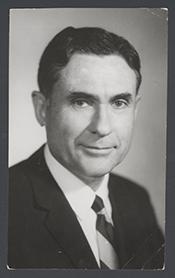
Historical · U.S. House · California · District 14
John McFall
Former U.S. Representative · California District 14 · 1957–1979 · Democratic
John McFall represented California's District 14 in the United States House of Representatives (1957–1979) for the Democratic party. The page below collects sourced biographical facts, term history, committee roles, and provenance for McFall.
Bioguide ID: M000436
Key facts
- Full name
- John McFall
- State
- California
- District
- District 14
- Party
- Democratic
- House service
- 1957–1979
- First House term
- 1957
- Status
- Left office
- Current term ends
- —
- Born
- 1918
- Bioguide ID
- M000436
- Committee assignments
- —
- Dataset version
- 1.20260605
Biographical narrative
874 words · sourced from the Wikipedia REST extract
John J. McFall was an American politician who served as a Democratic member of the United States House of Representatives for California's 14th congressional district. His tenure in Congress spanned over two decades, during which he held significant leadership positions, including that of House Majority Whip. McFall's political career was marked by his involvement in various legislative initiatives and his participation in notable political events, including a significant influence peddling scandal. He was born on February 20, 1918, and passed away on March 7, 2006.
Early life and career
John J. McFall was born in Buffalo, New York, and spent part of his childhood in Manteca, California, where his family relocated during his early years. He completed his secondary education at Manteca High School before pursuing higher education. In 1936, he graduated from Modesto Junior College, laying the groundwork for his future academic and professional endeavors. McFall continued his education at the University of California, Berkeley, where he earned his bachelor's degree in 1938. He furthered his studies at the UC Berkeley School of Law, obtaining his law degree in 1941.
Following his graduation, McFall's career as an attorney was temporarily interrupted by military service. He served in the Army Security Intelligence Corps from 1942 to 1946, where he achieved the rank of sergeant. His military service took place primarily within the United States during World War II, contributing to his understanding of national security and intelligence matters.
After returning from military service, McFall entered local politics. In 1948, he was elected as a councilman in Manteca, marking the beginning of his political career. His engagement in local governance provided him with valuable experience that would later inform his legislative work at the state and federal levels. In 1951, he was elected to the California State Assembly, where he served until his election to the United States Congress in 1956. This period in the state assembly allowed him to develop a deeper understanding of legislative processes and state-level issues.
House tenure
John McFall's congressional career began in 1957 when he was elected to represent California's 14th congressional district. Over the course of his political career, he was re-elected multiple times, serving a total of eleven terms in the House of Representatives. His tenure was characterized by a commitment to his constituents and active participation in various legislative initiatives. McFall's legislative work spanned numerous issues, reflecting the evolving political landscape of the time.
During his time in Congress, McFall held several leadership positions, including that of House Majority Whip, a role that involved significant responsibilities in managing party strategy and legislative priorities. His leadership position allowed him to influence the direction of key legislation and engage with fellow lawmakers on both sides of the aisle.
Despite his long and productive career, McFall faced challenges in the political arena. In 1978, he lost his bid for re-election to a twelfth term, which marked the end of his congressional service. He officially resigned from Congress on December 31, 1978, concluding a significant chapter in his political life. His departure from Congress was notable not only for his long tenure but also for the political context surrounding his final years in office.
Legislative focus and committees
Throughout his congressional career, John McFall was involved in a variety of legislative issues, reflecting the diverse interests and concerns of his constituents in California's 14th district. His work encompassed a range of topics, including economic development, education, and public welfare. McFall's legislative focus was informed by his background as an attorney and his experiences in local and state government.
In addition to his legislative initiatives, McFall's role as House Majority Whip placed him at the center of party strategy and coordination. This position required him to work closely with other members of Congress to ensure party unity and facilitate the passage of legislation. His leadership in this capacity was instrumental in advancing the Democratic Party's agenda during a time of significant political change in the United States.
McFall's congressional career was not without controversy. He was involved in the Koreagate scandal, an influence peddling scandal that implicated several members of Congress. This event led to a reprimand for McFall and highlighted the challenges faced by lawmakers in maintaining ethical standards in public office. The scandal had lasting implications for his reputation and the public's perception of congressional integrity.
After leaving Congress, McFall transitioned to a career as a lobbyist, focusing on railroad interests. This move allowed him to leverage his extensive experience in government and policy-making to advocate for specific industry concerns. His post-congressional career reflected his continued engagement in the political and legislative processes, albeit from a different perspective.
John J. McFall's life and career were marked by significant contributions to American politics, particularly in the context of California's legislative landscape. His experiences as a local councilman, state assembly member, and U.S. Representative provided him with a comprehensive understanding of governance and public service. McFall's legacy is characterized by his long tenure in Congress, his leadership roles, and his involvement in pivotal political events, which continue to be relevant in discussions of congressional history and ethics. He passed away on March 7, 2006, leaving behind a complex legacy shaped by decades of public service and political engagement.
Notable legislation
Sponsored and co-sponsored legislation for John McFall is pending operator curation. The biographical narrative above carries the same provenance trail until per-bill rows are written.
Sources
- [1]https://en.wikipedia.org/wiki/John_J._McFallWikipedia · retrieved 2026-06-05
Notable quotes
Sourced quotes for John McFall are pending operator curation. Narrative-scope provenance remains attached below.
Sources
- [1]https://en.wikipedia.org/wiki/John_J._McFallWikipedia · retrieved 2026-06-05
Key positions
Curated policy positions for John McFall are pending operator review. The biographical narrative above carries the same provenance trail until per-topic positions are written.
Sources
- [1]https://en.wikipedia.org/wiki/John_J._McFallWikipedia · retrieved 2026-06-05
Terms served
- 1957–1959U.S. House · Term 1 · Democratic
- 1959–1961U.S. House · Term 2 · Democratic
- 1961–1963U.S. House · Term 3 · Democratic
- 1963–1965U.S. House · Term 4 · Democratic
- 1965–1967U.S. House · Term 5 · Democratic
- 1967–1969U.S. House · Term 6 · Democratic
- 1969–1971U.S. House · Term 7 · Democratic
- 1971–1973U.S. House · Term 8 · Democratic
- 1973–1975U.S. House · Term 9 · Democratic
- 1975–1977U.S. House · Term 10 · Democratic
- 1977–1979U.S. House · Term 11 · Democratic
Sources & provenance
Every attributable claim above carries a per-section [N] marker that resolves to the corresponding URL below. Each entry records the upstream provider, the canonical URL, and the timestamp at which the source was retrieved by the ingest pipeline.
Key facts
- https://bioguide.congress.gov/search/bio/M000436bioguide · retrieved 2026-06-05
- https://www.govtrack.us/congress/members/407436govtrack · retrieved 2026-06-05
Biographical narrative
- https://en.wikipedia.org/wiki/John_J._McFallwikipedia · retrieved 2026-06-05
Find your representative
Every U.S. state elects representatives by district. Browse California’s delegation, the full former-representative roster, or explore the role and term length.
Related on The Candidate
- Preceded by Helen DouglasEarlier holder of the California District 14 House seat · Democratic.Open
- Succeeded by Norman ShumwayLater holder of the California District 14 House seat · Republican.Open
- Barclay HenleyFormer U.S. Representative · California District 1 · DemocraticOpen
- Charles ClaytonFormer U.S. Representative · California District 1 · RepublicanOpen
- Clarence LeaFormer U.S. Representative · California District 1 · DemocraticOpen
- Clement MillerFormer U.S. Representative · California District 1 · DemocraticOpen