
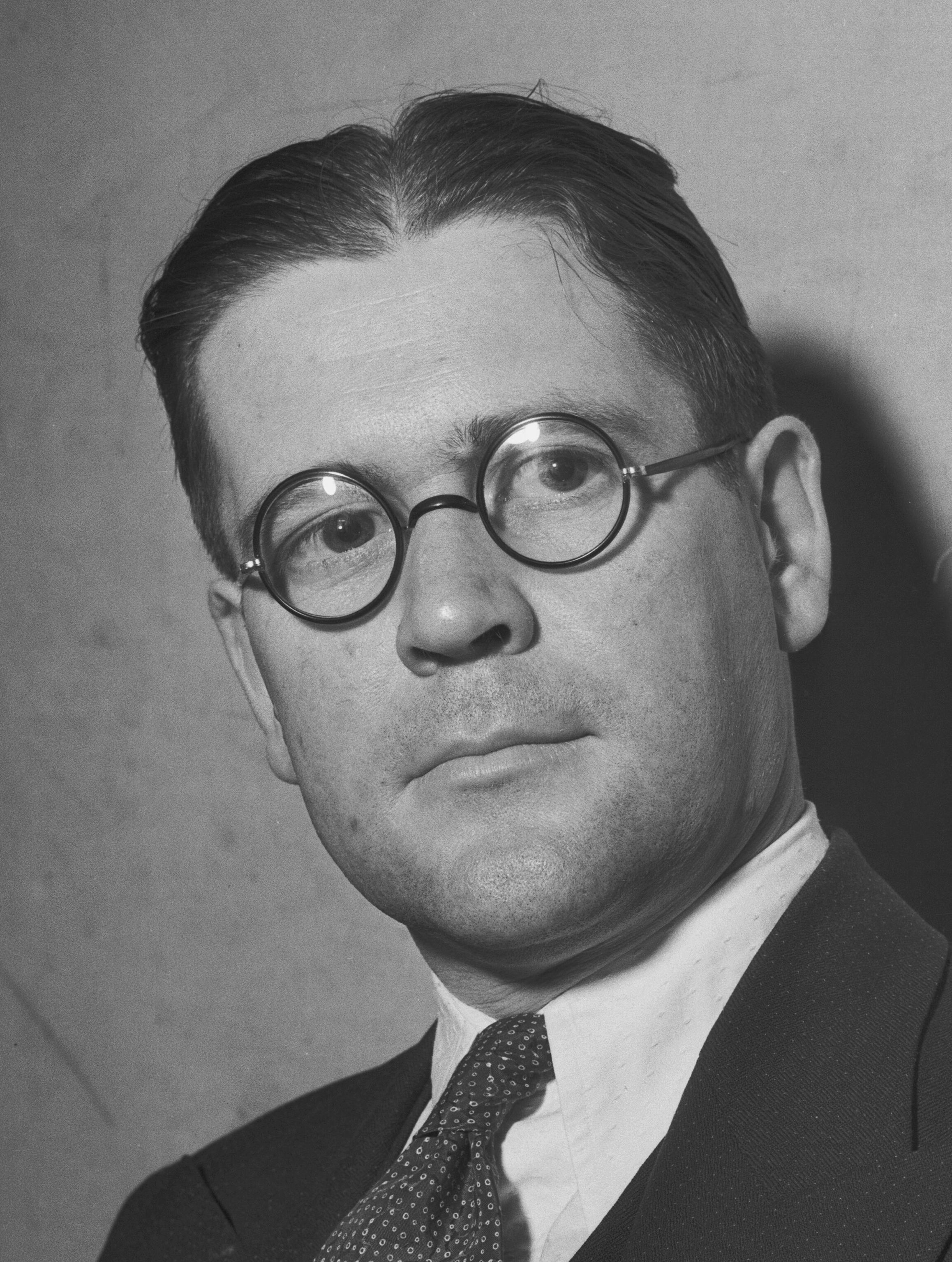
Historical · U.S. House · California · District 15
Gordon McDonough
Former U.S. Representative · California District 15 · 1945–1963 · Republican
Gordon McDonough represented California's District 15 in the United States House of Representatives (1945–1963) for the Republican party. The page below collects sourced biographical facts, term history, committee roles, and provenance for McDonough.
Bioguide ID: M000414
Key facts
- Full name
- Gordon McDonough
- State
- California
- District
- District 15
- Party
- Republican
- House service
- 1945–1963
- First House term
- 1945
- Status
- Left office
- Current term ends
- —
- Born
- 1895
- Bioguide ID
- M000414
- Committee assignments
- —
- Dataset version
- 1.20260605
Biographical narrative
915 words · sourced from the Wikipedia REST extract
Gordon McDonough was an American politician who served as a U.S. Representative for California's 15th congressional district. A member of the Republican Party, he held office for nine consecutive terms from 1945 until 1963. His political career spanned a significant period in American history, during which he participated in various legislative initiatives and contributed to the political landscape of California and the nation. Born in the late 19th century, McDonough's early life and subsequent career reflect a journey from local governance to national representation.
Early life and career
Gordon Leo McDonough was born on January 2, 1895, in Buffalo, New York. His family relocated to Emporium, Pennsylvania, in 1898, where he spent his formative years. McDonough pursued his education in the local public schools and graduated from high school in Emporium. Following his academic endeavors, he began his professional career as an industrial chemist, a role he held in Emporium from 1915 until 1918. This early experience in the industrial sector likely provided him with insights into the economic and labor issues that would later inform his political career.
In 1918, McDonough moved to Los Angeles, California, where he continued to work as an industrial chemist until 1933. His transition to California coincided with a period of significant growth and change in the region, as Los Angeles was emerging as a major urban center. During his time in Los Angeles, McDonough became increasingly involved in local governance and public service. His political career began in earnest when he was elected to the Los Angeles County Board of Supervisors in 1933. He served on the board for over a decade, holding the position of County chair for one year. This role allowed him to engage with various local issues, including public health, infrastructure, and community development, laying the groundwork for his future political endeavors.
House tenure
Gordon McDonough's congressional career began when he was elected as a Republican to the Seventy-ninth Congress, which convened on January 3, 1945. He was subsequently re-elected to eight additional terms, serving in the U.S. House of Representatives until January 3, 1963. Throughout his tenure, McDonough represented California's 15th congressional district, a position that allowed him to influence legislation and advocate for the interests of his constituents.
During the early years of McDonough's congressional service, the United States was navigating the aftermath of World War II and the beginning of the Cold War. His legislative activities during this period were shaped by the pressing issues of national security, economic recovery, and civil rights. McDonough's voting record indicates his support for significant civil rights legislation, including the Civil Rights Acts of 1957 and 1960, which aimed to address racial discrimination and protect voting rights for African Americans. He also supported the 24th Amendment to the U.S. Constitution, which prohibited poll taxes in federal elections, further demonstrating his commitment to expanding civil rights.
In 1962, California experienced a significant shift in its congressional representation, gaining eight additional House seats due to population growth. This redistricting process created new electoral dynamics, and McDonough found himself running in a newly drawn district that was perceived as unfavorable for Republican candidates. He faced a formidable opponent in Democrat Edward Roybal, a member of the Los Angeles City Council. Ultimately, McDonough was defeated in this election, marking the end of his congressional career. Roybal's victory was notable, as he became the first Latino American member of Congress from California in 80 years, highlighting the changing demographics and political landscape of the state.
Legislative focus and committees
Throughout his nine terms in the House of Representatives, Gordon McDonough was involved in various legislative initiatives and served on multiple committees. His background as an industrial chemist likely influenced his focus on issues related to industry, labor, and economic development. While specific committee assignments during his tenure are not detailed in the available information, it is common for representatives with technical backgrounds to serve on committees related to commerce, science, and technology.
McDonough's legislative focus also extended to civil rights, as evidenced by his support for key civil rights legislation. His votes in favor of the Civil Rights Acts of 1957 and 1960 reflected a commitment to addressing racial injustices and promoting equality. These acts were significant milestones in the civil rights movement, aimed at dismantling systemic discrimination and ensuring that all Americans had access to the democratic process.
In addition to his legislative work, McDonough's public persona was somewhat unique for a politician of his time. He appeared on the popular television game show "You Bet Your Life" hosted by Groucho Marx on January 4, 1950. This appearance showcased a different side of McDonough, allowing him to connect with the public in a more informal setting, which was less common for politicians of his era.
After leaving Congress, McDonough continued to be active in public life. He was married to Catherine McNeil, and together they raised seven children. His family life and personal commitments were an integral part of his identity, reflecting the values of family and community that were significant during his time.
Gordon McDonough passed away on June 25, 1968, in Bethesda, Maryland. He was interred in Holy Cross Mausoleum in Los Angeles, California. His legacy as a public servant is marked by his long tenure in the House of Representatives and his contributions to civil rights and local governance. McDonough's career reflects the complexities of American politics during a transformative period in the nation's history, characterized by social change and evolving political dynamics.
Notable legislation
Sponsored and co-sponsored legislation for Gordon McDonough is pending operator curation. The biographical narrative above carries the same provenance trail until per-bill rows are written.
Sources
- [1]https://en.wikipedia.org/wiki/Gordon_L._McDonoughWikipedia · retrieved 2026-06-05
Notable quotes
Sourced quotes for Gordon McDonough are pending operator curation. Narrative-scope provenance remains attached below.
Sources
- [1]https://en.wikipedia.org/wiki/Gordon_L._McDonoughWikipedia · retrieved 2026-06-05
Key positions
Curated policy positions for Gordon McDonough are pending operator review. The biographical narrative above carries the same provenance trail until per-topic positions are written.
Sources
- [1]https://en.wikipedia.org/wiki/Gordon_L._McDonoughWikipedia · retrieved 2026-06-05
Terms served
- 1945–1947U.S. House · Term 1 · Republican
- 1947–1949U.S. House · Term 2 · Republican
- 1949–1951U.S. House · Term 3 · Republican
- 1951–1953U.S. House · Term 4 · Republican
- 1953–1955U.S. House · Term 5 · Republican
- 1955–1957U.S. House · Term 6 · Republican
- 1957–1959U.S. House · Term 7 · Republican
- 1959–1961U.S. House · Term 8 · Republican
- 1961–1963U.S. House · Term 9 · Republican
Sources & provenance
Every attributable claim above carries a per-section [N] marker that resolves to the corresponding URL below. Each entry records the upstream provider, the canonical URL, and the timestamp at which the source was retrieved by the ingest pipeline.
Key facts
- https://bioguide.congress.gov/search/bio/M000414bioguide · retrieved 2026-06-05
- https://www.govtrack.us/congress/members/407414govtrack · retrieved 2026-06-05
Biographical narrative
- https://en.wikipedia.org/wiki/Gordon_L._McDonoughwikipedia · retrieved 2026-06-05
Find your representative
Every U.S. state elects representatives by district. Browse California’s delegation, the full former-representative roster, or explore the role and term length.
Related on The Candidate
- Preceded by John CostelloEarlier holder of the California District 15 House seat · Democratic.Open
- Succeeded by Norman MinetaLater holder of the California District 15 House seat · Democratic.Open
- Barclay HenleyFormer U.S. Representative · California District 1 · DemocraticOpen
- Charles ClaytonFormer U.S. Representative · California District 1 · RepublicanOpen
- Clarence LeaFormer U.S. Representative · California District 1 · DemocraticOpen
- Clement MillerFormer U.S. Representative · California District 1 · DemocraticOpen