
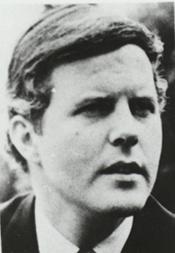
Historical · U.S. House · California · District 15
Tom Campbell
Former U.S. Representative · California District 15 · 1989–2001 · Republican
Tom Campbell represented California's District 15 in the United States House of Representatives (1989–2001) for the Republican party. The page below collects sourced biographical facts, term history, committee roles, and provenance for Campbell.
Bioguide ID: C000100
Key facts
- Full name
- Tom Campbell
- State
- California
- District
- District 15
- Party
- Republican
- House service
- 1989–2001
- First House term
- 1989
- Status
- Left office
- Current term ends
- —
- Born
- 1952
- Bioguide ID
- C000100
- Committee assignments
- —
- Dataset version
- 1.20260605
Biographical narrative
887 words · sourced from the Wikipedia REST extract
Thomas John Campbell is a former American politician, educator, and academic who served as a U.S. Representative for California's 15th congressional district. A member of the Republican Party, he held office for five terms from 1989 to 1993 and again from 1995 to 2001. Following his congressional career, Campbell transitioned into academia, where he has held various positions, including professor of law and economics at Chapman University. He is recognized for his moderate and libertarian views within the Republican Party and has been involved in several political campaigns, including unsuccessful bids for the U.S. Senate and Governor of California.
Early life and career
Thomas John Campbell was born on August 14, 1952, in Chicago, Illinois. He was raised in a family with strong ties to the Democratic Party; his father, William Joseph Campbell, served as a judge on the United States District Court for the Northern District of Illinois from 1940 until 1970, including a tenure as chief judge from 1959 to 1970. Campbell's educational journey began at St. Ignatius College Prep in Chicago, where he graduated as valedictorian in 1969. He then attended the University of Chicago, earning both bachelor's and master's degrees in 1973. His academic pursuits continued at Harvard Law School, where he graduated in 1976.
After completing his law degree, Campbell gained valuable experience by clerking for Judge George MacKinnon of the United States Court of Appeals for the District of Columbia Circuit and for Justice Byron White of the Supreme Court of the United States. His early career also included significant involvement in the Reagan administration, where he served as a White House Fellow. During this time, he worked in the offices of the White House Chief of Staff and White House Counsel. Campbell's career in public service continued as he became the youngest director of the Bureau of Competition at the Federal Trade Commission, a position he held from 1981 to 1983.
In 1980, Campbell completed a doctorate in economics under the guidance of Milton Friedman at the University of Chicago. This academic background laid the foundation for his future roles in both politics and education.
House tenure
Campbell's political career began in earnest when he ran for the United States House of Representatives in 1988, seeking to represent California's 12th congressional district, which encompassed much of Silicon Valley outside of San Jose. The incumbent, Republican Ernie Konnyu, faced allegations of sexual harassment, which contributed to Campbell's successful primary campaign. Campbell was supported by notable figures, including Ed Zschau, his predecessor, who actively encouraged his candidacy. In the general election, Campbell narrowly defeated Democratic candidate Anna Eshoo, marking the start of his congressional tenure.
During his first term in the House, Campbell was re-elected in 1990 with relative ease. However, following his second term, he decided to run for the U.S. Senate seat vacated by Alan Cranston in 1992. This decision was influenced by the redistricting process, which had made his House seat more favorable to Democratic candidates. Campbell's Senate campaign did not succeed, as he lost the Republican primary to Bruce Herschensohn.
After a brief hiatus from Congress, Campbell returned to the House in 1995, winning a special election to fill a vacancy. He continued to serve three additional terms until he retired in 2001. Throughout his congressional career, Campbell was known for his moderate stances on social issues, supporting abortion rights and gay rights, while also maintaining a fiscally conservative approach. Notably, he was the only Republican in the House to vote against the Taxpayer Relief Act of 1997.
Legislative focus and committees
During his time in the House, Campbell was involved in various legislative efforts and served on several committees. His focus included issues pertinent to his constituents in Silicon Valley, an area known for its technological innovation and economic dynamism. Campbell's background in economics and law informed his approach to legislation, emphasizing fiscal responsibility and regulatory reform.
Campbell's legislative record reflects his commitment to a blend of moderate social policies and conservative fiscal principles. He was recognized as one of the more socially liberal Republicans, which distinguished him within his party. His support for issues such as abortion rights and gay rights was indicative of his willingness to diverge from more traditional Republican positions.
After leaving Congress, Campbell continued to engage in political activities, including multiple campaigns for the U.S. Senate and a bid for Governor of California. He announced his departure from the Republican Party in 2016, citing opposition to the party's direction under then-presidential nominee Donald Trump. In 2019, he founded the Common Sense Party of California, reflecting his ongoing commitment to political engagement and reform.
Following his congressional career, Campbell returned to academia, where he has held various positions, including serving as a professor at Chapman University School of Law and as dean of the Haas School of Business at the University of California, Berkeley. His academic work includes a focus on corporate social responsibility and business ethics, further illustrating his commitment to education and public service.
Overall, Thomas John Campbell's career spans significant contributions to both politics and academia, marked by a distinctive blend of moderate Republican values and a focus on economic and legal education. His legacy includes a commitment to public service, a dedication to his constituents, and an ongoing influence in the fields of law and economics.
Notable legislation
Sponsored and co-sponsored legislation for Tom Campbell is pending operator curation. The biographical narrative above carries the same provenance trail until per-bill rows are written.
Sources
- [1]https://en.wikipedia.org/wiki/Tom_Campbell_(California_politician)Wikipedia · retrieved 2026-06-05
Notable quotes
Sourced quotes for Tom Campbell are pending operator curation. Narrative-scope provenance remains attached below.
Sources
- [1]https://en.wikipedia.org/wiki/Tom_Campbell_(California_politician)Wikipedia · retrieved 2026-06-05
Key positions
Curated policy positions for Tom Campbell are pending operator review. The biographical narrative above carries the same provenance trail until per-topic positions are written.
Sources
- [1]https://en.wikipedia.org/wiki/Tom_Campbell_(California_politician)Wikipedia · retrieved 2026-06-05
Terms served
- 1989–1991U.S. House · Term 1 · Republican
- 1991–1993U.S. House · Term 2 · Republican
- 1995–1997U.S. House · Term 3 · Republican
- 1997–1999U.S. House · Term 4 · Republican
- 1999–2001U.S. House · Term 5 · Republican
Sources & provenance
Every attributable claim above carries a per-section [N] marker that resolves to the corresponding URL below. Each entry records the upstream provider, the canonical URL, and the timestamp at which the source was retrieved by the ingest pipeline.
Key facts
- https://bioguide.congress.gov/search/bio/C000100bioguide · retrieved 2026-06-05
- https://www.govtrack.us/congress/members/400573govtrack · retrieved 2026-06-05
Biographical narrative
- https://en.wikipedia.org/wiki/Tom_Campbell_(California_politician)wikipedia · retrieved 2026-06-05
Find your representative
Every U.S. state elects representatives by district. Browse California’s delegation, the full former-representative roster, or explore the role and term length.
Related on The Candidate
- Preceded by Anthony CoelhoEarlier holder of the California District 15 House seat · Democratic.Open
- Barclay HenleyFormer U.S. Representative · California District 1 · DemocraticOpen
- Charles ClaytonFormer U.S. Representative · California District 1 · RepublicanOpen
- Clarence LeaFormer U.S. Representative · California District 1 · DemocraticOpen
- Clement MillerFormer U.S. Representative · California District 1 · DemocraticOpen
- Republican PartyFederal candidates and office holders on the Republican line.Open