
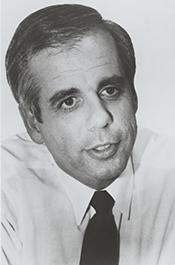
Historical · U.S. House · California · District 15
Anthony Coelho
Former U.S. Representative · California District 15 · 1979–1989 · Democratic
Anthony Coelho represented California's District 15 in the United States House of Representatives (1979–1989) for the Democratic party. The page below collects sourced biographical facts, term history, committee roles, and provenance for Coelho.
Bioguide ID: C000581
Key facts
- Full name
- Anthony Coelho
- State
- California
- District
- District 15
- Party
- Democratic
- House service
- 1979–1989
- First House term
- 1979
- Status
- Left office
- Current term ends
- —
- Born
- 1942
- Bioguide ID
- C000581
- Committee assignments
- —
- Dataset version
- 1.20260605
Biographical narrative
918 words · sourced from the Wikipedia REST extract
Anthony Lee Coelho is a former American politician who served as a U.S. Representative for California's 15th congressional district. A member of the Democratic Party, Coelho is recognized for his significant contributions to disability rights, most notably as the primary sponsor of the Americans with Disabilities Act. His tenure in the House of Representatives spanned from 1979 until his resignation in 1989, during which he held various leadership roles, including House Majority Whip and chairman of the Democratic Congressional Campaign Committee. Following his congressional career, Coelho transitioned into business and continued to advocate for disability rights, holding several prominent positions in both the private sector and public service.
Early life and career
Anthony Coelho was born on June 15, 1942, in Los Banos, California, to parents of Portuguese descent. He grew up in a rural setting, where he worked on his family's dairy farm. Coelho attended public schools in the nearby town of Dos Palos, where he developed a strong work ethic and a commitment to education. He later pursued higher education at Loyola University of Los Angeles, now known as Loyola Marymount University, where he earned a Bachelor of Arts degree in 1964. During his time at Loyola, Coelho was actively involved in student leadership, serving as the Student Body President in his senior year and joining the Phi Sigma Kappa fraternity.
At the age of 16, Coelho experienced a life-altering event when he was injured in a pickup truck accident. This incident was later linked to the onset of epilepsy, a condition that he was unaware he had for several years. The diagnosis ultimately affected his aspirations to enter the priesthood, as he was informed that his condition disqualified him from pursuing that path due to canon law. This revelation also led to the loss of his driver's license and health insurance, significantly impacting his early adulthood.
Coelho began his political career as a staff member for Representative Bernie Sisk in 1965, eventually becoming Sisk's administrative assistant by 1970. In this role, he gained valuable experience in legislative processes and policy development, particularly in agriculture. He also contributed to the establishment of C-SPAN, which enabled televised coverage of House proceedings. When Sisk retired in 1978, Coelho successfully ran for his seat in Congress.
House tenure
Coelho was elected to the 96th Congress in November 1978 and subsequently served five additional terms, concluding his tenure on June 15, 1989. Throughout his time in the House, he was a member of several committees, including the Agriculture, Interior, Veterans Affairs, and Administration Committees. However, he became particularly known for his advocacy for the rights of individuals with disabilities.
In 1980, Coelho was appointed chairman of the Democratic Congressional Campaign Committee, a significant role that positioned him as a key fundraiser for the party. His leadership in this capacity was notable, as he was one of the youngest members to hold such a position, reminiscent of Lyndon B. Johnson's early career. Coelho's fundraising efforts were instrumental in supporting Democratic candidates during his tenure.
Coelho's influence extended beyond fundraising; he played a critical role in shaping the Democratic Party's response to the Reagan administration's economic policies. He was involved in strategic efforts to hold Republicans accountable for their economic decisions, particularly those affecting social programs. His leadership culminated in his election as House Majority Whip in 1986, where he was responsible for counting votes and ensuring party discipline on key legislative issues.
Despite his successes, Coelho's career faced challenges. In 1989, he resigned from Congress amid reports regarding a loan he received from a savings and loan executive for the purchase of junk bonds. Although he was not charged with any wrongdoing, the controversy marked the end of his congressional career after six terms.
Legislative focus and committees
During his time in the House, Coelho was particularly recognized for his commitment to disability rights. He was the primary sponsor of the Americans with Disabilities Act, landmark legislation that aimed to eliminate discrimination against individuals with disabilities in various areas, including employment, public accommodations, and transportation. The act was signed into law by President George H. W. Bush and has had a lasting impact on the lives of millions of Americans with disabilities. By 1994, four years after the act's passage, significant increases in employment among individuals with severe disabilities were reported, highlighting the law's effectiveness in promoting inclusion.
Coelho's legislative work extended beyond disability rights. He served on multiple committees, allowing him to influence a range of issues, including agriculture and veterans' affairs. His expertise in agricultural policy was particularly relevant given his background and experience working in this sector prior to his congressional career.
In addition to his legislative responsibilities, Coelho was an active member of the Congressional Hispanic Caucus, contributing to discussions and initiatives that addressed the needs and concerns of Hispanic communities. His involvement in this caucus reflected his commitment to representing diverse constituencies and advocating for equitable policies.
Following his departure from Congress, Coelho remained engaged in public service and advocacy, particularly within the disability community. He took on various roles in business and public service, including serving as managing director at an investment firm and holding leadership positions in organizations focused on disability employment and advocacy.
Coelho's career illustrates a blend of public service, advocacy, and business acumen, reflecting his dedication to improving the lives of individuals with disabilities and contributing to the political landscape of the United States. His legacy continues to influence discussions around disability rights and representation in American politics.
Notable legislation
Sponsored and co-sponsored legislation for Anthony Coelho is pending operator curation. The biographical narrative above carries the same provenance trail until per-bill rows are written.
Sources
- [1]https://en.wikipedia.org/wiki/Tony_CoelhoWikipedia · retrieved 2026-06-05
Notable quotes
Sourced quotes for Anthony Coelho are pending operator curation. Narrative-scope provenance remains attached below.
Sources
- [1]https://en.wikipedia.org/wiki/Tony_CoelhoWikipedia · retrieved 2026-06-05
Key positions
Curated policy positions for Anthony Coelho are pending operator review. The biographical narrative above carries the same provenance trail until per-topic positions are written.
Sources
- [1]https://en.wikipedia.org/wiki/Tony_CoelhoWikipedia · retrieved 2026-06-05
Terms served
- 1979–1981U.S. House · Term 1 · Democratic
- 1981–1983U.S. House · Term 2 · Democratic
- 1983–1985U.S. House · Term 3 · Democratic
- 1985–1987U.S. House · Term 4 · Democratic
- 1987–1989U.S. House · Term 5 · Democratic
- 1989–1989U.S. House · Term 6 · Democratic
Sources & provenance
Every attributable claim above carries a per-section [N] marker that resolves to the corresponding URL below. Each entry records the upstream provider, the canonical URL, and the timestamp at which the source was retrieved by the ingest pipeline.
Key facts
- https://bioguide.congress.gov/search/bio/C000581bioguide · retrieved 2026-06-05
- https://www.govtrack.us/congress/members/402710govtrack · retrieved 2026-06-05
Biographical narrative
- https://en.wikipedia.org/wiki/Tony_Coelhowikipedia · retrieved 2026-06-05
Find your representative
Every U.S. state elects representatives by district. Browse California’s delegation, the full former-representative roster, or explore the role and term length.
Related on The Candidate
- Preceded by Bernice SiskEarlier holder of the California District 15 House seat · Democratic.Open
- Succeeded by Tom CampbellLater holder of the California District 15 House seat · Republican.Open
- Barclay HenleyFormer U.S. Representative · California District 1 · DemocraticOpen
- Charles ClaytonFormer U.S. Representative · California District 1 · RepublicanOpen
- Clarence LeaFormer U.S. Representative · California District 1 · DemocraticOpen
- Clement MillerFormer U.S. Representative · California District 1 · DemocraticOpen