
Historical · U.S. House · California · District 2
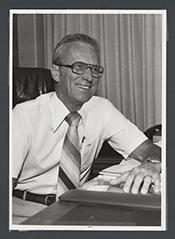
Eugene Chappie
Former U.S. Representative · California District 2 · 1981–1987 · Republican
Eugene Chappie represented California's District 2 in the United States House of Representatives (1981–1987) for the Republican party. The page below collects sourced biographical facts, term history, committee roles, and provenance for Chappie.
Bioguide ID: C000322
Key facts
- Full name
- Eugene Chappie
- State
- California
- District
- District 2
- Party
- Republican
- House service
- 1981–1987
- First House term
- 1981
- Status
- Left office
- Current term ends
- —
- Born
- 1920
- Bioguide ID
- C000322
- Committee assignments
- —
- Dataset version
- 1.20260605
Biographical narrative
1,029 words · sourced from the Wikipedia REST extract
Eugene A. Chappie was a notable figure in American politics, serving as a U.S. Representative for California's 2nd congressional district from 1981 until 1987. A member of the Republican Party, Chappie's political career spanned several decades, during which he made significant contributions to both local and national governance. His tenure in Congress was marked by a commitment to his constituents and a focus on various legislative issues relevant to his district and the broader political landscape.
Early life and career
Eugene Albert Chappie was born on March 28, 1920, in Sacramento, California. Growing up in the state capital, he completed his high school education before embarking on a path that would lead him to serve his country in the military. Chappie's early life was characterized by a sense of duty and commitment, values that would later inform his political career.
Following high school, Chappie joined the United States Army, where he began his military service during World War II. His service took him to the Pacific Theater, where he demonstrated leadership and dedication, ultimately achieving the rank of captain. This experience not only shaped his character but also instilled in him a strong sense of patriotism and public service. After the war, he returned to California and transitioned into agribusiness, a sector that was significant to the state's economy and his local community.
Chappie's military career did not end with World War II; he served again during the Korean War, further solidifying his commitment to his country. His experiences in the military and agribusiness provided him with a unique perspective on the needs and challenges facing his community, which would later influence his approach to governance.
Transitioning from his professional life into politics, Chappie began his public service career as an El Dorado County Supervisor in 1950. This role allowed him to engage directly with local governance and community issues, laying the groundwork for his future political ambitions. His tenure as a county supervisor lasted for over a decade, during which he gained valuable experience in public administration and developed a reputation as a dedicated public servant.
In 1964, Chappie was elected to the California State Assembly as a Republican. This position marked a significant step in his political career, allowing him to influence state legislation and advocate for the interests of his constituents on a larger scale. His time in the State Assembly further honed his legislative skills and deepened his understanding of the political process.
House tenure
Chappie's journey to the U.S. House of Representatives began in 1980 when he decided to run for Congress. His campaign was notable for its focus on the needs of the 2nd congressional district, which encompasses a vast area of northern California. In a competitive election, Chappie emerged victorious, defeating the incumbent Democratic representative, Harold "Bizz" Johnson, by a margin of nearly 14 points. This victory was historically significant, as it marked the first time since 1942 that a Republican had represented this district, reflecting a shift in the political landscape of the region.
Chappie was sworn into office in 1981, beginning a three-term tenure in the House of Representatives that would last until January 3, 1987. During his time in Congress, he was involved in various legislative initiatives and worked to address the concerns of his constituents. His election was bolstered by the broader political climate at the time, including the popularity of then-President Ronald Reagan, who also carried the district in the same election.
Throughout his congressional career, Chappie focused on a range of issues pertinent to his district, including economic development, agriculture, and veterans' affairs. His background in agribusiness and military service provided him with insights that he leveraged to advocate for policies that would benefit his constituents. Chappie's ability to connect with voters and understand their needs contributed to his effectiveness as a legislator.
Despite the challenges that come with serving in Congress, Chappie maintained a commitment to his constituents and worked diligently to represent their interests. His tenure was characterized by a willingness to engage with the community and address the pressing issues of the time. However, as his time in office progressed, he faced increasing health challenges, which ultimately influenced his decision to retire.
Legislative focus and committees
During his time in the House of Representatives, Eugene A. Chappie was involved in various legislative efforts that reflected his priorities and the needs of his constituents. His background in agribusiness made him particularly attuned to issues affecting the agricultural sector, which is a vital component of California's economy. Chappie worked to promote policies that supported farmers and agricultural businesses, advocating for measures that would enhance the viability of this important industry.
In addition to agriculture, Chappie was also engaged in issues related to veterans' affairs. Given his own military service, he had a personal understanding of the challenges faced by veterans and their families. He sought to ensure that veterans received the support and resources they needed, advocating for programs that would improve their quality of life and access to services.
Chappie's legislative focus extended beyond these areas, as he also addressed broader economic issues affecting his district. He recognized the importance of economic development and job creation, working to promote initiatives that would stimulate growth and provide opportunities for residents. His efforts in this regard were aimed at fostering a robust local economy that could sustain the needs of his constituents.
Throughout his congressional career, Chappie served on various committees, which allowed him to play a role in shaping legislation on a national level. His committee assignments provided him with a platform to influence policy discussions and advocate for the interests of his district. He utilized his experience and knowledge to contribute to the legislative process, working collaboratively with colleagues from both parties to achieve common goals.
Chappie's time in Congress came to an end in January 1987 when he retired due to declining health. His departure marked the conclusion of a significant chapter in his life, during which he had made notable contributions to both local and national governance. Following his retirement, Chappie passed away on May 31, 1992, leaving behind a legacy of public service and dedication to his constituents.
Notable legislation
Sponsored and co-sponsored legislation for Eugene Chappie is pending operator curation. The biographical narrative above carries the same provenance trail until per-bill rows are written.
Sources
- [1]https://en.wikipedia.org/wiki/Eugene_A._ChappieWikipedia · retrieved 2026-06-05
Notable quotes
Sourced quotes for Eugene Chappie are pending operator curation. Narrative-scope provenance remains attached below.
Sources
- [1]https://en.wikipedia.org/wiki/Eugene_A._ChappieWikipedia · retrieved 2026-06-05
Key positions
Curated policy positions for Eugene Chappie are pending operator review. The biographical narrative above carries the same provenance trail until per-topic positions are written.
Sources
- [1]https://en.wikipedia.org/wiki/Eugene_A._ChappieWikipedia · retrieved 2026-06-05
Terms served
- 1981–1983U.S. House · Term 1 · Republican
- 1983–1985U.S. House · Term 2 · Republican
- 1985–1987U.S. House · Term 3 · Republican
Sources & provenance
Every attributable claim above carries a per-section [N] marker that resolves to the corresponding URL below. Each entry records the upstream provider, the canonical URL, and the timestamp at which the source was retrieved by the ingest pipeline.
Key facts
- https://bioguide.congress.gov/search/bio/C000322bioguide · retrieved 2026-06-05
- https://www.govtrack.us/congress/members/402464govtrack · retrieved 2026-06-05
Biographical narrative
- https://en.wikipedia.org/wiki/Eugene_A._Chappiewikipedia · retrieved 2026-06-05
Find your representative
Every U.S. state elects representatives by district. Browse California’s delegation, the full former-representative roster, or explore the role and term length.
Related on The Candidate
- Preceded by Harry EnglebrightEarlier holder of the California District 2 House seat · Republican.Open
- Succeeded by Wally HergerLater holder of the California District 2 House seat · Republican.Open
- Barclay HenleyFormer U.S. Representative · California District 1 · DemocraticOpen
- Charles ClaytonFormer U.S. Representative · California District 1 · RepublicanOpen
- Clarence LeaFormer U.S. Representative · California District 1 · DemocraticOpen
- Clement MillerFormer U.S. Representative · California District 1 · DemocraticOpen