
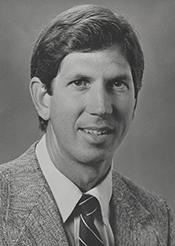
Historical · U.S. House · California · District 20
Cal Dooley
Former U.S. Representative · California District 20 · 1991–2005 · Democratic
Cal Dooley represented California's District 20 in the United States House of Representatives (1991–2005) for the Democratic party. The page below collects sourced biographical facts, term history, committee roles, and provenance for Dooley.
Bioguide ID: D000424
Key facts
- Full name
- Cal Dooley
- State
- California
- District
- District 20
- Party
- Democratic
- House service
- 1991–2005
- First House term
- 1991
- Status
- Left office
- Current term ends
- —
- Born
- 1954
- Bioguide ID
- D000424
- Committee assignments
- —
- Dataset version
- 1.20260605
Biographical narrative
1,055 words · sourced from the Wikipedia REST extract
Calvin M. Dooley is a former American politician who served as a member of the United States House of Representatives from 1991 to 2005. A member of the Democratic Party, he represented California's 17th and later the 20th congressional districts during his tenure. Dooley's political career was marked by his moderate voting record, which reflected the centrist tendencies of many Democrats from California's Central Valley. After leaving Congress, he transitioned into leadership roles within various trade associations, including the Food Products Association and the American Chemistry Council.
Early life and career
Calvin M. Dooley was born on January 11, 1954, in Visalia, California. He spent his formative years on a family farm located a few miles east of Hanford, California. This agricultural background played a significant role in shaping his understanding of the issues that would later influence his political career. Dooley graduated from Hanford Union High School in 1972, laying the groundwork for his future educational pursuits.
Following high school, Dooley enrolled at the University of California, Davis, where he earned a bachelor's degree in agricultural economics in 1977. This degree provided him with a solid foundation in the economic aspects of agriculture, which would become a critical area of focus during his time in public office. After several years in the workforce, he furthered his education by obtaining a master's degree in management from Stanford University in 1987. This advanced degree equipped him with the skills necessary for leadership and management, which would later be beneficial in his political and professional endeavors.
Before entering politics, Dooley worked as a rancher, gaining firsthand experience in the agricultural sector. His connection to the farming community would later inform his legislative priorities and policy positions. In addition to his work as a rancher, he served as an administrative assistant to California State Senator Rose Ann Vuich from 1987 to 1990. This role provided him with valuable insights into the workings of state government and the legislative process, preparing him for his future role in the U.S. Congress.
House tenure
Calvin Dooley's political career in the U.S. House of Representatives began when he won the Democratic primary for California's 17th congressional district in 1990. He faced a significant challenge in the general election against six-term Republican incumbent Chip Pashayan. At the time, Pashayan had a strong electoral history, having won reelection with a substantial majority in his previous campaign. However, Pashayan's involvement in the House banking scandal created vulnerabilities that Dooley was able to exploit. In a competitive race, Dooley emerged victorious, defeating Pashayan by a margin of just over nine percentage points.
In 1992, following a redistricting process, Dooley's district was renumbered as the 20th District, which was characterized as a Latino-majority district. This demographic shift allowed Dooley to secure reelection easily that year and in subsequent elections. Over the course of his congressional career, he was reelected five additional times, demonstrating a consistent level of support from his constituents. His tenure was marked by only one significant electoral challenge, during which Republican candidate Rich Rodriguez managed to limit Dooley's share of the vote to 53 percent. This contest highlighted the competitive nature of the political landscape in the Central Valley.
Dooley's political alignment was often described as that of a "New Democrat," reflecting a moderate stance that resonated with many voters in his district. His voting record indicated a pragmatic approach to governance, which was typical for Democrats representing the Central Valley. Throughout his time in Congress, he focused on a range of issues pertinent to his constituents, including agricultural policy, economic development, and environmental concerns.
In 2004, Dooley announced his decision to retire from Congress after serving seven terms. He endorsed his chief of staff, Lisa Quigley, as his preferred successor. However, this endorsement was met with challenges, as many members of the California Democratic establishment rallied behind Jim Costa, a former state legislator from the Fresno area. The resulting primary battle was contentious, ultimately leading to Costa's victory and effectively securing his position for the general election in November.
One notable aspect of Dooley's congressional career was his vote on the authorization of military action in Iraq. On October 10, 2002, he was among the 81 House Democrats who supported the decision to authorize the invasion. In later years, Dooley expressed regret regarding this vote, reflecting a shift in his perspective on the issue.
Legislative focus and committees
During his time in the U.S. House of Representatives, Calvin Dooley was involved in various legislative initiatives and served on multiple committees that aligned with his interests and the needs of his constituents. His background in agricultural economics and experience as a rancher informed his focus on agricultural policy, which was a critical component of the economy in California's Central Valley. He worked on legislation that aimed to support farmers, promote sustainable agricultural practices, and address the challenges facing rural communities.
Dooley's moderate stance allowed him to collaborate with colleagues across the aisle, fostering bipartisan support for various initiatives. His legislative efforts often centered on economic development, job creation, and environmental protection, reflecting the diverse interests of his constituents. He recognized the importance of balancing agricultural needs with environmental sustainability, a theme that resonated with many voters in his district.
In addition to his work on agricultural issues, Dooley was involved in broader economic and trade matters. His experience in the food industry and understanding of economic dynamics positioned him as a knowledgeable advocate for policies that supported both local businesses and the agricultural sector. He sought to promote trade agreements that would benefit American farmers and manufacturers, recognizing the interconnectedness of the global economy.
Throughout his congressional career, Dooley's participation in various committees allowed him to influence a wide range of policy areas. His committee assignments provided him with a platform to advocate for the interests of his constituents while also engaging in national discussions on pressing issues. His ability to navigate complex legislative processes and build coalitions contributed to his effectiveness as a representative.
After leaving Congress in 2005, Dooley transitioned to a successful career in the private sector, taking on leadership roles within trade associations that represented food manufacturers and chemical companies. His extensive experience in both public service and the private sector has allowed him to maintain a significant presence in discussions related to agricultural and economic policy.
Notable legislation
Sponsored and co-sponsored legislation for Cal Dooley is pending operator curation. The biographical narrative above carries the same provenance trail until per-bill rows are written.
Sources
- [1]https://en.wikipedia.org/wiki/Cal_DooleyWikipedia · retrieved 2026-06-05
Notable quotes
Sourced quotes for Cal Dooley are pending operator curation. Narrative-scope provenance remains attached below.
Sources
- [1]https://en.wikipedia.org/wiki/Cal_DooleyWikipedia · retrieved 2026-06-05
Key positions
Curated policy positions for Cal Dooley are pending operator review. The biographical narrative above carries the same provenance trail until per-topic positions are written.
Sources
- [1]https://en.wikipedia.org/wiki/Cal_DooleyWikipedia · retrieved 2026-06-05
Terms served
- 1991–1993U.S. House · Term 1 · Democratic
- 1993–1995U.S. House · Term 2 · Democratic
- 1995–1997U.S. House · Term 3 · Democratic
- 1997–1999U.S. House · Term 4 · Democratic
- 1999–2001U.S. House · Term 5 · Democratic
- 2001–2003U.S. House · Term 6 · Democratic
- 2003–2005U.S. House · Term 7 · Democratic
Sources & provenance
Every attributable claim above carries a per-section [N] marker that resolves to the corresponding URL below. Each entry records the upstream provider, the canonical URL, and the timestamp at which the source was retrieved by the ingest pipeline.
Key facts
- https://bioguide.congress.gov/search/bio/D000424bioguide · retrieved 2026-06-05
- http://dooley.house.govhouse.gov · retrieved 2026-06-05
Biographical narrative
- https://en.wikipedia.org/wiki/Cal_Dooleywikipedia · retrieved 2026-06-05
Find your representative
Every U.S. state elects representatives by district. Browse California’s delegation, the full former-representative roster, or explore the role and term length.
Related on The Candidate
- Preceded by Barry Goldwater Jr.Earlier holder of the California District 20 House seat · Republican.Open
- Succeeded by Kevin McCarthyLater holder of the California District 20 House seat · Republican.Open
- Barclay HenleyFormer U.S. Representative · California District 1 · DemocraticOpen
- Charles ClaytonFormer U.S. Representative · California District 1 · RepublicanOpen
- Clarence LeaFormer U.S. Representative · California District 1 · DemocraticOpen
- Clement MillerFormer U.S. Representative · California District 1 · DemocraticOpen