
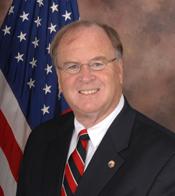
Historical · U.S. House · California · District 20
Sam Farr
Former U.S. Representative · California District 20 · 1993–2017 · Democratic
Sam Farr represented California's District 20 in the United States House of Representatives (1993–2017) for the Democratic party. The page below collects sourced biographical facts, term history, committee roles, and provenance for Farr.
Bioguide ID: F000030
Key facts
- Full name
- Sam Farr
- State
- California
- District
- District 20
- Party
- Democratic
- House service
- 1993–2017
- First House term
- 1993
- Status
- Left office
- Current term ends
- —
- Born
- 1941
- Bioguide ID
- F000030
- Committee assignments
- —
- Dataset version
- 1.20260605
Biographical narrative
940 words · sourced from the Wikipedia REST extract
Samuel Sharon Farr is a former U.S. Representative who served California's 17th and 20th congressional districts from 1993 until 2017. A member of the Democratic Party, Farr was elected to Congress in a special election to fill the vacancy left by Leon Panetta, who resigned to join the Clinton administration. Over his twelve terms in office, Farr became known for his focus on environmental issues, particularly ocean conservation, as well as his advocacy for organic agriculture and tourism. He retired from Congress after the 2016 elections.
Early life and career
Farr was born on July 4, 1941, in San Francisco, California, to Janet Emerson Haskins and Frederick Sharon "Fred" Farr. He spent much of his childhood in Carmel, California, where he developed a connection to the region that would later influence his political career. His father served as a California state senator from 1955 to 1967, which likely provided Farr with early exposure to the political landscape.
Farr pursued higher education at several institutions, including Willamette University, Santa Clara University, and the Monterey Institute of International Studies. During his time at Willamette University, he became a member of the Sigma Chi fraternity, an organization that fosters leadership and community service among its members.
In 1964, Farr joined the Peace Corps, where he served as a volunteer in Colombia for two years. His work involved teaching community development skills in a poor neighborhood near Medellín. This experience had a profound impact on him, particularly following personal tragedies during his service, including the death of his mother from cancer and the subsequent death of his sister in a riding accident. Despite these challenges, Farr maintained a connection to Colombia, returning for personal and official visits, including a notable speech before the Colombian Congress in 2007, during which he was awarded the Orden del Congreso de Colombia.
Farr's political career began in the California State Assembly, where he worked as a staffer on budget issues for a decade. He was elected to the Monterey County Board of Supervisors in 1975, marking the beginning of his elected public service. In 1980, he won a seat in the California State Assembly, where he became known for his advocacy of the organic farming industry and for drafting one of the strictest oil-spill liability laws in the nation. He served in the Assembly until his election to the U.S. House of Representatives in 1993.
House tenure
Farr was elected to the U.S. House of Representatives in a special election held in 1993, succeeding Leon Panetta, who had resigned to become the Director of the Office of Management and Budget under President Bill Clinton. In this election, Farr defeated Republican candidate Bill McCampbell with a narrow margin, receiving 52 percent of the vote. He subsequently won his first full term in the 1994 election, again defeating McCampbell with the same percentage of votes. These elections were significant as they marked the closest contests in the district since Panetta had first claimed the seat for the Democrats in 1977, with McCampbell being the only Republican to surpass 40 percent of the vote in the district during that period.
Following these initial contests, Farr's subsequent elections saw him face little substantive opposition. He was re-elected ten more times, consistently receiving a significant majority of the vote, never dropping below 64 percent. This trend reflected the district's strong Democratic leanings and Farr's established presence in the community.
Farr's tenure in the House lasted until January 3, 2017, when he retired following the 2016 elections. His long service in Congress is characterized by a commitment to various issues, particularly those impacting his constituents in California.
Legislative focus and committees
Throughout his congressional career, Farr was known for his focus on environmental issues, particularly ocean conservation. He introduced the "Oceans Conservation, Education, and National Strategy for the 21st Century Act," aimed at consolidating the national management of oceans and enhancing the role of the National Oceanic and Atmospheric Administration. This legislation sought to create a system of regional governance for ocean management and establish an Oceans and Great Lakes Conservation Trust Fund.
Farr also sponsored the "Reconstruction and Stabilization Civilian Management Act of 2008," which aimed to enhance the State Department's capacity to deploy civilian expertise in response to international crises. Although the bill was approved by the House, it ultimately stalled in the Senate.
In addition to his legislative initiatives, Farr was active in several congressional caucuses. He co-chaired the House Oceans Caucus, which sponsored events such as Capitol Hill Oceans Week, drawing experts and stakeholders from across the country to discuss ocean-related issues. He also co-chaired the Congressional Travel and Tourism Caucus, where he worked to promote the travel industry and its significance to the U.S. economy.
Farr's committee assignments included the Committee on Appropriations, where he served as the ranking member of the Subcommittee on Agriculture, Rural Development, Food and Drug Administration, and Related Agencies. He was also a member of the Subcommittee on Military Construction, Veterans Affairs, and Related Agencies. His leadership extended to the House Democracy Assistance Commission, which focused on supporting emerging democracies worldwide.
Farr's political positions included opposition to the USA PATRIOT Act and a pro-choice stance on reproductive rights. He was recognized for his progressive voting record, receiving a high rating from various progressive organizations.
Overall, Farr's career in the U.S. House of Representatives was marked by a commitment to environmental issues, community engagement, and a focus on enhancing the quality of life for his constituents in California. His retirement in 2017 concluded a notable twelve-term tenure in Congress, during which he made significant contributions to both local and national policy discussions.
Notable legislation
Sponsored and co-sponsored legislation for Sam Farr is pending operator curation. The biographical narrative above carries the same provenance trail until per-bill rows are written.
Sources
- [1]https://en.wikipedia.org/wiki/Sam_FarrWikipedia · retrieved 2026-06-05
Notable quotes
Sourced quotes for Sam Farr are pending operator curation. Narrative-scope provenance remains attached below.
Sources
- [1]https://en.wikipedia.org/wiki/Sam_FarrWikipedia · retrieved 2026-06-05
Key positions
Curated policy positions for Sam Farr are pending operator review. The biographical narrative above carries the same provenance trail until per-topic positions are written.
Sources
- [1]https://en.wikipedia.org/wiki/Sam_FarrWikipedia · retrieved 2026-06-05
Terms served
- 1993–1995U.S. House · Term 1 · Democratic
- 1995–1997U.S. House · Term 2 · Democratic
- 1997–1999U.S. House · Term 3 · Democratic
- 1999–2001U.S. House · Term 4 · Democratic
- 2001–2003U.S. House · Term 5 · Democratic
- 2003–2005U.S. House · Term 6 · Democratic
- 2005–2007U.S. House · Term 7 · Democratic
- 2007–2009U.S. House · Term 8 · Democratic
- 2009–2011U.S. House · Term 9 · Democratic
- 2011–2013U.S. House · Term 10 · Democratic
- 2013–2015U.S. House · Term 11 · Democratic
- 2015–2017U.S. House · Term 12 · Democratic
Sources & provenance
Every attributable claim above carries a per-section [N] marker that resolves to the corresponding URL below. Each entry records the upstream provider, the canonical URL, and the timestamp at which the source was retrieved by the ingest pipeline.
Key facts
- https://bioguide.congress.gov/search/bio/F000030bioguide · retrieved 2026-06-05
- http://farr.house.govhouse.gov · retrieved 2026-06-05
Biographical narrative
- https://en.wikipedia.org/wiki/Sam_Farrwikipedia · retrieved 2026-06-05
Find your representative
Every U.S. state elects representatives by district. Browse California’s delegation, the full former-representative roster, or explore the role and term length.
Related on The Candidate
- Preceded by Barry Goldwater Jr.Earlier holder of the California District 20 House seat · Republican.Open
- Barclay HenleyFormer U.S. Representative · California District 1 · DemocraticOpen
- Charles ClaytonFormer U.S. Representative · California District 1 · RepublicanOpen
- Clarence LeaFormer U.S. Representative · California District 1 · DemocraticOpen
- Clement MillerFormer U.S. Representative · California District 1 · DemocraticOpen
- Democratic PartyFederal candidates and office holders on the Democratic line.Open