
Historical · U.S. House · California · District 21
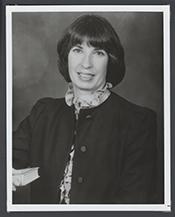
Bobbi Fiedler
Former U.S. Representative · California District 21 · 1981–1987 · Republican
Bobbi Fiedler represented California's District 21 in the United States House of Representatives (1981–1987) for the Republican party. The page below collects sourced biographical facts, term history, committee roles, and provenance for Fiedler.
Bioguide ID: F000102
Key facts
- Full name
- Bobbi Fiedler
- State
- California
- District
- District 21
- Party
- Republican
- House service
- 1981–1987
- First House term
- 1981
- Status
- Left office
- Current term ends
- —
- Born
- 1937
- Bioguide ID
- F000102
- Committee assignments
- —
- Dataset version
- 1.20260605
Biographical narrative
909 words · sourced from the Wikipedia REST extract
Roberta Frances "Bobbi" Fiedler was an American politician who served as a Republican U.S. Representative for California's 21st congressional district from 1981 to 1987. Known for her grassroots activism, Fiedler gained prominence in local politics before making her way to Congress, where she focused on issues such as education and civil rights. Her tenure in the House was marked by a commitment to her constituents and a willingness to break from party lines on certain social issues.
Early life and career
Bobbi Fiedler was born on April 22, 1937, in Santa Monica, California, to Jack and Sylvia Horowitz. She grew up in a Jewish household as the second of two sisters. Fiedler's father was a former champion boxer who owned a construction business, which likely influenced her understanding of the working-class community. She attended local public schools and pursued further education at Santa Monica Technical School from 1955 to 1957, followed by Santa Monica City College from 1955 to 1959.
Fiedler's political career began at the grassroots level, where she became involved in local educational issues. In 1976, she organized a group called Bustop to protest against court-ordered desegregation busing in Los Angeles. This organization quickly grew to include approximately 30,000 members, reflecting widespread community concern over the impact of busing on local families. Her activism in this area led to her election to the Los Angeles Board of Education in 1977, where she served alongside fellow board member Roberta Weintraub. Both women were vocal opponents of desegregation busing, which they believed disrupted the educational experience for children in their district.
House tenure
Fiedler's entry into the U.S. House of Representatives came after a competitive campaign in 1980 against incumbent Democrat James C. Corman. Corman had served in Congress for two decades and was the chairman of the Democratic Congressional Campaign Committee, making him a formidable opponent. The election took place in a district that was predominantly Democratic, with a significant portion of the electorate supporting Corman's views on education and civil rights.
The central issue of the campaign was desegregation busing, which had been mandated by the California Supreme Court in 1977. Fiedler's campaign capitalized on local discontent regarding the busing policies that required some children to travel long distances to attend school. The National Republican Congressional Committee recognized the potential to challenge Corman, not necessarily to defeat him outright but to create a competitive race that could embarrass the incumbent. Fiedler's campaign received substantial financial support from the Republican Party, which helped to amplify her message.
The election was closely contested, with polls indicating a dead heat leading up to election day. Ultimately, Fiedler won by a narrow margin, securing her first term in Congress with a victory by just 750 votes out of approximately 200,000 cast. This victory was significant not only for Fiedler but also for the Republican Party, as it marked a shift in the political landscape of the district.
Following her initial success, Fiedler faced minimal opposition in subsequent elections. After the departure of Barry Goldwater Jr. from the congressional race, she easily won re-election in 1982, defeating her Democratic opponent by a substantial margin. Her popularity continued in the 1984 election, where she again secured a decisive victory, further solidifying her position within the Republican Party and her congressional district.
Legislative focus and committees
During her time in Congress, Fiedler was known for her independent stance on various issues, often diverging from the mainstream Republican platform. She identified as an independent Republican, particularly in her support for abortion rights and the Equal Rights Amendment, which distinguished her from many of her colleagues. This willingness to break from party lines demonstrated her commitment to her constituents' needs and her belief in certain social issues.
Fiedler's legislative focus included education, civil rights, and local governance. Her background in education and her experience on the Los Angeles Board of Education informed her approach to educational policy in Congress. She was involved in discussions and initiatives aimed at improving educational opportunities and addressing the challenges faced by schools in her district.
In 1986, Fiedler chose not to seek re-election to the House, opting instead to run for the Republican nomination for the U.S. Senate seat held by three-term Democratic incumbent Alan Cranston. Her campaign, however, faced challenges, including allegations of political corruption stemming from an undercover investigation. Although the charges were dismissed before going to trial, the controversy impacted her campaign, and she received a small percentage of the vote in the primary.
After her congressional career, Fiedler remained active in political circles, contributing to the campaigns of prominent Republican figures, including George H. W. Bush and California Governor Pete Wilson. She also played a role in mentoring and supporting Republican women candidates at various levels of government. In 1993, she was appointed by Los Angeles Mayor Richard Riordan to the Community Redevelopment Agency and later served on the California Lottery Commission, completing one term on each.
Fiedler's involvement in politics extended to advocacy for the San Fernando Valley's secession movement, demonstrating her continued commitment to local issues and governance. She was married three times and had two children, with her personal life reflecting a blend of family and political engagement.
Bobbi Fiedler passed away on March 3, 2019, in Northridge, Los Angeles. Her legacy includes her role as one of the pioneering Jewish women in Congress from California and her contributions to educational policy and local governance during her time in office.
Notable legislation
Sponsored and co-sponsored legislation for Bobbi Fiedler is pending operator curation. The biographical narrative above carries the same provenance trail until per-bill rows are written.
Sources
- [1]https://en.wikipedia.org/wiki/Bobbi_FiedlerWikipedia · retrieved 2026-06-05
Notable quotes
Sourced quotes for Bobbi Fiedler are pending operator curation. Narrative-scope provenance remains attached below.
Sources
- [1]https://en.wikipedia.org/wiki/Bobbi_FiedlerWikipedia · retrieved 2026-06-05
Key positions
Curated policy positions for Bobbi Fiedler are pending operator review. The biographical narrative above carries the same provenance trail until per-topic positions are written.
Sources
- [1]https://en.wikipedia.org/wiki/Bobbi_FiedlerWikipedia · retrieved 2026-06-05
Terms served
- 1981–1983U.S. House · Term 1 · Republican
- 1983–1985U.S. House · Term 2 · Republican
- 1985–1987U.S. House · Term 3 · Republican
Sources & provenance
Every attributable claim above carries a per-section [N] marker that resolves to the corresponding URL below. Each entry records the upstream provider, the canonical URL, and the timestamp at which the source was retrieved by the ingest pipeline.
Key facts
- https://bioguide.congress.gov/search/bio/F000102bioguide · retrieved 2026-06-05
- https://www.govtrack.us/congress/members/404059govtrack · retrieved 2026-06-05
Biographical narrative
- https://en.wikipedia.org/wiki/Bobbi_Fiedlerwikipedia · retrieved 2026-06-05
Find your representative
Every U.S. state elects representatives by district. Browse California’s delegation, the full former-representative roster, or explore the role and term length.
Related on The Candidate
- Preceded by James CormanEarlier holder of the California District 21 House seat · Democratic.Open
- Succeeded by Tj CoxLater holder of the California District 21 House seat · Democratic.Open
- Barclay HenleyFormer U.S. Representative · California District 1 · DemocraticOpen
- Charles ClaytonFormer U.S. Representative · California District 1 · RepublicanOpen
- Clarence LeaFormer U.S. Representative · California District 1 · DemocraticOpen
- Clement MillerFormer U.S. Representative · California District 1 · DemocraticOpen