
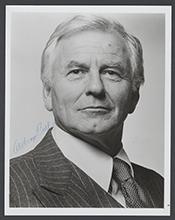
Historical · U.S. House · California · District 27
Alphonzo Bell
Former U.S. Representative · California District 27 · 1961–1977 · Republican
Alphonzo Bell represented California's District 27 in the United States House of Representatives (1961–1977) for the Republican party. The page below collects sourced biographical facts, term history, committee roles, and provenance for Bell.
Bioguide ID: B000330
Key facts
- Full name
- Alphonzo Bell
- State
- California
- District
- District 27
- Party
- Republican
- House service
- 1961–1977
- First House term
- 1961
- Status
- Left office
- Current term ends
- —
- Born
- 1914
- Bioguide ID
- B000330
- Committee assignments
- —
- Dataset version
- 1.20260605
Biographical narrative
933 words · sourced from the Wikipedia REST extract
Alphonzo Bell was a Republican politician who served as a United States Representative for California's 27th congressional district from 1961 until 1977. Known for his representation of the Westside region of Los Angeles, which included Malibu and parts of Santa Monica, Bell's political career spanned eight terms in the House of Representatives. His legislative focus encompassed a range of issues, including civil rights, education, and environmental protection, reflecting both conservative and moderate positions on various topics.
Early life and career
Alphonzo Edward Bell Jr. was born on September 19, 1914, into a prominent family in Southern California, known for their contributions to ranching, oil, and real estate development. His father, Alphonzo Bell Sr., utilized profits from the oil business to develop upscale communities in the Westside region, including areas that would later become known as Westwood, Beverly Hills, Pacific Palisades, and Bel-Air. Growing up on a large estate and ranch just north of Los Angeles, Bell was surrounded by affluence and influential figures, including childhood friend Will Rogers Jr.
Bell's educational journey began at the Webb School of California, where he attended in the early 1930s. He later pursued higher education at Occidental College, earning a degree in political science in 1938. His academic pursuits were interrupted by World War II, during which he served in the Army Air Force from 1942 to 1945. Following the war, Bell returned to the family oil business, eventually becoming the company president from 1947 until 1959. In addition to his business endeavors, he was also involved in ranching and cattle farming.
Bell's political aspirations began to take shape in the mid-1950s, as he held various positions within the California Republican Party. His political involvement included serving as chairman of the Republican Central Committee of Los Angeles County and the Republican State Central Committee of California, as well as being a member of the Republican National Committee. Although he initially identified with the Democratic Party and was inspired by President Franklin Roosevelt, Bell switched his allegiance to the Republican Party while in college, actively supporting General Dwight D. Eisenhower's presidential campaign in 1952.
House tenure
In 1960, Alphonzo Bell was elected as a Republican to the Eighty-seventh Congress, marking the beginning of his tenure in the U.S. House of Representatives. He served from January 3, 1961, until January 3, 1977, completing a total of eight terms in office. Throughout his congressional career, Bell represented a diverse district that ran along the California coast, including Malibu and the Palos Verdes Peninsula, and encompassed parts of Santa Monica, Pacific Palisades, Brentwood, Bel-Air, and West Los Angeles.
During this period, the district was considered a Republican stronghold, although it had a significant percentage of registered voters from other parties, which necessitated bipartisan support for electoral success. Bell's political approach was characterized by a blend of conservative and moderate views. He was known for his support of conservative positions on foreign policy and defense, particularly his backing of the Vietnam War across multiple presidential administrations. However, he also adopted more moderate to liberal stances on domestic issues such as civil rights, education, and environmental policies.
Bell's political identity was complex; he was often described as a political conservative, yet he also embraced liberal principles on various social issues. A study conducted by Ralph Nader in 1972 highlighted the difficulty in categorizing Bell's political ideology, noting his conservative leanings in economic regulation while advocating for the rights of marginalized groups. Bell himself described his approach as "middle-ground," emphasizing the importance of evaluating issues on their own merits rather than adhering strictly to party lines.
Legislative focus and committees
Throughout his congressional career, Alphonzo Bell was actively involved in several key legislative initiatives and served on important committees. He held the position of ranking member on the House Committee on Science and Astronautics and the Committee on Education and Labor. His work on these committees garnered bipartisan support for a variety of significant bills, including the Older Americans Act, the Elementary and Secondary Education Act, and the Housing and Urban Development Act of 1968. Additionally, he championed legislation aimed at improving labor standards, enhancing workers' safety, and expanding veterans' benefits.
Bell was a strong advocate for civil rights and supported every major piece of civil rights legislation during his time in Congress. He played a crucial role in the passage of the Civil Rights Act of 1964, working to secure the necessary bipartisan support to counteract opposition from within his own party. His collaboration with civil rights leaders, including Clarence Mitchell Jr. of the NAACP, was instrumental in advancing the cause of equal opportunity. Bell's commitment to civil rights was evident in his participation in the 1963 March on Washington for Jobs and Freedom, where he stood alongside Martin Luther King Jr. and other prominent figures advocating for social justice.
In addition to civil rights, Bell supported various social welfare initiatives, including the Family Assistance Plan and the Comprehensive Child Development Act of 1971. He also endorsed the Equal Rights Amendment, reflecting his commitment to gender equality. His legislative efforts extended to environmental protection and wildlife preservation, indicating a comprehensive approach to governance that addressed both social and ecological issues.
Alphonzo Bell's tenure in the U.S. House of Representatives was marked by a dedication to public service and a willingness to navigate the complexities of bipartisan politics. His legacy includes contributions to civil rights, education reform, and environmental legislation, reflecting a multifaceted approach to the challenges of his time. Bell passed away on April 25, 2004, leaving behind a significant impact on the legislative landscape of California and the nation.
Notable legislation
Sponsored and co-sponsored legislation for Alphonzo Bell is pending operator curation. The biographical narrative above carries the same provenance trail until per-bill rows are written.
Sources
- [1]https://en.wikipedia.org/wiki/Alphonzo_E._Bell_Jr.Wikipedia · retrieved 2026-06-05
Notable quotes
Sourced quotes for Alphonzo Bell are pending operator curation. Narrative-scope provenance remains attached below.
Sources
- [1]https://en.wikipedia.org/wiki/Alphonzo_E._Bell_Jr.Wikipedia · retrieved 2026-06-05
Key positions
Curated policy positions for Alphonzo Bell are pending operator review. The biographical narrative above carries the same provenance trail until per-topic positions are written.
Sources
- [1]https://en.wikipedia.org/wiki/Alphonzo_E._Bell_Jr.Wikipedia · retrieved 2026-06-05
Terms served
- 1961–1963U.S. House · Term 1 · Republican
- 1963–1965U.S. House · Term 2 · Republican
- 1965–1967U.S. House · Term 3 · Republican
- 1967–1969U.S. House · Term 4 · Republican
- 1969–1971U.S. House · Term 5 · Republican
- 1971–1973U.S. House · Term 6 · Republican
- 1973–1975U.S. House · Term 7 · Republican
- 1975–1977U.S. House · Term 8 · Republican
Sources & provenance
Every attributable claim above carries a per-section [N] marker that resolves to the corresponding URL below. Each entry records the upstream provider, the canonical URL, and the timestamp at which the source was retrieved by the ingest pipeline.
Key facts
- https://bioguide.congress.gov/search/bio/B000330bioguide · retrieved 2026-06-05
- https://www.govtrack.us/congress/members/401322govtrack · retrieved 2026-06-05
Biographical narrative
- https://en.wikipedia.org/wiki/Alphonzo_E._Bell_Jr.wikipedia · retrieved 2026-06-05
Find your representative
Every U.S. state elects representatives by district. Browse California’s delegation, the full former-representative roster, or explore the role and term length.
Related on The Candidate
- Succeeded by Meldon LevineLater holder of the California District 27 House seat · Democratic.Open
- Barclay HenleyFormer U.S. Representative · California District 1 · DemocraticOpen
- Charles ClaytonFormer U.S. Representative · California District 1 · RepublicanOpen
- Clarence LeaFormer U.S. Representative · California District 1 · DemocraticOpen
- Clement MillerFormer U.S. Representative · California District 1 · DemocraticOpen
- Republican PartyFederal candidates and office holders on the Republican line.Open