
Historical · U.S. House · California · District 27
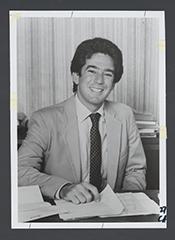
Meldon Levine
Former U.S. Representative · California District 27 · 1983–1993 · Democratic
Meldon Levine represented California's District 27 in the United States House of Representatives (1983–1993) for the Democratic party. The page below collects sourced biographical facts, term history, committee roles, and provenance for Levine.
Bioguide ID: L000264
Key facts
- Full name
- Meldon Levine
- State
- California
- District
- District 27
- Party
- Democratic
- House service
- 1983–1993
- First House term
- 1983
- Status
- Left office
- Current term ends
- —
- Born
- 1943
- Bioguide ID
- L000264
- Committee assignments
- —
- Dataset version
- 1.20260605
Biographical narrative
817 words · sourced from the Wikipedia REST extract
Meldon Edises Levine is a former U.S. Representative from California, affiliated with the Democratic Party. He served in the United States House of Representatives for a decade, from 1983 until 1993, representing California's 27th congressional district. Levine's career has spanned various roles in public service and law, reflecting his commitment to legislative work and community involvement.
Early life and career
Mel Levine was born on June 7, 1943, in Los Angeles, California. He completed his secondary education at Beverly Hills High School, graduating in 1960. His achievements during his high school years earned him a place in the school's Alumni Hall of Fame, highlighting his early promise and leadership potential.
Following high school, Levine pursued higher education at the University of California, Berkeley, where he distinguished himself as both the student body president and valedictorian, graduating with a degree that laid the foundation for his future endeavors. He furthered his education by obtaining a Master of Public Administration from Princeton University in 1966. Levine then attended Harvard Law School, where he earned his Juris Doctor degree in 1969. He was admitted to the California bar in 1970, marking the beginning of his professional legal career.
After being admitted to the bar, Levine established a private law practice. His legal career was complemented by his work in public service, as he served as a legislative assistant to U.S. Senator John V. Tunney from 1971 to 1973. This role provided him with valuable experience in federal legislative processes and policy-making.
Levine's political career continued to evolve when he was elected to the California State Assembly, where he served from 1977 until 1982. His tenure in the Assembly allowed him to engage with state-level issues and build a network that would later support his congressional ambitions. In 1982, Levine successfully ran for the U.S. House of Representatives, beginning his five-term service in Congress the following year.
House tenure
Levine's congressional career began in 1983, when he was elected to represent California's 27th congressional district. During his time in the House, he was involved in various legislative initiatives and contributed to discussions on significant national issues. His tenure lasted until January 3, 1993, during which he was re-elected multiple times, reflecting his sustained support from constituents.
Throughout his time in Congress, Levine participated in key legislative actions, including his support for the 1991 Gulf War Authorization Act. This act authorized the use of U.S. Armed Forces in response to United Nations Security Council Resolution 678, which called for military action against Iraq following its invasion of Kuwait. Levine's involvement in such significant legislation underscored his engagement with foreign policy matters and national security issues.
In 1992, Levine sought to expand his political career by running for the U.S. Senate. However, he was unsuccessful in the Democratic primary, losing to Barbara Boxer, who subsequently won the general election. Following his departure from Congress, Levine continued to be active in public service and legal practice.
Legislative focus and committees
During his time in the House of Representatives, Levine's legislative focus encompassed a range of issues, reflecting the diverse interests of his constituents and the broader national agenda. His background in law and public administration informed his approach to policy-making, allowing him to navigate complex legislative challenges effectively.
Levine served on various committees, where he contributed to discussions and decisions on critical issues. His work in these committees involved addressing matters related to education, health care, and public infrastructure, among others. His experience in the California State Assembly and as a legislative assistant provided him with insights that were valuable in his committee roles.
After leaving Congress, Levine continued to engage in public service. In 2013, he was appointed by Los Angeles Mayor Eric Garcetti to the Board of Water and Power Commissioners, a position that allowed him to influence local water and power policies. He was confirmed by the Los Angeles City Council and later served as the president of the Board, demonstrating his ongoing commitment to public service and community involvement.
In addition to his role on the Board of Water and Power Commissioners, Levine is counsel at the law firm Gibson, Dunn & Crutcher, where he applies his legal expertise to various matters. He is also a member of the board of directors of the Pacific Council on International Policy, further illustrating his engagement with issues of international significance.
Levine's personal life includes his marriage to journalist Connie Bruck, and he has three children from a previous marriage to retired Superior Court judge Jan Greenberg Levine. His family background and personal connections reflect a life intertwined with both public service and private endeavors.
In summary, Mel Levine's career has been marked by significant contributions to legislative processes at both the state and federal levels. His educational background, legal expertise, and commitment to public service have shaped his professional journey, making him a notable figure in California's political landscape.
Notable legislation
Sponsored and co-sponsored legislation for Meldon Levine is pending operator curation. The biographical narrative above carries the same provenance trail until per-bill rows are written.
Sources
- [1]https://en.wikipedia.org/wiki/Mel_LevineWikipedia · retrieved 2026-06-05
Notable quotes
Sourced quotes for Meldon Levine are pending operator curation. Narrative-scope provenance remains attached below.
Sources
- [1]https://en.wikipedia.org/wiki/Mel_LevineWikipedia · retrieved 2026-06-05
Key positions
Curated policy positions for Meldon Levine are pending operator review. The biographical narrative above carries the same provenance trail until per-topic positions are written.
Sources
- [1]https://en.wikipedia.org/wiki/Mel_LevineWikipedia · retrieved 2026-06-05
Terms served
- 1983–1985U.S. House · Term 1 · Democratic
- 1985–1987U.S. House · Term 2 · Democratic
- 1987–1989U.S. House · Term 3 · Democratic
- 1989–1991U.S. House · Term 4 · Democratic
- 1991–1993U.S. House · Term 5 · Democratic
Sources & provenance
Every attributable claim above carries a per-section [N] marker that resolves to the corresponding URL below. Each entry records the upstream provider, the canonical URL, and the timestamp at which the source was retrieved by the ingest pipeline.
Key facts
- https://bioguide.congress.gov/search/bio/L000264bioguide · retrieved 2026-06-05
- https://www.govtrack.us/congress/members/406765govtrack · retrieved 2026-06-05
Biographical narrative
- https://en.wikipedia.org/wiki/Mel_Levinewikipedia · retrieved 2026-06-05
Find your representative
Every U.S. state elects representatives by district. Browse California’s delegation, the full former-representative roster, or explore the role and term length.
Related on The Candidate
- Preceded by Alphonzo BellEarlier holder of the California District 27 House seat · Republican.Open
- Succeeded by James RoganLater holder of the California District 27 House seat · Republican.Open
- Barclay HenleyFormer U.S. Representative · California District 1 · DemocraticOpen
- Charles ClaytonFormer U.S. Representative · California District 1 · RepublicanOpen
- Clarence LeaFormer U.S. Representative · California District 1 · DemocraticOpen
- Clement MillerFormer U.S. Representative · California District 1 · DemocraticOpen