
Historical · U.S. House · California · District 27
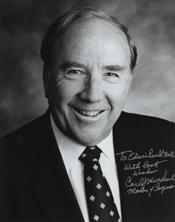
Carlos Moorhead
Former U.S. Representative · California District 27 · 1973–1997 · Republican
Carlos Moorhead represented California's District 27 in the United States House of Representatives (1973–1997) for the Republican party. The page below collects sourced biographical facts, term history, committee roles, and provenance for Moorhead.
Bioguide ID: M000926
Key facts
- Full name
- Carlos Moorhead
- State
- California
- District
- District 27
- Party
- Republican
- House service
- 1973–1997
- First House term
- 1973
- Status
- Left office
- Current term ends
- —
- Born
- 1922
- Bioguide ID
- M000926
- Committee assignments
- —
- Dataset version
- 1.20260605
Biographical narrative
887 words · sourced from the Wikipedia REST extract
Carlos J. Moorhead was an American lawyer and politician who served as a U.S. Representative for California's 27th congressional district from 1973 until 1997. A member of the Republican Party, Moorhead's political career spanned over two decades, during which he was elected to twelve consecutive terms in the House of Representatives. His tenure was marked by significant political events, including his notable support for President Richard Nixon during the impeachment hearings in the 1970s. Moorhead's contributions to California politics began at the state level before he transitioned to national politics, where he engaged in various legislative matters until his retirement.
Early life and career
Carlos John Moorhead was born on May 6, 1922, in Long Beach, California. He grew up in the nearby city of Glendale, where he attended public schools. Moorhead graduated from Herbert Hoover High School in 1940, demonstrating an early commitment to education that would later serve him well in his professional endeavors. Following high school, he enrolled at the University of California, Los Angeles (UCLA), where he earned a Bachelor of Arts degree in 1943. His academic achievements laid a strong foundation for his future career in law and politics.
Moorhead's education continued at the University of Southern California Law School, where he obtained his Juris Doctor (J.D.) degree in 1949. After being admitted to the California State Bar the same year, he began his legal practice in Glendale. His legal career was distinguished by his admission to practice before the United States Supreme Court in 1973, a significant milestone for any attorney. Moorhead also served as a member of the California Law Revision Commission, contributing to the development and refinement of state laws.
In addition to his academic and professional pursuits, Moorhead served in the United States Army during World War II, enlisting in 1942. He dedicated three years to military service, achieving the rank of lieutenant colonel by the time he was discharged in 1945. This experience not only shaped his character but also influenced his later political views and legislative priorities.
House tenure
Carlos Moorhead's political career in the U.S. House of Representatives began when he was elected as a Republican to the 93rd Congress, which commenced on January 3, 1973. He successfully secured reelection in eleven subsequent congressional terms, serving a total of twelve terms until January 3, 1997. His long tenure in the House is notable for its duration, reflecting both his electoral success and the trust placed in him by his constituents in California's 27th congressional district.
Throughout his time in Congress, Moorhead was involved in various legislative initiatives and discussions, often aligning with the Republican Party's positions on key issues. He gained particular recognition for his stance during the impeachment hearings of President Richard Nixon in the 1970s. Moorhead voted against all three articles of impeachment, a decision that underscored his loyalty to the party and the president during a tumultuous period in American politics. This position was significant, as the impeachment hearings were a defining moment in U.S. political history, and Moorhead's votes reflected the broader divisions within Congress and the country at that time.
Moorhead's congressional career was characterized by his commitment to his constituents and his active participation in legislative processes. He was not a candidate for reelection to the 105th Congress, marking the end of his lengthy service in the House. His departure from Congress concluded a significant chapter in his life, during which he had a considerable impact on both state and national politics.
Legislative focus and committees
During his time in the House of Representatives, Carlos Moorhead served on various committees that shaped his legislative focus. While specific details regarding the committees he served on are not provided, it is common for members of Congress to participate in committees that align with their interests and the needs of their constituents. These committees play a crucial role in reviewing legislation, conducting hearings, and overseeing government operations, allowing members to influence policy in areas such as education, healthcare, and national security.
Moorhead's legislative priorities were likely influenced by his background as a lawyer and his experiences in the military. His legal expertise would have informed his approach to issues related to law and justice, while his military service may have shaped his views on defense and veterans' affairs. As a Republican representative, he would have also aligned with the party's broader agenda, which often emphasized fiscal conservatism, limited government, and individual liberties.
Throughout his congressional career, Moorhead's actions and decisions were reflective of the political climate of the times. He navigated the complexities of national issues, including economic challenges, social change, and foreign policy matters, all while advocating for the interests of his constituents in California. His long tenure in office allowed him to witness and participate in significant legislative developments, contributing to the ongoing dialogue about the role of government in American society.
Carlos J. Moorhead passed away on November 23, 2011, after a prolonged battle with Alzheimer's disease. His legacy as a public servant is marked by his extensive career in both state and national politics, as well as his commitment to the principles of the Republican Party. Moorhead's contributions to American governance, particularly during a transformative era in U.S. history, continue to be recognized as part of the broader narrative of political service in the country.
Notable legislation
Sponsored and co-sponsored legislation for Carlos Moorhead is pending operator curation. The biographical narrative above carries the same provenance trail until per-bill rows are written.
Sources
- [1]https://en.wikipedia.org/wiki/Carlos_MoorheadWikipedia · retrieved 2026-06-05
Notable quotes
Sourced quotes for Carlos Moorhead are pending operator curation. Narrative-scope provenance remains attached below.
Sources
- [1]https://en.wikipedia.org/wiki/Carlos_MoorheadWikipedia · retrieved 2026-06-05
Key positions
Curated policy positions for Carlos Moorhead are pending operator review. The biographical narrative above carries the same provenance trail until per-topic positions are written.
Sources
- [1]https://en.wikipedia.org/wiki/Carlos_MoorheadWikipedia · retrieved 2026-06-05
Terms served
- 1973–1975U.S. House · Term 1 · Republican
- 1975–1977U.S. House · Term 2 · Republican
- 1977–1979U.S. House · Term 3 · Republican
- 1979–1981U.S. House · Term 4 · Republican
- 1981–1983U.S. House · Term 5 · Republican
- 1983–1985U.S. House · Term 6 · Republican
- 1985–1987U.S. House · Term 7 · Republican
- 1987–1989U.S. House · Term 8 · Republican
- 1989–1991U.S. House · Term 9 · Republican
- 1991–1993U.S. House · Term 10 · Republican
- 1993–1995U.S. House · Term 11 · Republican
- 1995–1997U.S. House · Term 12 · Republican
Sources & provenance
Every attributable claim above carries a per-section [N] marker that resolves to the corresponding URL below. Each entry records the upstream provider, the canonical URL, and the timestamp at which the source was retrieved by the ingest pipeline.
Key facts
- https://bioguide.congress.gov/search/bio/M000926bioguide · retrieved 2026-06-05
- https://www.govtrack.us/congress/members/407899govtrack · retrieved 2026-06-05
Biographical narrative
- https://en.wikipedia.org/wiki/Carlos_Moorheadwikipedia · retrieved 2026-06-05
Find your representative
Every U.S. state elects representatives by district. Browse California’s delegation, the full former-representative roster, or explore the role and term length.
Related on The Candidate
- Preceded by Edwin ReineckeEarlier holder of the California District 27 House seat · Republican.Open
- Succeeded by James RoganLater holder of the California District 27 House seat · Republican.Open
- Barclay HenleyFormer U.S. Representative · California District 1 · DemocraticOpen
- Charles ClaytonFormer U.S. Representative · California District 1 · RepublicanOpen
- Clarence LeaFormer U.S. Representative · California District 1 · DemocraticOpen
- Clement MillerFormer U.S. Representative · California District 1 · DemocraticOpen