
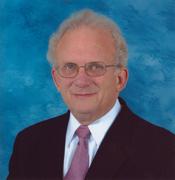
Historical · U.S. House · California · District 28
Howard Berman
Former U.S. Representative · California District 28 · 1983–2013 · Democratic
Howard Berman represented California's District 28 in the United States House of Representatives (1983–2013) for the Democratic party. The page below collects sourced biographical facts, term history, committee roles, and provenance for Berman.
Bioguide ID: B000410
Key facts
- Full name
- Howard Berman
- State
- California
- District
- District 28
- Party
- Democratic
- House service
- 1983–2013
- First House term
- 1983
- Status
- Left office
- Current term ends
- —
- Born
- 1941
- Bioguide ID
- B000410
- Committee assignments
- —
- Dataset version
- 1.20260605
Biographical narrative
883 words · sourced from the Wikipedia REST extract
Howard L. Berman is a former U.S. Representative who served California's 28th congressional district from 1983 until 2013. A member of the Democratic Party, Berman's political career spanned three decades, during which he was known for his legislative work and his role in shaping the political landscape of California. His tenure in the House of Representatives was marked by significant electoral success, as he was reelected multiple times without ever receiving less than 61% of the vote. Berman's district, which included areas such as the Hollywood Hills and parts of the San Fernando Valley, underwent changes due to redistricting throughout his career. He faced a notable electoral challenge in 2012, when he was defeated by fellow Democratic incumbent Brad Sherman after their districts were merged.
Early life and career
Howard Lawrence Berman was born on April 15, 1941, in Los Angeles, California, to Jewish parents Eleanor (née Schapiro) and Joseph Berman. His family background includes maternal grandparents who immigrated from Russia. Berman attended Alexander Hamilton High School, graduating in 1959. He pursued higher education at the University of California, Los Angeles (UCLA), where he earned a Bachelor of Arts degree in international relations in 1962 and a Bachelor of Laws (LL.B.) in 1965. During his time at UCLA, he developed a significant friendship with Henry Waxman, who would later become a fellow U.S. Representative and political ally.
Berman's early career included service as a volunteer with the Volunteers in Service to America (VISTA) program from 1966 to 1967, where he worked in Baltimore and San Francisco. Following this, he began his legal career as an associate at the Los Angeles law firm Levy, Van Bourg & Hackler, specializing in labor relations from 1967 to 1972. His involvement in public service and law laid the groundwork for his future political aspirations.
House tenure
Berman's political career in the California State Assembly began in 1972 when he won election to represent a district in the Hollywood Hills. He successfully unseated the incumbent Republican speaker pro tempore, marking the start of his legislative journey. During his tenure in the Assembly, Berman was appointed the youngest majority leader in the history of the California State Assembly, a position he attained after demonstrating loyalty to Speaker Leo McCarthy. However, his relationship with McCarthy soured, leading to Berman's dismissal in 1980 when he attempted to challenge McCarthy's leadership.
In 1982, following redistricting that made the 26th congressional district more favorable for Democrats, Berman won the Democratic primary for the open seat with a significant majority. He subsequently won the general election, marking the beginning of his long tenure in the U.S. House of Representatives. Berman was reelected 14 times from 1984 through 2010, consistently receiving a substantial share of the vote in each election. His ability to maintain electoral support was indicative of his political acumen and the alignment of his policies with the preferences of his constituents.
Berman's influence extended beyond his district, as he played a significant role in the redistricting process after the 2000 census. He was instrumental in negotiating a plan that preserved a majority of safe seats for Democrats while also accommodating Republican interests. This strategic maneuvering showcased his skills as a political operator and his commitment to maintaining Democratic representation in California.
In 2012, Berman faced a challenging electoral scenario when redistricting led to the merging of his district with that of fellow Democrat Brad Sherman. This unique situation resulted in a highly competitive primary race between two incumbents, a rarity in American politics. Despite receiving endorsements from a significant portion of California's Democratic congressional delegation, Berman was ultimately defeated in the general election by Sherman.
Legislative focus and committees
Throughout his congressional career, Berman was known for his active involvement in various legislative initiatives, although he often operated away from the spotlight. His legislative focus included a range of issues, with particular attention to consumer protection, intellectual property, and international relations. One of his notable achievements was serving as the House sponsor of the 1986 False Claims Act, which aimed to combat fraud against the federal government by allowing whistleblowers to file lawsuits on behalf of the government.
Berman's committee assignments during his time in the House reflected his interests and expertise. He served on several key committees, where he contributed to shaping policy and legislation. His work on these committees allowed him to influence a variety of issues, from economic policy to social justice, further establishing his reputation as a dedicated legislator.
Despite his significant contributions, Berman was often described as a member who preferred to work behind the scenes rather than seeking public acclaim. His approach to politics was characterized by a focus on substantive legislative work rather than media attention. This style contributed to his effectiveness as a legislator, as he was able to build coalitions and navigate complex political landscapes.
In summary, Howard L. Berman's career as a U.S. Representative was marked by a commitment to public service, a strategic approach to politics, and a focus on legislative effectiveness. His tenure spanned three decades, during which he played a significant role in shaping policies that impacted his constituents and the broader political landscape in California. After his defeat in 2012, Berman retired from public office, leaving behind a legacy of legislative achievement and political influence.
Notable legislation
Sponsored and co-sponsored legislation for Howard Berman is pending operator curation. The biographical narrative above carries the same provenance trail until per-bill rows are written.
Sources
- [1]https://en.wikipedia.org/wiki/Howard_BermanWikipedia · retrieved 2026-06-05
Notable quotes
Sourced quotes for Howard Berman are pending operator curation. Narrative-scope provenance remains attached below.
Sources
- [1]https://en.wikipedia.org/wiki/Howard_BermanWikipedia · retrieved 2026-06-05
Key positions
Curated policy positions for Howard Berman are pending operator review. The biographical narrative above carries the same provenance trail until per-topic positions are written.
Sources
- [1]https://en.wikipedia.org/wiki/Howard_BermanWikipedia · retrieved 2026-06-05
Terms served
- 1983–1985U.S. House · Term 1 · Democratic
- 1985–1987U.S. House · Term 2 · Democratic
- 1987–1989U.S. House · Term 3 · Democratic
- 1989–1991U.S. House · Term 4 · Democratic
- 1991–1993U.S. House · Term 5 · Democratic
- 1993–1995U.S. House · Term 6 · Democratic
- 1995–1997U.S. House · Term 7 · Democratic
- 1997–1999U.S. House · Term 8 · Democratic
- 1999–2001U.S. House · Term 9 · Democratic
- 2001–2003U.S. House · Term 10 · Democratic
- 2003–2005U.S. House · Term 11 · Democratic
- 2005–2007U.S. House · Term 12 · Democratic
- 2007–2009U.S. House · Term 13 · Democratic
- 2009–2011U.S. House · Term 14 · Democratic
- 2011–2013U.S. House · Term 15 · Democratic
Sources & provenance
Every attributable claim above carries a per-section [N] marker that resolves to the corresponding URL below. Each entry records the upstream provider, the canonical URL, and the timestamp at which the source was retrieved by the ingest pipeline.
Key facts
- https://bioguide.congress.gov/search/bio/B000410bioguide · retrieved 2026-06-05
- http://www.house.gov/bermanhouse.gov · retrieved 2026-06-05
Biographical narrative
- https://en.wikipedia.org/wiki/Howard_Bermanwikipedia · retrieved 2026-06-05
Find your representative
Every U.S. state elects representatives by district. Browse California’s delegation, the full former-representative roster, or explore the role and term length.
Related on The Candidate
- Preceded by Yvonne BurkeEarlier holder of the California District 28 House seat · Democratic.Open
- Barclay HenleyFormer U.S. Representative · California District 1 · DemocraticOpen
- Charles ClaytonFormer U.S. Representative · California District 1 · RepublicanOpen
- Clarence LeaFormer U.S. Representative · California District 1 · DemocraticOpen
- Clement MillerFormer U.S. Representative · California District 1 · DemocraticOpen
- Democratic PartyFederal candidates and office holders on the Democratic line.Open