
Historical · U.S. House · California · District 31
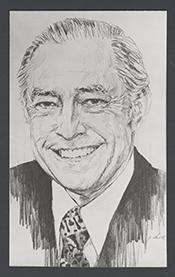
Charles Wilson
Former U.S. Representative · California District 31 · 1963–1981 · Democratic
Charles Wilson represented California's District 31 in the United States House of Representatives (1963–1981) for the Democratic party. The page below collects sourced biographical facts, term history, committee roles, and provenance for Wilson.
Bioguide ID: W000571
Key facts
- Full name
- Charles Wilson
- State
- California
- District
- District 31
- Party
- Democratic
- House service
- 1963–1981
- First House term
- 1963
- Status
- Left office
- Current term ends
- —
- Born
- 1917
- Bioguide ID
- W000571
- Committee assignments
- —
- Dataset version
- 1.20260605
Biographical narrative
826 words · sourced from the Wikipedia REST extract
Charles H. Wilson was a prominent American politician and businessman who served as a U.S. Representative for California's 31st congressional district from 1963 until 1981. A member of the Democratic Party, Wilson's political career spanned nearly two decades, during which he was involved in various legislative activities and faced significant challenges, including a reprimand related to financial misconduct. His tenure in Congress is marked by a commitment to his constituents in the Los Angeles area, where he was known for his active engagement in local issues.
Early life and career
Charles Herbert Wilson was born on February 15, 1917, in Magna, Utah. In 1922, his family relocated to Los Angeles, California, where he spent his formative years. Wilson attended public schools in Los Angeles and Inglewood, which laid the foundation for his future endeavors. His early career began in the banking sector, where he worked from 1935 until 1942. This experience in finance would later inform his approach to economic issues during his political career.
With the onset of World War II, Wilson enlisted in the United States Army in June 1942. He served as a staff sergeant and was deployed to the European Theater of Operations, where he gained valuable experience and insights into the complexities of military and international affairs. After his military service concluded in December 1945, Wilson returned to Los Angeles and established his own insurance agency, further solidifying his ties to the local business community.
Wilson's political aspirations began to take shape in the 1950s. He entered the political arena by running for a seat in the California State Assembly, where he represented the 66th District from 1955 until 1963. His time in the State Assembly provided him with crucial legislative experience and a platform to advocate for the interests of his constituents.
House tenure
In 1962, Wilson successfully ran for the U.S. House of Representatives, marking the beginning of his nine-term tenure in Congress. He officially took office on January 3, 1963, and served until January 3, 1981. Throughout his time in the House, Wilson was involved in a variety of legislative initiatives and was known for his active participation in debates and discussions on key issues affecting his district and the nation.
Wilson's congressional career was characterized by his commitment to representing the interests of his constituents in California's 31st district, which encompassed parts of Los Angeles. He was particularly focused on issues relevant to urban development, education, and social services. His efforts in Congress were aimed at addressing the needs of a diverse population and responding to the challenges faced by urban communities during a period of significant social change in the United States.
However, Wilson's career was not without controversy. In June 1980, he faced a reprimand from the House of Representatives due to financial misconduct related to the Koreagate scandal. This incident marked a significant turning point in his political career and had repercussions for his standing within the Democratic Party and among his constituents. The reprimand contributed to his defeat in the 1980 primary elections, where he lost the nomination to former Lieutenant Governor Mervyn M. Dymally.
Wilson's defeat was notable as he became the last white congressman to represent California's 31st district, reflecting the changing demographics and political landscape of the area. His departure from Congress marked the end of an era for the district, which had seen significant shifts in representation and community needs.
Legislative focus and committees
During his time in the House, Charles H. Wilson served on various committees that shaped his legislative focus. His work often revolved around issues pertinent to his constituents, including urban development, education, and social welfare. Wilson's background in banking and business informed his approach to economic policies, and he was known for advocating measures that aimed to improve the economic conditions of his district.
Wilson's involvement in legislative committees allowed him to engage with a range of issues, from budgetary concerns to social programs. His experience in the California State Assembly provided him with a solid foundation for understanding the complexities of federal legislation and governance. Throughout his tenure, he worked to ensure that the voices of his constituents were heard in the halls of Congress.
Despite the challenges he faced, including the reprimand that marred his later years in office, Wilson remained dedicated to his role as a representative. His legislative efforts were aimed at addressing the pressing needs of his district, and he sought to foster an environment where constituents could thrive.
After leaving Congress in 1981, Wilson continued to reside in Maryland, where he lived until his death on July 21, 1984, in Clinton, Maryland. He was interred at Inglewood Park Cemetery in Inglewood, California, marking the end of a life dedicated to public service and community engagement. Wilson's legacy as a U.S. Representative reflects the complexities of political life and the challenges faced by elected officials in navigating the demands of their constituents and the broader political landscape.
Notable legislation
Sponsored and co-sponsored legislation for Charles Wilson is pending operator curation. The biographical narrative above carries the same provenance trail until per-bill rows are written.
Sources
- [1]https://en.wikipedia.org/wiki/Charles_H._WilsonWikipedia · retrieved 2026-06-05
Notable quotes
Sourced quotes for Charles Wilson are pending operator curation. Narrative-scope provenance remains attached below.
Sources
- [1]https://en.wikipedia.org/wiki/Charles_H._WilsonWikipedia · retrieved 2026-06-05
Key positions
Curated policy positions for Charles Wilson are pending operator review. The biographical narrative above carries the same provenance trail until per-topic positions are written.
Sources
- [1]https://en.wikipedia.org/wiki/Charles_H._WilsonWikipedia · retrieved 2026-06-05
Terms served
- 1963–1965U.S. House · Term 1 · Democratic
- 1965–1967U.S. House · Term 2 · Democratic
- 1967–1969U.S. House · Term 3 · Democratic
- 1969–1971U.S. House · Term 4 · Democratic
- 1971–1973U.S. House · Term 5 · Democratic
- 1973–1975U.S. House · Term 6 · Democratic
- 1975–1977U.S. House · Term 7 · Democratic
- 1977–1979U.S. House · Term 8 · Democratic
- 1979–1981U.S. House · Term 9 · Democratic
Sources & provenance
Every attributable claim above carries a per-section [N] marker that resolves to the corresponding URL below. Each entry records the upstream provider, the canonical URL, and the timestamp at which the source was retrieved by the ingest pipeline.
Key facts
- https://bioguide.congress.gov/search/bio/W000571bioguide · retrieved 2026-06-05
- https://www.govtrack.us/congress/members/411726govtrack · retrieved 2026-06-05
Biographical narrative
- https://en.wikipedia.org/wiki/Charles_H._Wilsonwikipedia · retrieved 2026-06-05
Find your representative
Every U.S. state elects representatives by district. Browse California’s delegation, the full former-representative roster, or explore the role and term length.
Related on The Candidate
- Succeeded by Matthew MartínezLater holder of the California District 31 House seat · Republican.Open
- Barclay HenleyFormer U.S. Representative · California District 1 · DemocraticOpen
- Charles ClaytonFormer U.S. Representative · California District 1 · RepublicanOpen
- Clarence LeaFormer U.S. Representative · California District 1 · DemocraticOpen
- Clement MillerFormer U.S. Representative · California District 1 · DemocraticOpen
- Democratic PartyFederal candidates and office holders on the Democratic line.Open