
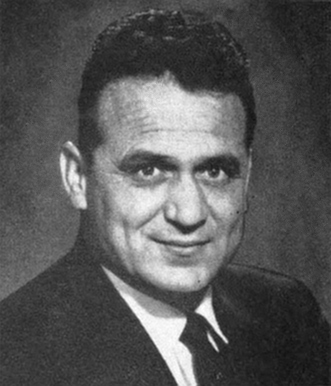
Historical · U.S. House · California · District 38
Patrick Martin
Former U.S. Representative · California District 38 · 1963–1965 · Republican
Patrick Martin represented California's District 38 in the United States House of Representatives (1963–1965) for the Republican party. The page below collects sourced biographical facts, term history, committee roles, and provenance for Martin.
Bioguide ID: M000197
Key facts
- Full name
- Patrick Martin
- State
- California
- District
- District 38
- Party
- Republican
- House service
- 1963–1965
- First House term
- 1963
- Status
- Left office
- Current term ends
- —
- Born
- 1924
- Bioguide ID
- M000197
- Committee assignments
- —
- Dataset version
- 1.20260605
Biographical narrative
999 words · sourced from the Wikipedia REST extract
Patrick Martin was an American lawyer and politician who served as a U.S. Representative for California's 38th congressional district from 1963 to 1965. A member of the Republican Party, Martin's political career was marked by a single term in the House of Representatives, during which he participated in significant legislative debates of the era, including issues surrounding civil rights. Prior to his political career, Martin had a diverse background that included military service during World War II and a legal career that began after his education in law. His life journey reflects the experiences of many Americans of his time, navigating the complexities of post-war society, legal practice, and political engagement.
Early life and career
Patrick Martin was born on November 25, 1924, in Norfolk, Nebraska. Originally named Minor Carl Martin, he was commonly referred to as "Pat." His upbringing took place in both Nebraska and California, which likely influenced his later political perspectives and connections. Martin pursued higher education, graduating from Riverside Junior College in 1947. He continued his studies at the University of California, Berkeley, where he earned his degree in 1949. Following this, he attended Hastings College of Law, graduating in 1953. His academic achievements laid the groundwork for his future career in law.
After being admitted to the bar, Martin began practicing law in Riverside, California. This legal background provided him with a foundation in the principles of governance and the intricacies of the legal system, which would later inform his work as a legislator. His experiences as a lawyer likely contributed to his understanding of the legislative process and the importance of law in shaping society.
In addition to his academic and professional pursuits, Martin served in the United States Coast Guard during World War II. From 1943 to 1945, he worked as a radioman, a role that involved critical communication responsibilities during a tumultuous period in American history. His military service not only instilled in him a sense of duty and patriotism but also connected him to the broader narrative of American involvement in global conflicts during the 20th century.
House tenure
Patrick Martin was elected to the U.S. House of Representatives as a Republican, beginning his term on January 3, 1963. He represented California's 38th congressional district during a time of significant social and political change in the United States. His election came during the Eighty-eighth Congress, a period characterized by intense debates over civil rights, social welfare, and foreign policy. Martin's tenure lasted until January 3, 1965, marking a brief but impactful period in his political career.
During his time in Congress, Martin was involved in various legislative discussions, including those surrounding the Civil Rights Act of 1964. Notably, he voted against this landmark legislation, which aimed to end segregation and discrimination based on race, color, religion, sex, or national origin. This vote placed him in a contentious position within the broader context of the civil rights movement, which was gaining momentum during the early 1960s. The implications of his vote reflected the complex attitudes toward civil rights within the Republican Party and American society at large during this era.
Martin's single term in the House was marked by the challenges and responsibilities that come with representing a diverse constituency. As a member of Congress, he would have had to navigate the interests and concerns of his constituents while also aligning with the broader goals of his party. His legislative actions and decisions would have been influenced by the political climate of the time, as well as his personal beliefs and experiences.
Despite his efforts, Martin was not successful in his bid for reelection in 1964 to the Eighty-ninth Congress. Following his defeat, he returned to his legal practice, where he continued to apply his knowledge and skills in the field of law. His departure from Congress did not diminish his commitment to public service, as he remained engaged in his community through his legal work.
Legislative focus and committees
During his tenure in the House of Representatives, Patrick Martin's legislative focus was shaped by the pressing issues of the day, particularly those related to civil rights and social justice. His vote against the Civil Rights Act of 1964 positioned him within a specific ideological framework that was prevalent among certain factions of the Republican Party at the time. This decision has been a point of historical interest, reflecting the complexities of political alignment and the varying perspectives on civil rights legislation.
While specific details about the committees Martin served on during his time in Congress are not provided, it is common for members of the House to participate in committees that align with their interests and the needs of their constituents. Committees play a crucial role in the legislative process, allowing members to focus on specific areas such as finance, foreign affairs, or education. Martin's background as a lawyer may have influenced his committee assignments, potentially steering him toward areas related to legal matters, public policy, or social issues.
The context of the 1960s was marked by significant legislative activity, particularly in response to the civil rights movement, the Vietnam War, and various social reforms. As a member of Congress during this transformative period, Martin would have had the opportunity to engage with a wide range of issues that affected the American populace. His decisions and actions in the House were part of a larger narrative of American governance, reflecting the tensions and aspirations of a nation grappling with its identity and values.
After his congressional career, Martin continued to practice law until his death on July 18, 1968, in Long Beach, California. His passing was a loss to those who knew him and to the community he served. He was buried at Arlington National Cemetery, a testament to his military service and dedication to his country. Martin's life and career illustrate the multifaceted nature of public service, encompassing military duty, legal practice, and political engagement, all of which contribute to the rich tapestry of American history.
Notable legislation
Sponsored and co-sponsored legislation for Patrick Martin is pending operator curation. The biographical narrative above carries the same provenance trail until per-bill rows are written.
Sources
- [1]https://en.wikipedia.org/wiki/Patrick_M._MartinWikipedia · retrieved 2026-06-05
Notable quotes
Sourced quotes for Patrick Martin are pending operator curation. Narrative-scope provenance remains attached below.
Sources
- [1]https://en.wikipedia.org/wiki/Patrick_M._MartinWikipedia · retrieved 2026-06-05
Key positions
Curated policy positions for Patrick Martin are pending operator review. The biographical narrative above carries the same provenance trail until per-topic positions are written.
Sources
- [1]https://en.wikipedia.org/wiki/Patrick_M._MartinWikipedia · retrieved 2026-06-05
Terms served
- 1963–1965U.S. House · Term 1 · Republican
Sources & provenance
Every attributable claim above carries a per-section [N] marker that resolves to the corresponding URL below. Each entry records the upstream provider, the canonical URL, and the timestamp at which the source was retrieved by the ingest pipeline.
Key facts
- https://bioguide.congress.gov/search/bio/M000197bioguide · retrieved 2026-06-05
- https://www.govtrack.us/congress/members/407217govtrack · retrieved 2026-06-05
Biographical narrative
- https://en.wikipedia.org/wiki/Patrick_M._Martinwikipedia · retrieved 2026-06-05
Find your representative
Every U.S. state elects representatives by district. Browse California’s delegation, the full former-representative roster, or explore the role and term length.
Related on The Candidate
- Succeeded by Jerry PattersonLater holder of the California District 38 House seat · Democratic.Open
- Barclay HenleyFormer U.S. Representative · California District 1 · DemocraticOpen
- Charles ClaytonFormer U.S. Representative · California District 1 · RepublicanOpen
- Clarence LeaFormer U.S. Representative · California District 1 · DemocraticOpen
- Clement MillerFormer U.S. Representative · California District 1 · DemocraticOpen
- Republican PartyFederal candidates and office holders on the Republican line.Open