
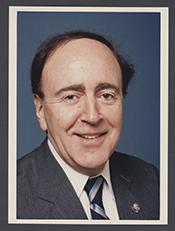
Historical · U.S. House · California · District 38
Stephen Horn
Former U.S. Representative · California District 38 · 1993–2003 · Republican
Stephen Horn represented California's District 38 in the United States House of Representatives (1993–2003) for the Republican party. The page below collects sourced biographical facts, term history, committee roles, and provenance for Horn.
Bioguide ID: H000789
Key facts
- Full name
- Stephen Horn
- State
- California
- District
- District 38
- Party
- Republican
- House service
- 1993–2003
- First House term
- 1993
- Status
- Left office
- Current term ends
- —
- Born
- 1931
- Bioguide ID
- H000789
- Committee assignments
- —
- Dataset version
- 1.20260605
Biographical narrative
944 words · sourced from the Wikipedia REST extract
John Stephen Horn was a notable figure in American politics, serving as a Republican U.S. Representative for California's 38th congressional district from 1993 until 2003. Prior to his congressional career, Horn held significant positions in academia and government, including serving as the President of California State University, Long Beach. His tenure in the House of Representatives was marked by his moderate political stance and a commitment to government transparency and oversight.
Early life and career
Stephen Horn was born on May 31, 1931, in San Juan Bautista, California. He pursued higher education at Stanford University, where he earned his bachelor's degree in 1953. Following this, he continued his studies at Harvard University, obtaining a Master of Public Administration in 1955. Horn returned to Stanford to complete his academic journey, earning a Ph.D. in 1958. His educational background laid a strong foundation for his future roles in public service and academia.
Horn's professional career began in government service shortly after completing his education. In 1959, he became an administrative assistant to Secretary of Labor James P. Mitchell. The following year, he transitioned to work for U.S. Senator Thomas Kuchel as a legislative assistant, a position he held until 1966. During this time, Horn played a significant role in various legislative initiatives and gained valuable experience in the workings of Congress.
In addition to his legislative work, Horn was involved in the 1964 presidential campaign of Nelson Rockefeller in California, which further solidified his political connections. His commitment to civil rights was evident in his role as Vice Chairman of the U.S. Civil Rights Commission from 1969 to 1980. Horn also contributed to the National Institute of Corrections from 1972 until 1988, serving as chairman from 1984 to 1987. These positions underscored his dedication to public service and advocacy for civil rights.
Horn's academic career flourished when he became the President of California State University, Long Beach in 1970. He held this position until 1988, during which he implemented significant reforms in the university's curriculum. His initiatives included emphasizing learning skills, cultural literacy, and interdisciplinary education. He was instrumental in establishing one of the first programs in the nation for women returning to college and created the Disabled Resources Center at CSULB, which became a model for similar institutions across the country. Horn's leadership also involved overseeing major construction projects that expanded the university's facilities.
House tenure
Horn's entry into congressional politics began with his first campaign in 1988, where he sought to succeed Republican Dan Lungren. However, he lost the primary election to conservative Dana Rohrabacher. Following a period of reapportionment in 1991, Horn's home in Long Beach was placed in the newly drawn 38th district, previously held by Democratic incumbent Glenn M. Anderson. When Anderson announced his retirement in 1992, Horn seized the opportunity to run for the seat.
In the Republican primary, Horn faced a competitive field of candidates but managed to secure a narrow victory. He then advanced to the general election, where he defeated Evan Anderson Braude, the stepson of the retiring incumbent, to win his first term in Congress. Horn's moderate Republican stance allowed him to appeal to a diverse electorate in a district that leaned Democratic.
During his time in the House, Horn was re-elected four additional times, demonstrating his ability to connect with constituents. His victories were often attributed to the political climate of the time, including a significant Republican wave in 1994 and endorsements from influential organizations such as the Sierra Club in 1996. Despite facing a challenging political landscape in 1998, Horn successfully retained his seat against a strong Democratic opponent. His closest electoral challenge came in 2000, when he won by a narrow margin against Democrat Gerrie Schipske.
As the political landscape shifted following the 2001 reapportionment, Horn's district became more Democratic-leaning. Recognizing the changing dynamics, he announced his retirement and did not seek re-election in 2002. In a surprising move, he endorsed Democrat Hector De La Torre, who was running to succeed him in the newly drawn district.
Horn's contributions to government transparency and oversight were recognized in 2003 when he received the first-ever Good Government Award from the Project on Government Oversight, a watchdog organization. This accolade highlighted his commitment to ensuring public access to government information and promoting accountability within the political system.
Legislative focus and committees
Throughout his congressional career, Horn's legislative focus encompassed a range of issues, reflecting his moderate Republican ideology. He was known for his efforts to promote government transparency, civil rights, and education reform. His background in academia and public administration informed his approach to policy-making, as he sought to address the needs of his constituents while advocating for broader societal improvements.
Horn served on various committees during his time in the House, where he contributed to discussions and decisions on key legislative matters. His experience in government and academia provided him with a unique perspective on the intersection of policy and education, allowing him to advocate effectively for initiatives that aligned with his values.
In addition to his legislative work, Horn's commitment to civil rights and social justice remained a cornerstone of his political identity. His previous roles in the U.S. Civil Rights Commission and other organizations underscored his dedication to promoting equality and addressing systemic issues within society.
After concluding his congressional tenure in 2003, Horn's legacy continued to be felt in both the political and academic spheres. He passed away on February 17, 2011, at the age of 79, due to complications from Alzheimer's disease. His contributions to education, civil rights, and government transparency left a lasting impact on the communities he served and the institutions he influenced throughout his career.
Notable legislation
Sponsored and co-sponsored legislation for Stephen Horn is pending operator curation. The biographical narrative above carries the same provenance trail until per-bill rows are written.
Sources
- [1]https://en.wikipedia.org/wiki/Steve_HornWikipedia · retrieved 2026-06-05
Notable quotes
Sourced quotes for Stephen Horn are pending operator curation. Narrative-scope provenance remains attached below.
Sources
- [1]https://en.wikipedia.org/wiki/Steve_HornWikipedia · retrieved 2026-06-05
Key positions
Curated policy positions for Stephen Horn are pending operator review. The biographical narrative above carries the same provenance trail until per-topic positions are written.
Sources
- [1]https://en.wikipedia.org/wiki/Steve_HornWikipedia · retrieved 2026-06-05
Terms served
- 1993–1995U.S. House · Term 1 · Republican
- 1995–1997U.S. House · Term 2 · Republican
- 1997–1999U.S. House · Term 3 · Republican
- 1999–2001U.S. House · Term 4 · Republican
- 2001–2003U.S. House · Term 5 · Republican
Sources & provenance
Every attributable claim above carries a per-section [N] marker that resolves to the corresponding URL below. Each entry records the upstream provider, the canonical URL, and the timestamp at which the source was retrieved by the ingest pipeline.
Key facts
- https://bioguide.congress.gov/search/bio/H000789bioguide · retrieved 2026-06-05
- https://www.govtrack.us/congress/members/400506govtrack · retrieved 2026-06-05
Biographical narrative
- https://en.wikipedia.org/wiki/Steve_Hornwikipedia · retrieved 2026-06-05
Find your representative
Every U.S. state elects representatives by district. Browse California’s delegation, the full former-representative roster, or explore the role and term length.
Related on The Candidate
- Preceded by Jerry PattersonEarlier holder of the California District 38 House seat · Democratic.Open
- Barclay HenleyFormer U.S. Representative · California District 1 · DemocraticOpen
- Charles ClaytonFormer U.S. Representative · California District 1 · RepublicanOpen
- Clarence LeaFormer U.S. Representative · California District 1 · DemocraticOpen
- Clement MillerFormer U.S. Representative · California District 1 · DemocraticOpen
- Republican PartyFederal candidates and office holders on the Republican line.Open