
Historical · U.S. House · California · District 39
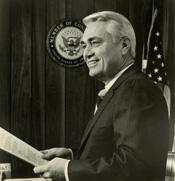
Charles Wiggins
Former U.S. Representative · California District 39 · 1967–1979 · Republican
Charles Wiggins represented California's District 39 in the United States House of Representatives (1967–1979) for the Republican party. The page below collects sourced biographical facts, term history, committee roles, and provenance for Wiggins.
Bioguide ID: W000448
Key facts
- Full name
- Charles Wiggins
- State
- California
- District
- District 39
- Party
- Republican
- House service
- 1967–1979
- First House term
- 1967
- Status
- Left office
- Current term ends
- —
- Born
- 1927
- Bioguide ID
- W000448
- Committee assignments
- —
- Dataset version
- 1.20260605
Biographical narrative
953 words · sourced from the Wikipedia REST extract
Charles E. Wiggins was a prominent American politician and jurist who served as a United States Representative from California and later as a judge on the United States Court of Appeals for the Ninth Circuit. A member of the Republican Party, Wiggins represented California's 39th congressional district from 1967 until 1979. His political career was marked by significant events, including his involvement in the impeachment proceedings against President Richard Nixon. After leaving Congress, Wiggins transitioned to a judicial role, where he continued to influence American law until his retirement.
Early life and career
Charles Edward Wiggins was born on December 3, 1927, in El Monte, California. He grew up in the area and attended local public schools, which provided him with a foundational education that would later support his academic and professional pursuits. Following his high school education, Wiggins served in the United States Army during World War II. His military service spanned from 1945 to 1948, and he re-enlisted from 1950 to 1952, during which time he attained the rank of First Lieutenant. This experience not only shaped his character but also instilled in him a sense of duty and public service that would define his later career.
After his military service, Wiggins pursued higher education, earning a Bachelor of Science degree from the University of Southern California in 1953. He continued his studies at the University of Southern California Law School, where he obtained a Bachelor of Laws in 1956. His legal education prepared him for a career in law, and he began his professional journey as a law clerk for Judge Swain of the Appellate Division of the Los Angeles Superior Court. This position provided him with valuable insights into the judicial process and the workings of the legal system.
Wiggins's commitment to public service was evident early in his career. He served on the El Monte Planning Commission from 1954 to 1960, where he contributed to local governance and urban planning initiatives. In 1960, he was elected as a councilman for the city of El Monte, a position he held until 1964. His leadership skills and dedication to his community led to his election as mayor of El Monte from 1964 to 1966. These roles allowed him to build a strong political network and gain experience in legislative matters, setting the stage for his future endeavors in Congress.
House tenure
Wiggins was first elected to the United States House of Representatives in 1966, representing California's 25th congressional district. His tenure in Congress began on January 3, 1967, and he was subsequently re-elected to five additional terms, serving until January 3, 1979. During his time in office, Wiggins represented a district that had previously been held by Richard Nixon, which added a layer of historical significance to his role.
Throughout his congressional career, Wiggins was known for his active participation in legislative debates and his engagement with key issues of the time. One of the most notable aspects of his tenure was his involvement in the impeachment proceedings against President Nixon during the Watergate scandal. Initially, Wiggins was a staunch defender of Nixon, advocating for him during discussions in the House Judiciary Committee. However, his position shifted dramatically following the release of the "Smoking Gun" tape, which revealed Nixon's involvement in efforts to cover up the Watergate break-in.
Wiggins's change of heart regarding Nixon's actions was significant, as he publicly acknowledged that the evidence presented in the tape indicated a conspiracy to obstruct justice. This shift in perspective led him to urge Nixon to resign, believing that it would be in the best interest of the nation. His willingness to break ranks with fellow Republicans on this issue highlighted his commitment to the rule of law and the principles of justice, even in the face of political pressure.
Despite his earlier support for Nixon, Wiggins faced challenges in subsequent elections. His stance on the impeachment proceedings contributed to a reduced margin of victory in the 1974 congressional elections. Nevertheless, he was re-elected in 1976, demonstrating his continued support among constituents. Ultimately, Wiggins chose not to seek re-election for the Ninety-sixth Congress in 1978, opting to return to private legal practice after his congressional career concluded.
Legislative focus and committees
During his time in the House of Representatives, Wiggins served on several committees that shaped his legislative focus. His work often revolved around issues pertinent to his constituents and the broader national interest. Wiggins was known for his involvement in matters related to civil rights, government reform, and national security, reflecting the pressing concerns of the era.
His participation in the House Judiciary Committee was particularly noteworthy, especially given the historical context of the Watergate scandal. Wiggins's role in the impeachment discussions underscored his commitment to accountability and transparency in government. His willingness to confront difficult issues and advocate for ethical governance resonated with many of his colleagues and constituents.
After leaving Congress, Wiggins returned to private practice, where he continued to engage with legal matters until he was nominated for a judicial position. In 1984, President Ronald Reagan appointed him to the United States Court of Appeals for the Ninth Circuit, a significant transition that marked the next phase of his career. Wiggins was confirmed by the Senate and received his commission later that year. He served in this capacity until he assumed senior status in 1996, continuing to contribute to the judiciary until his death in 2000.
Wiggins's legacy is characterized by his dedication to public service, his legal acumen, and his willingness to navigate complex political landscapes. His career reflects a commitment to the principles of justice and governance, leaving an indelible mark on both the legislative and judicial branches of the United States government.
Notable legislation
Sponsored and co-sponsored legislation for Charles Wiggins is pending operator curation. The biographical narrative above carries the same provenance trail until per-bill rows are written.
Sources
- [1]https://en.wikipedia.org/wiki/Charles_E._WigginsWikipedia · retrieved 2026-06-05
Notable quotes
Sourced quotes for Charles Wiggins are pending operator curation. Narrative-scope provenance remains attached below.
Sources
- [1]https://en.wikipedia.org/wiki/Charles_E._WigginsWikipedia · retrieved 2026-06-05
Key positions
Curated policy positions for Charles Wiggins are pending operator review. The biographical narrative above carries the same provenance trail until per-topic positions are written.
Sources
- [1]https://en.wikipedia.org/wiki/Charles_E._WigginsWikipedia · retrieved 2026-06-05
Terms served
- 1967–1969U.S. House · Term 1 · Republican
- 1969–1971U.S. House · Term 2 · Republican
- 1971–1973U.S. House · Term 3 · Republican
- 1973–1975U.S. House · Term 4 · Republican
- 1975–1977U.S. House · Term 5 · Republican
- 1977–1979U.S. House · Term 6 · Republican
Sources & provenance
Every attributable claim above carries a per-section [N] marker that resolves to the corresponding URL below. Each entry records the upstream provider, the canonical URL, and the timestamp at which the source was retrieved by the ingest pipeline.
Key facts
- https://bioguide.congress.gov/search/bio/W000448bioguide · retrieved 2026-06-05
- https://www.govtrack.us/congress/members/411605govtrack · retrieved 2026-06-05
Biographical narrative
- https://en.wikipedia.org/wiki/Charles_E._Wigginswikipedia · retrieved 2026-06-05
Find your representative
Every U.S. state elects representatives by district. Browse California’s delegation, the full former-representative roster, or explore the role and term length.
Related on The Candidate
- Succeeded by William DannemeyerLater holder of the California District 39 House seat · Republican.Open
- Barclay HenleyFormer U.S. Representative · California District 1 · DemocraticOpen
- Charles ClaytonFormer U.S. Representative · California District 1 · RepublicanOpen
- Clarence LeaFormer U.S. Representative · California District 1 · DemocraticOpen
- Clement MillerFormer U.S. Representative · California District 1 · DemocraticOpen
- Republican PartyFederal candidates and office holders on the Republican line.Open