
Historical · U.S. House · California · District 4
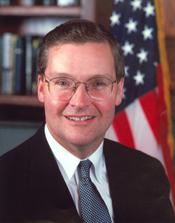
John Doolittle
Former U.S. Representative · California District 4 · 1991–2009 · Republican
John Doolittle represented California's District 4 in the United States House of Representatives (1991–2009) for the Republican party. The page below collects sourced biographical facts, term history, committee roles, and provenance for Doolittle.
Bioguide ID: D000429
Key facts
- Full name
- John Doolittle
- State
- California
- District
- District 4
- Party
- Republican
- House service
- 1991–2009
- First House term
- 1991
- Status
- Left office
- Current term ends
- —
- Born
- 1950
- Bioguide ID
- D000429
- Committee assignments
- —
- Dataset version
- 1.20260605
Biographical narrative
904 words · sourced from the Wikipedia REST extract
John T. Doolittle is a former American politician and attorney who served as a Republican member of the United States House of Representatives from 1991 to 2009, representing California's 4th congressional district. His political career spanned nearly two decades, during which he held various leadership roles and was involved in significant legislative actions. Doolittle's tenure in Congress was marked by his alignment with conservative principles and his participation in key political events, including the impeachment inquiry against President Bill Clinton. He concluded his congressional career after announcing he would not seek re-election in 2008, amid various controversies and challenges.
Early life and career
John T. Doolittle was born on October 30, 1950, in Glendale, California. He spent his formative years in Cupertino, California, where he attended local public schools and graduated from Cupertino High School in 1968. Doolittle pursued higher education at the University of California, Santa Cruz, where he earned a Bachelor of Arts degree in history with honors. Following his undergraduate studies, he attended McGeorge School of Law at the University of the Pacific in Sacramento, obtaining his Juris Doctor degree in 1978.
Before embarking on his legal career, Doolittle dedicated two years as a missionary in Argentina for the Church of Jesus Christ of Latter-day Saints, a faith he and his family practice. After completing his law degree, he began his political career in 1979 as an aide to California State Senator H. L. Richardson, a prominent conservative figure. Encouraged by Richardson and other Republican leaders, Doolittle ran for the California State Senate in 1980. He won the election against incumbent Democrat Albert S. Rodda, marking the beginning of his political journey.
Doolittle's time in the California State Senate was characterized by both successes and challenges. After being redistricted into a predominantly Democratic area, he lost his seat to Assemblyman Leroy Greene in 1982. However, he managed to retain his position until 1984 due to a quirk in redistricting rules. Doolittle successfully ran for re-election in 1984 and again in 1988, serving as chairman of the state Senate Republican Caucus from 1987 to 1990.
House tenure
Doolittle's transition to the U.S. House of Representatives began in 1990 when he sought to fill the seat vacated by retiring Republican Norman D. Shumway. In the general election, Doolittle secured victory over Democrat Patty Malberg, receiving 51% of the vote in what was then California's 14th congressional district. Following redistricting in 1992, Doolittle's district was renumbered as California's 4th congressional district. He continued to win re-election, securing 50% of the vote in 1992 and 60% in 1994, establishing himself as a prominent figure in California politics.
Throughout his nine terms in the House, Doolittle was known for his conservative stance and loyalty to the Republican Party. He was part of the "Gang of Seven," a group of Republican lawmakers who played a significant role in exposing the House banking scandal in the early 1990s. Doolittle's political positions included support for partial privatization of Social Security, opposition to gun control and abortion rights, and a general alignment with the policies of the Bush administration, particularly in regard to fiscal conservatism.
In the 109th Congress, Doolittle held the position of Deputy Whip for the Republican Party, further solidifying his influence within the party. His legislative actions included co-sponsoring a resolution in November 1997 that sought to initiate an impeachment inquiry against President Bill Clinton, a precursor to the more extensive impeachment proceedings that would follow in 1998.
Despite his early successes, Doolittle faced increasing challenges as he approached the 2008 election. He encountered difficulties in fundraising and lost support from previous allies, ultimately deciding not to run for re-election. His decision came amid scrutiny and criticism regarding his financial dealings and fundraising practices.
Legislative focus and committees
During his time in Congress, Doolittle was recognized for his strong conservative ideology and active participation in various legislative initiatives. He was involved in efforts to reform government spending and taxation, advocating for policies that aligned with the Republican Party's fiscal agenda. His support for partial privatization of Social Security reflected his belief in empowering individuals to have greater control over their financial futures.
Doolittle's opposition to gun control measures and abortion rights was consistent with his conservative values, and he often aligned himself with like-minded lawmakers in these areas. His involvement in the Republican Study Committee, which he helped revive as the "Conservative Action Team," demonstrated his commitment to promoting conservative principles within the House.
Throughout his congressional career, Doolittle faced scrutiny regarding his financial practices, particularly related to his fundraising efforts. His use of his wife's one-person firm for political fundraising raised ethical concerns, leading to criticism from opponents and advocacy groups. Additionally, he was under investigation for alleged financial improprieties related to his business dealings with lobbyist Jack Abramoff. Although he was listed among the most corrupt congressmen by Citizens for Responsibility and Ethics in Washington during this period, the investigation concluded in 2010 without any charges being filed against him.
In summary, John T. Doolittle's political career was marked by a commitment to conservative values and significant involvement in legislative processes. His tenure in the U.S. House of Representatives spanned nearly two decades, during which he navigated both successes and controversies. After announcing his decision not to seek re-election in 2008, Doolittle concluded his time in Congress, leaving behind a complex legacy shaped by his political actions and the challenges he faced.
Notable legislation
Sponsored and co-sponsored legislation for John Doolittle is pending operator curation. The biographical narrative above carries the same provenance trail until per-bill rows are written.
Sources
- [1]https://en.wikipedia.org/wiki/John_DoolittleWikipedia · retrieved 2026-06-05
Notable quotes
Sourced quotes for John Doolittle are pending operator curation. Narrative-scope provenance remains attached below.
Sources
- [1]https://en.wikipedia.org/wiki/John_DoolittleWikipedia · retrieved 2026-06-05
Key positions
Curated policy positions for John Doolittle are pending operator review. The biographical narrative above carries the same provenance trail until per-topic positions are written.
Sources
- [1]https://en.wikipedia.org/wiki/John_DoolittleWikipedia · retrieved 2026-06-05
Terms served
- 1991–1993U.S. House · Term 1 · Republican
- 1993–1995U.S. House · Term 2 · Republican
- 1995–1997U.S. House · Term 3 · Republican
- 1997–1999U.S. House · Term 4 · Republican
- 1999–2001U.S. House · Term 5 · Republican
- 2001–2003U.S. House · Term 6 · Republican
- 2003–2005U.S. House · Term 7 · Republican
- 2005–2007U.S. House · Term 8 · Republican
- 2007–2009U.S. House · Term 9 · Republican
Sources & provenance
Every attributable claim above carries a per-section [N] marker that resolves to the corresponding URL below. Each entry records the upstream provider, the canonical URL, and the timestamp at which the source was retrieved by the ingest pipeline.
Key facts
- https://bioguide.congress.gov/search/bio/D000429bioguide · retrieved 2026-06-05
- http://doolittle.house.govhouse.gov · retrieved 2026-06-05
Biographical narrative
- https://en.wikipedia.org/wiki/John_Doolittlewikipedia · retrieved 2026-06-05
Find your representative
Every U.S. state elects representatives by district. Browse California’s delegation, the full former-representative roster, or explore the role and term length.
Related on The Candidate
- Preceded by Robert LeggettEarlier holder of the California District 4 House seat · Democratic.Open
- Barclay HenleyFormer U.S. Representative · California District 1 · DemocraticOpen
- Charles ClaytonFormer U.S. Representative · California District 1 · RepublicanOpen
- Clarence LeaFormer U.S. Representative · California District 1 · DemocraticOpen
- Clement MillerFormer U.S. Representative · California District 1 · DemocraticOpen
- Republican PartyFederal candidates and office holders on the Republican line.Open