
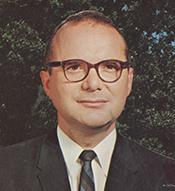
Historical · U.S. House · California · District 4
Robert Leggett
Former U.S. Representative · California District 4 · 1963–1979 · Democratic
Robert Leggett represented California's District 4 in the United States House of Representatives (1963–1979) for the Democratic party. The page below collects sourced biographical facts, term history, committee roles, and provenance for Leggett.
Bioguide ID: L000221
Key facts
- Full name
- Robert Leggett
- State
- California
- District
- District 4
- Party
- Democratic
- House service
- 1963–1979
- First House term
- 1963
- Status
- Left office
- Current term ends
- —
- Born
- 1926
- Bioguide ID
- L000221
- Committee assignments
- —
- Dataset version
- 1.20260605
Biographical narrative
855 words · sourced from the Wikipedia REST extract
Robert L. Leggett was an American lawyer and politician who served as a U.S. Representative for California's 4th congressional district from 1963 until 1979. A member of the Democratic Party, he completed eight consecutive terms in the House of Representatives, during which he was known for his opposition to the Vietnam War and his early advocacy for environmental issues. His political career was marked by significant legislative involvement and a notable controversy that arose in the 1970s.
Early life and career
Robert Louis Leggett was born on July 26, 1926, in Richmond, California. He grew up in the area and attended local public schools, where he laid the foundation for his future academic and professional pursuits. Following his high school education, Leggett enlisted in the United States Naval Air Corps, serving from 1944 to 1946 during the final years of World War II. This military experience contributed to his understanding of national defense and military affairs, which would later influence his legislative priorities.
After completing his military service, Leggett pursued higher education at the University of California, Berkeley. He earned a Bachelor of Arts degree in 1947, followed by a Juris Doctor degree from the University of California's Boalt Hall School of Jurisprudence in 1950. Upon being admitted to the bar in 1951, he began practicing law in Vallejo, California. His legal career provided him with valuable experience and insights into the workings of the legal system, which would prove beneficial during his time in public office.
Leggett's political career began in the early 1960s when he was elected to the California State Assembly, serving from 1960 to 1962. His tenure in the Assembly allowed him to gain experience in legislative processes and state-level governance, setting the stage for his subsequent election to the U.S. House of Representatives.
House tenure
Leggett was elected to the U.S. House of Representatives in 1962 as a member of the Democratic Party, representing California's 4th congressional district. He officially took office on January 3, 1963, and served until January 3, 1979. Throughout his eight terms in Congress, Leggett was known for his active participation in various legislative matters and his commitment to his constituents.
During his time in the House, Leggett was a member of the House Armed Services Committee. His background in military service and law informed his perspectives on defense and national security issues. He was particularly noted for his opposition to the Vietnam War, a stance that resonated with many constituents who were concerned about U.S. involvement in the conflict. His advocacy for peace and diplomacy reflected a broader trend among certain lawmakers during the tumultuous 1960s and 1970s.
In addition to his focus on military and defense issues, Leggett was an early advocate for environmental protection. He recognized the importance of addressing environmental challenges and worked on legislation aimed at promoting conservation and sustainable practices. His efforts contributed to the growing awareness of environmental issues during a period when such concerns were becoming increasingly prominent in American political discourse.
Leggett's congressional career was not without controversy. In the 1970s, he became embroiled in a scandal related to allegations of improper connections with South Korean officials. This controversy arose in the context of investigations into Koreagate, which examined the influence of foreign entities on U.S. politicians. Although Leggett strongly denied any wrongdoing, the allegations affected his political standing and contributed to his decision to retire from Congress in 1979.
Legislative focus and committees
Throughout his tenure in the House of Representatives, Robert L. Leggett focused on a range of issues that reflected the interests and concerns of his constituents. His work on the House Armed Services Committee allowed him to engage with critical national security matters, including military funding and defense policy. His opposition to the Vietnam War was a defining aspect of his legislative career, as he sought to advocate for a more peaceful approach to international relations.
In addition to military and defense issues, Leggett's early commitment to environmentalism set him apart from some of his contemporaries. He recognized the importance of addressing environmental degradation and worked on initiatives aimed at promoting conservation efforts. His advocacy contributed to the broader environmental movement that gained momentum during the 1970s, as public awareness of ecological issues increased.
Leggett's legislative focus also included various domestic policies that aimed to improve the quality of life for his constituents. His work in Congress involved addressing issues such as education, healthcare, and social welfare, reflecting the priorities of the Democratic Party during that era. He sought to promote policies that would benefit working families and enhance community resources.
Despite the controversies that surrounded his later years in Congress, Leggett's contributions to legislative discussions and his commitment to his constituents were notable aspects of his career. After retiring from public office, he continued to engage in various endeavors, including a personal life that saw him marry Suzi Park Thomson in 1981.
Robert L. Leggett passed away on August 13, 1997, in Orange, California, at the age of 71. His legacy as a public servant and advocate for peace and environmental issues remains a part of California's political history.
Notable legislation
Sponsored and co-sponsored legislation for Robert Leggett is pending operator curation. The biographical narrative above carries the same provenance trail until per-bill rows are written.
Sources
- [1]https://en.wikipedia.org/wiki/Robert_LeggettWikipedia · retrieved 2026-06-05
Notable quotes
Sourced quotes for Robert Leggett are pending operator curation. Narrative-scope provenance remains attached below.
Sources
- [1]https://en.wikipedia.org/wiki/Robert_LeggettWikipedia · retrieved 2026-06-05
Key positions
Curated policy positions for Robert Leggett are pending operator review. The biographical narrative above carries the same provenance trail until per-topic positions are written.
Sources
- [1]https://en.wikipedia.org/wiki/Robert_LeggettWikipedia · retrieved 2026-06-05
Terms served
- 1963–1965U.S. House · Term 1 · Democratic
- 1965–1967U.S. House · Term 2 · Democratic
- 1967–1969U.S. House · Term 3 · Democratic
- 1969–1971U.S. House · Term 4 · Democratic
- 1971–1973U.S. House · Term 5 · Democratic
- 1973–1975U.S. House · Term 6 · Democratic
- 1975–1977U.S. House · Term 7 · Democratic
- 1977–1979U.S. House · Term 8 · Democratic
Sources & provenance
Every attributable claim above carries a per-section [N] marker that resolves to the corresponding URL below. Each entry records the upstream provider, the canonical URL, and the timestamp at which the source was retrieved by the ingest pipeline.
Key facts
- https://bioguide.congress.gov/search/bio/L000221bioguide · retrieved 2026-06-05
- https://www.govtrack.us/congress/members/406725govtrack · retrieved 2026-06-05
Biographical narrative
- https://en.wikipedia.org/wiki/Robert_Leggettwikipedia · retrieved 2026-06-05
Find your representative
Every U.S. state elects representatives by district. Browse California’s delegation, the full former-representative roster, or explore the role and term length.
Related on The Candidate
- Preceded by Franck HavennerEarlier holder of the California District 4 House seat · Democratic.Open
- Succeeded by John DoolittleLater holder of the California District 4 House seat · Republican.Open
- Barclay HenleyFormer U.S. Representative · California District 1 · DemocraticOpen
- Charles ClaytonFormer U.S. Representative · California District 1 · RepublicanOpen
- Clarence LeaFormer U.S. Representative · California District 1 · DemocraticOpen
- Clement MillerFormer U.S. Representative · California District 1 · DemocraticOpen