
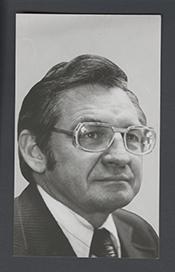
Historical · U.S. House · California · District 40
Andrew Hinshaw
Former U.S. Representative · California District 40 · 1973–1977 · Republican
Andrew Hinshaw represented California's District 40 in the United States House of Representatives (1973–1977) for the Republican party. The page below collects sourced biographical facts, term history, committee roles, and provenance for Hinshaw.
Bioguide ID: H000638
Key facts
- Full name
- Andrew Hinshaw
- State
- California
- District
- District 40
- Party
- Republican
- House service
- 1973–1977
- First House term
- 1973
- Status
- Left office
- Current term ends
- —
- Born
- 1923
- Bioguide ID
- H000638
- Committee assignments
- —
- Dataset version
- 1.20260605
Biographical narrative
974 words · sourced from the Wikipedia REST extract
Andrew J. Hinshaw was an American politician who served as a U.S. Representative for California's 40th congressional district from 1973 until 1977. A member of the Republican Party, Hinshaw's political career was marked by his tenure as a congressman and his previous role as the Orange County Assessor. His time in office was ultimately overshadowed by legal troubles that culminated in a conviction for bribery. Born on August 4, 1923, in Dexter, Missouri, Hinshaw's life spanned significant historical events, including World War II, and his career reflected the shifting political landscape of California during the 1970s.
Early life and career
Andrew J. Hinshaw was born in Dexter, Missouri, and spent his formative years in Michigan and Los Angeles, California, where he attended public schools. His early education laid the groundwork for his later academic pursuits. Following high school, Hinshaw enlisted in the United States Navy during World War II, serving from 1942 to 1945. His military service was a defining period in his life, contributing to his sense of civic duty and public service.
After the war, Hinshaw pursued higher education, earning a Bachelor of Science degree from the University of Southern California in 1950. He furthered his education by attending the USC Law School, although it is unclear whether he completed a law degree. His academic background provided him with a foundation for his future career in public service and politics.
Hinshaw's professional life began with a decade-long tenure at the California State Board of Equalization, where he gained experience in tax assessment and public administration. Following this role, he worked for five years in the Los Angeles County Assessor's Office, which further solidified his expertise in property assessment and local governance. His experience in these positions paved the way for his entry into politics.
In 1965, Hinshaw was elected as the Property Assessor of Orange County, California, a position he held until 1972. This role was notably controversial, as it involved significant scrutiny regarding the treatment of large landowners in the county. During his time in office, there were calls from Orange County grand juries for reforms to address the perceived leniency in property assessments, indicating that his tenure was marked by challenges and public debate.
House tenure
Hinshaw's political career took a significant turn in 1972 when he entered the Republican primary for California's 39th Congressional District. This district had previously been known as the 35th District before redistricting. At the time, the district was represented by John G. Schmitz, a staunch conservative known for his outspoken views. Hinshaw, who was regarded as a moderate Republican by the standards of Orange County, was personally recruited for the race by President Richard Nixon. Nixon's connection to the district, particularly his residence in San Clemente, added a layer of significance to Hinshaw's candidacy.
In a notable upset, Hinshaw narrowly defeated Schmitz in the Republican primary, winning by a margin of 2.7 percentage points. This victory was particularly significant given the district's reputation as one of the most Republican strongholds in California. Following his primary win, Hinshaw was effectively assured of election to Congress, reflecting the district's political leanings.
Hinshaw was sworn into the House of Representatives in 1973, marking the beginning of his first term. During his time in office, he focused on various legislative issues relevant to his constituents and the broader political landscape. He was reelected in 1974, demonstrating a degree of electoral support that allowed him to continue his work in Congress.
However, Hinshaw's political career faced a turning point in 1976 when he was defeated in the primary election by State Assemblyman Robert Badham. This loss marked the end of his congressional tenure, as Badham went on to win the general election. Hinshaw's defeat can be attributed to various factors, including shifting political dynamics within the Republican Party and the district itself.
Legislative focus and committees
During his time in the House of Representatives, Hinshaw's legislative focus encompassed a range of issues pertinent to his constituents and the state of California. While specific details regarding the bills he sponsored or supported are not provided, it can be inferred that his background in property assessment and local governance influenced his policy priorities. As a member of the Republican Party, he likely aligned with the party's broader platform, which emphasized fiscal conservatism, limited government, and support for business interests.
Hinshaw's committee assignments during his congressional tenure would have played a crucial role in shaping his legislative agenda and influence. However, the specific committees on which he served are not detailed in the available information. Typically, members of Congress are assigned to committees that align with their expertise and the interests of their constituents, which would have provided Hinshaw with opportunities to advocate for policies relevant to his district.
Despite his initial successes in Congress, Hinshaw's political career was marred by legal issues that emerged in the latter part of the 1970s. In 1976, he faced serious allegations of accepting bribes from the Tandy Corporation while serving as the Orange County Assessor. These accusations included claims that he had misused county resources for his congressional campaign. The legal proceedings that followed resulted in Hinshaw being found guilty and sentenced to prison, where he served eight months.
Hinshaw's conviction and subsequent legal troubles overshadowed his congressional accomplishments and marked a significant decline in his political career. Following his time in prison, he largely withdrew from the public eye, and his later life was characterized by a retreat from the political arena.
Andrew J. Hinshaw passed away on January 21, 2016, at the age of 92. His life and career reflect the complexities of American politics during a transformative era, as well as the challenges that can arise from public service. His legacy is intertwined with both his contributions to California's political landscape and the controversies that ultimately defined his career.
Notable legislation
Sponsored and co-sponsored legislation for Andrew Hinshaw is pending operator curation. The biographical narrative above carries the same provenance trail until per-bill rows are written.
Sources
- [1]https://en.wikipedia.org/wiki/Andrew_J._HinshawWikipedia · retrieved 2026-06-05
Notable quotes
Sourced quotes for Andrew Hinshaw are pending operator curation. Narrative-scope provenance remains attached below.
Sources
- [1]https://en.wikipedia.org/wiki/Andrew_J._HinshawWikipedia · retrieved 2026-06-05
Key positions
Curated policy positions for Andrew Hinshaw are pending operator review. The biographical narrative above carries the same provenance trail until per-topic positions are written.
Sources
- [1]https://en.wikipedia.org/wiki/Andrew_J._HinshawWikipedia · retrieved 2026-06-05
Terms served
- 1973–1975U.S. House · Term 1 · Republican
- 1975–1977U.S. House · Term 2 · Republican
Sources & provenance
Every attributable claim above carries a per-section [N] marker that resolves to the corresponding URL below. Each entry records the upstream provider, the canonical URL, and the timestamp at which the source was retrieved by the ingest pipeline.
Key facts
- https://bioguide.congress.gov/search/bio/H000638bioguide · retrieved 2026-06-05
- https://www.govtrack.us/congress/members/405493govtrack · retrieved 2026-06-05
Biographical narrative
- https://en.wikipedia.org/wiki/Andrew_J._Hinshawwikipedia · retrieved 2026-06-05
Find your representative
Every U.S. state elects representatives by district. Browse California’s delegation, the full former-representative roster, or explore the role and term length.
Related on The Candidate
- Succeeded by Robert BadhamLater holder of the California District 40 House seat · Republican.Open
- Barclay HenleyFormer U.S. Representative · California District 1 · DemocraticOpen
- Charles ClaytonFormer U.S. Representative · California District 1 · RepublicanOpen
- Clarence LeaFormer U.S. Representative · California District 1 · DemocraticOpen
- Clement MillerFormer U.S. Representative · California District 1 · DemocraticOpen
- Republican PartyFederal candidates and office holders on the Republican line.Open