
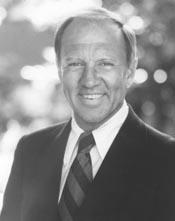
Historical · U.S. House · California · District 40
Robert Badham
Former U.S. Representative · California District 40 · 1977–1989 · Republican
Robert Badham represented California's District 40 in the United States House of Representatives (1977–1989) for the Republican party. The page below collects sourced biographical facts, term history, committee roles, and provenance for Badham.
Bioguide ID: B000024
Key facts
- Full name
- Robert Badham
- State
- California
- District
- District 40
- Party
- Republican
- House service
- 1977–1989
- First House term
- 1977
- Status
- Left office
- Current term ends
- —
- Born
- 1929
- Bioguide ID
- B000024
- Committee assignments
- —
- Dataset version
- 1.20260605
Biographical narrative
943 words · sourced from the Wikipedia REST extract
Robert E. Badham was an American politician who served as a Republican member of the United States House of Representatives for California's 40th congressional district from 1977 until 1989. His political career spanned over three decades, during which he was involved in various legislative initiatives and held significant positions within Congress. Badham's tenure was marked by his engagement in local and national politics, as well as his contributions to the Republican Party at both state and national levels.
Early life and career
Robert Edward Badham was born on June 9, 1929, in Los Angeles, California. He completed his secondary education at Beverly Hills High School, graduating in 1947. Following high school, Badham attended Stanford University, where he earned a Bachelor of Arts degree in 1951. His early life was characterized by a commitment to service, as he joined the United States Naval Reserve during the Korean War, where he served on active duty.
After his military service, Badham returned to California and took on a significant role in his family's business, Hoffman Hardware Company, which was based in Los Angeles. His experience in the private sector laid a foundation for his later political career, as he developed an understanding of business operations and community needs.
Badham's entry into politics began in 1962 when he was elected to the California State Assembly. He served in this capacity for fourteen years, during which he became known for his legislative initiatives. Among his notable achievements was co-authoring legislation that allowed for the creation of personalized license plates, a measure that reflected his interest in individual expression and state identity. Additionally, he was an advocate for environmental protection, notably working to safeguard tide pools along the Southern California coastline. His involvement in state politics also included participation as a delegate to the California State Republican conventions, as well as serving as a delegate to the Republican National Conventions from 1964 to 1984.
House tenure
In 1976, Badham sought a position in the U.S. House of Representatives, entering a competitive Republican primary for California's 40th congressional district. He emerged victorious with a plurality of the vote, securing approximately 32% against a field of eight candidates, which included former congressman John G. Schmitz and the incumbent Andrew J. Hinshaw. Following his primary success, Badham won the general election in November, marking the beginning of his six terms in Congress.
During his time in the House, Badham represented a district that included the cities of Irvine and Newport Beach, which were known for their strong Republican leanings. His electoral success in this heavily Republican district allowed him to be re-elected five additional times, reflecting his ability to connect with constituents and address their concerns effectively.
Throughout his congressional career, Badham held significant positions that influenced his legislative effectiveness. He served as a ranking member on the House Armed Services Committee, where he contributed to discussions and decisions regarding national defense and military policy. His role on this committee was particularly relevant during a period marked by significant geopolitical changes and military engagements. Additionally, Badham represented the United States in the NATO Parliamentary Assembly, further emphasizing his involvement in international relations and defense matters.
Badham's legislative focus was shaped by the political climate of the time and the interests of his constituents. He was known for advocating policies that aligned with the Republican Party's platform, particularly those related to defense, economic growth, and local governance. His ability to navigate the complexities of congressional politics allowed him to build coalitions and support for various initiatives, contributing to his reputation as a dedicated public servant.
Legislative focus and committees
During his tenure in the House of Representatives, Robert Badham's legislative focus encompassed a range of issues, reflecting both his personal interests and the priorities of his constituents. His work on the House Armed Services Committee was particularly notable, as he engaged with matters related to national security, military readiness, and defense appropriations. This committee played a crucial role in shaping U.S. defense policy during a time of heightened international tensions, and Badham's contributions were significant in advocating for the needs of the military and veterans.
In addition to his work on defense-related issues, Badham was involved in various initiatives that addressed local concerns in his district. His background in business and community service informed his approach to legislation, as he sought to promote economic development and improve the quality of life for residents in Orange County. His advocacy for personalized license plates during his time in the California State Assembly carried over into his congressional work, as he continued to support measures that encouraged individual expression and local identity.
Badham's participation in the NATO Parliamentary Assembly underscored his commitment to international cooperation and security. This role allowed him to engage with representatives from other nations, fostering dialogue on defense and security issues that transcended national borders. His involvement in this assembly reflected a broader understanding of the interconnectedness of global politics and the importance of collaborative efforts in addressing security challenges.
After retiring from Congress in 1989, Badham continued to engage in public service and community initiatives. He served on the California Board of Accountancy and held the position of vice chairman of the Newport Beach Civil Service Board. Additionally, he contributed to fundraising efforts for local institutions, such as Hoag Hospital, demonstrating his ongoing commitment to the community he represented.
Robert E. Badham passed away on October 21, 2005, after suffering a heart attack. He was laid to rest at Riverside National Cemetery in Riverside, California. His legacy as a public servant is marked by his dedication to his constituents and his contributions to both state and national politics.
Notable legislation
Sponsored and co-sponsored legislation for Robert Badham is pending operator curation. The biographical narrative above carries the same provenance trail until per-bill rows are written.
Sources
- [1]https://en.wikipedia.org/wiki/Robert_BadhamWikipedia · retrieved 2026-06-05
Notable quotes
Sourced quotes for Robert Badham are pending operator curation. Narrative-scope provenance remains attached below.
Sources
- [1]https://en.wikipedia.org/wiki/Robert_BadhamWikipedia · retrieved 2026-06-05
Key positions
Curated policy positions for Robert Badham are pending operator review. The biographical narrative above carries the same provenance trail until per-topic positions are written.
Sources
- [1]https://en.wikipedia.org/wiki/Robert_BadhamWikipedia · retrieved 2026-06-05
Terms served
- 1977–1979U.S. House · Term 1 · Republican
- 1979–1981U.S. House · Term 2 · Republican
- 1981–1983U.S. House · Term 3 · Republican
- 1983–1985U.S. House · Term 4 · Republican
- 1985–1987U.S. House · Term 5 · Republican
- 1987–1989U.S. House · Term 6 · Republican
Sources & provenance
Every attributable claim above carries a per-section [N] marker that resolves to the corresponding URL below. Each entry records the upstream provider, the canonical URL, and the timestamp at which the source was retrieved by the ingest pipeline.
Key facts
- https://bioguide.congress.gov/search/bio/B000024bioguide · retrieved 2026-06-05
- https://www.govtrack.us/congress/members/401029govtrack · retrieved 2026-06-05
Biographical narrative
- https://en.wikipedia.org/wiki/Robert_Badhamwikipedia · retrieved 2026-06-05
Find your representative
Every U.S. state elects representatives by district. Browse California’s delegation, the full former-representative roster, or explore the role and term length.
Related on The Candidate
- Preceded by Andrew HinshawEarlier holder of the California District 40 House seat · Republican.Open
- Succeeded by Lucille Roybal-AllardLater holder of the California District 40 House seat · Democratic.Open
- Barclay HenleyFormer U.S. Representative · California District 1 · DemocraticOpen
- Charles ClaytonFormer U.S. Representative · California District 1 · RepublicanOpen
- Clarence LeaFormer U.S. Representative · California District 1 · DemocraticOpen
- Clement MillerFormer U.S. Representative · California District 1 · DemocraticOpen