
Historical · U.S. House · California · District 41
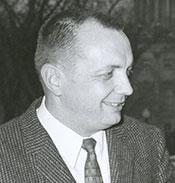
Bob Wilson
Former U.S. Representative · California District 41 · 1953–1981 · Republican
Bob Wilson represented California's District 41 in the United States House of Representatives (1953–1981) for the Republican party. The page below collects sourced biographical facts, term history, committee roles, and provenance for Wilson.
Bioguide ID: W000610
Key facts
- Full name
- Bob Wilson
- State
- California
- District
- District 41
- Party
- Republican
- House service
- 1953–1981
- First House term
- 1953
- Status
- Left office
- Current term ends
- —
- Born
- 1916
- Bioguide ID
- W000610
- Committee assignments
- —
- Dataset version
- 1.20260605
Biographical narrative
980 words · sourced from the Wikipedia REST extract
Robert C. Wilson was an American politician who served as a U.S. Representative for California's 41st congressional district from 1953 until 1981. A member of the Republican Party, Wilson was known for his long tenure in Congress, spanning 14 terms. His political career was marked by a strong focus on military issues, anti-communism, and a commitment to conservative fiscal policies. Wilson's influence extended beyond his legislative work, as he was a prominent figure in local politics and community engagement in San Diego.
Early life and career
Robert Carlton Wilson was born on April 5, 1916, in Calexico, California. He pursued higher education at San Diego State College, which is now known as San Diego State University, and also attended the Otis Art Institute, currently known as Otis College of Art and Design. Wilson's early life laid the foundation for his later career in both politics and business.
During World War II, Wilson served in the United States Army, where he was stationed stateside in the Army commissary from 1940 to 1945. His military service continued after the war when he joined the Marine Corps Reserve, eventually attaining the rank of colonel. Following his military career, Wilson became a partner in two advertising agencies, which provided him with valuable experience in communication and public relations—skills that would later benefit him in his political endeavors.
Wilson's entry into politics began with his involvement in the campaign for Dwight D. Eisenhower in 1952. His political aspirations were realized when he was recruited to run for the newly established 30th congressional district, which was based in San Diego, California. His selection as the Republican candidate was met with surprise by his wife, Jean Bryant Wilson, who humorously questioned his candidacy. Nevertheless, Wilson was elected to Congress during Eisenhower's significant electoral victory that year, marking the beginning of a lengthy and impactful political career.
House tenure
Wilson's congressional career began in 1953, and he would go on to serve a total of 14 terms in the House of Representatives, concluding his service on January 3, 1981. Throughout his tenure, he was reelected 13 times, often without facing serious opposition, as San Diego was a Republican stronghold during this period. His campaigns were characterized by themes of anti-communism and a strong military presence, reflecting the political climate of the time.
As a member of Congress, Wilson became a prominent advocate for the defense industry and played a significant role in the expansion of military facilities in San Diego. His commitment to military issues was evident in his long-standing membership on the House Armed Services Committee, which he served on from 1959 until his retirement. Additionally, from 1968 until he left office, Wilson held the position of chair of the National Republican Congressional Committee, further solidifying his influence within the party.
Wilson's popularity in San Diego was notable, and he engaged in various community outreach efforts, including distributing promotional items such as pot holders and cookbooks bearing his name during election seasons. His efforts to connect with constituents contributed to his strong electoral support and recognition within the district.
Throughout his congressional career, Wilson participated in significant legislative actions, including voting in favor of several key civil rights measures, such as the Civil Rights Acts of 1957, 1960, 1964, and 1968, as well as the Voting Rights Act of 1965. However, he also faced scrutiny for some of his statements and positions, including a controversial remark regarding spousal rape in 1979.
In 1980, Wilson made the decision not to seek a 15th term in Congress. Following his departure from the House, he continued to be active in political circles, serving as co-chairman of the American Freedom Coalition alongside Congressman Richard Ichord. His involvement in various organizations reflected his ongoing commitment to conservative causes and political engagement.
Legislative focus and committees
During his time in the House of Representatives, Wilson's legislative focus was primarily on military and defense issues, which aligned with the interests of his constituents in San Diego. His role on the House Armed Services Committee allowed him to influence defense policy and advocate for the military presence in his district. This focus was particularly relevant given the strategic importance of military installations in Southern California.
Wilson's political philosophy emphasized anti-communism and a strong national defense, which resonated with the Republican base during the Cold War era. He was a vocal proponent of maintaining a robust military capability, arguing that it was essential for national security and the protection of American interests both domestically and abroad.
In addition to his work on military matters, Wilson's legislative record included support for civil rights legislation, reflecting a complex political landscape in which he navigated the demands of his constituents while adhering to his party's principles. His votes in favor of civil rights measures indicated a willingness to engage with pressing social issues of the time, although his overall political stance remained firmly rooted in conservative values.
Wilson's engagement with his constituents extended beyond legislative matters. His efforts to connect with voters through community events and outreach initiatives helped solidify his reputation as a dedicated public servant. The distribution of items such as the "Bob Wilson Barbecue Cook Book" exemplified his approach to maintaining visibility and rapport with the electorate.
After concluding his congressional career, Wilson remained active in various civic and political organizations. His involvement with the California Society of the Sons of the American Revolution highlighted his interest in historical and patriotic causes, further illustrating his commitment to public service and community engagement.
Robert C. Wilson passed away on August 12, 1999, in Chula Vista, California, at the age of 83. He was laid to rest at Fort Rosecrans National Cemetery in San Diego, leaving behind a legacy shaped by decades of public service and political engagement. His long tenure in the U.S. House of Representatives remains a significant part of California's political history.
Notable legislation
Sponsored and co-sponsored legislation for Bob Wilson is pending operator curation. The biographical narrative above carries the same provenance trail until per-bill rows are written.
Sources
- [1]https://en.wikipedia.org/wiki/Bob_Wilson_(politician)Wikipedia · retrieved 2026-06-05
Notable quotes
Sourced quotes for Bob Wilson are pending operator curation. Narrative-scope provenance remains attached below.
Sources
- [1]https://en.wikipedia.org/wiki/Bob_Wilson_(politician)Wikipedia · retrieved 2026-06-05
Key positions
Curated policy positions for Bob Wilson are pending operator review. The biographical narrative above carries the same provenance trail until per-topic positions are written.
Sources
- [1]https://en.wikipedia.org/wiki/Bob_Wilson_(politician)Wikipedia · retrieved 2026-06-05
Terms served
- 1953–1955U.S. House · Term 1 · Republican
- 1955–1957U.S. House · Term 2 · Republican
- 1957–1959U.S. House · Term 3 · Republican
- 1959–1961U.S. House · Term 4 · Republican
- 1961–1963U.S. House · Term 5 · Republican
- 1963–1965U.S. House · Term 6 · Republican
- 1965–1967U.S. House · Term 7 · Republican
- 1967–1969U.S. House · Term 8 · Republican
- 1969–1971U.S. House · Term 9 · Republican
- 1971–1973U.S. House · Term 10 · Republican
- 1973–1975U.S. House · Term 11 · Republican
- 1975–1977U.S. House · Term 12 · Republican
- 1977–1979U.S. House · Term 13 · Republican
- 1979–1981U.S. House · Term 14 · Republican
Sources & provenance
Every attributable claim above carries a per-section [N] marker that resolves to the corresponding URL below. Each entry records the upstream provider, the canonical URL, and the timestamp at which the source was retrieved by the ingest pipeline.
Key facts
- https://bioguide.congress.gov/search/bio/W000610bioguide · retrieved 2026-06-05
- https://www.govtrack.us/congress/members/411765govtrack · retrieved 2026-06-05
Biographical narrative
- https://en.wikipedia.org/wiki/Bob_Wilson_(politician)wikipedia · retrieved 2026-06-05
Find your representative
Every U.S. state elects representatives by district. Browse California’s delegation, the full former-representative roster, or explore the role and term length.
Related on The Candidate
- Succeeded by William LoweryLater holder of the California District 41 House seat · Republican.Open
- Barclay HenleyFormer U.S. Representative · California District 1 · DemocraticOpen
- Charles ClaytonFormer U.S. Representative · California District 1 · RepublicanOpen
- Clarence LeaFormer U.S. Representative · California District 1 · DemocraticOpen
- Clement MillerFormer U.S. Representative · California District 1 · DemocraticOpen
- Republican PartyFederal candidates and office holders on the Republican line.Open