
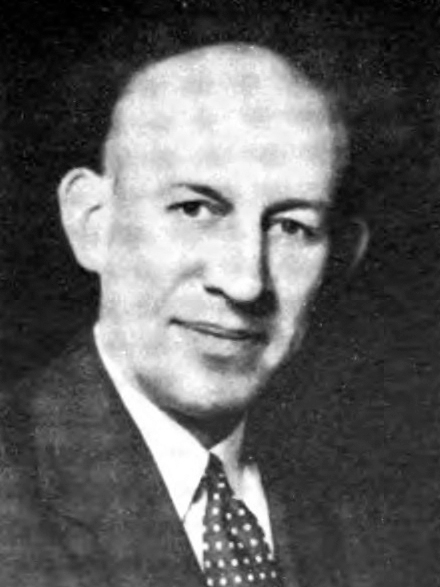
Historical · U.S. House · California · District 8
John Anderson
Former U.S. Representative · California District 8 · 1939–1953 · Republican
John Anderson represented California's District 8 in the United States House of Representatives (1939–1953) for the Republican party. The page below collects sourced biographical facts, term history, committee roles, and provenance for Anderson.
Bioguide ID: A000196
Key facts
- Full name
- John Anderson
- State
- California
- District
- District 8
- Party
- Republican
- House service
- 1939–1953
- First House term
- 1939
- Status
- Left office
- Current term ends
- —
- Born
- 1904
- Bioguide ID
- A000196
- Committee assignments
- —
- Dataset version
- 1.20260605
Biographical narrative
936 words · sourced from the Wikipedia REST extract
John Zuinglius Anderson was an American farmer and politician who served as a U.S. Representative from California's 8th congressional district from 1939 to 1953. A member of the Republican Party, Anderson was elected to seven consecutive terms in the House of Representatives, where he was known for his involvement in agricultural issues and his controversial stance on Japanese-American internment during World War II. After leaving Congress, he continued to engage in public service and agricultural organizations until his retirement.
Early life and career
John Anderson was born on March 22, 1904, in Oakland, California. His family relocated to Santa Cruz, California, later that same year, and then moved to San Jose in 1913. Growing up in these California communities, Anderson attended public schools and graduated from San Jose High School in 1923. Following his education, he moved to San Juan Bautista in 1925, where he embarked on a career in agriculture, focusing on fruit growing. This early experience in farming would later inform his political career, particularly in matters related to agricultural policy.
Anderson's background as a farmer provided him with a practical understanding of the agricultural sector, which was a significant part of California's economy. His work in fruit growing not only established his roots in the community but also helped him build connections that would be beneficial in his later political endeavors. The agricultural landscape of California, particularly in the regions where he lived and worked, would become a focal point of his legislative efforts during his time in Congress.
House tenure
Anderson's political career began when he was elected as a Republican to the U.S. House of Representatives, starting his first term on January 3, 1939. He was re-elected to six subsequent terms, serving a total of seven consecutive terms until his departure from Congress on January 3, 1953. His tenure in the House coincided with significant events in American history, including World War II and the post-war era, which influenced his legislative priorities and actions.
During his time in Congress, Anderson was part of the Seventy-sixth Congress and the six succeeding Congresses. His legislative activities were marked by a focus on issues pertinent to his constituents, particularly those related to agriculture and rural development. As a representative from California, a state with a diverse agricultural economy, Anderson's insights into farming and related industries were vital in shaping policies that affected farmers and agricultural workers.
One of the more controversial aspects of Anderson's congressional career was his stance on the internment of Japanese-Americans during World War II. He was a vocal supporter of the forced relocation of Japanese-American citizens from the Pacific Coast states, advocating for their removal during the war. This position reflected the prevailing sentiments of the time, although it has since been widely criticized. Anderson's actions during this period illustrate the complexities of wartime politics and the impact of national security concerns on civil liberties.
Anderson did not seek renomination in 1952, concluding his congressional career after a significant tenure that spanned over a decade. His decision to step away from politics marked the end of an era in which he had played a notable role in representing the interests of his constituents in California.
Legislative focus and committees
Throughout his time in the House of Representatives, Anderson's legislative focus was largely centered on agricultural issues, reflecting his background as a farmer. He was involved in various committees that dealt with agriculture, rural development, and economic policies that impacted the agricultural sector. His experience in farming provided him with a unique perspective on the challenges faced by farmers, and he sought to advocate for policies that would support and enhance the agricultural economy in California.
In addition to his work on agricultural issues, Anderson's legislative record included participation in broader economic discussions, particularly those that affected the post-war recovery and growth of the American economy. His involvement in these areas demonstrated his commitment to addressing the needs of his constituents and the agricultural community during a time of significant change in the United States.
After leaving Congress, Anderson continued to engage in public service and agricultural organizations. He served on the board of directors for Bank of America, where he contributed his expertise in financial matters related to agriculture. Additionally, he held leadership positions in the California Canning Pear Association and the Pacific States Canning Pear Association, organizations that represented the interests of fruit growers and canning industries in the region.
Anderson's career extended into the executive branch when he served as a special assistant to U.S. Secretary of Agriculture Ezra Taft Benson from 1955 to 1956. This role allowed him to continue influencing agricultural policy at a national level. Following this position, he worked as an administrative assistant to President Dwight D. Eisenhower from December 15, 1956, until January 20, 1961. His work in the Eisenhower administration further solidified his involvement in national agricultural policy and governance.
After his time in the Eisenhower administration, Anderson transitioned to a role on the staff of the U.S. House Veterans' Affairs Committee, where he continued to serve until June 30, 1962. His commitment to public service remained evident throughout his career, as he contributed to various aspects of governance and policy-making.
John Anderson's life came to an end on February 9, 1981, when he died from a self-inflicted gunshot wound. His remains were cremated, and his ashes were scattered at Sonora Pass in California's Sierra Nevada mountains. Anderson's legacy as a farmer and politician is marked by his long tenure in Congress and his involvement in agricultural issues, reflecting the complexities of American political life during the mid-20th century.
Notable legislation
Sponsored and co-sponsored legislation for John Anderson is pending operator curation. The biographical narrative above carries the same provenance trail until per-bill rows are written.
Sources
- [1]https://en.wikipedia.org/wiki/Jack_Z._AndersonWikipedia · retrieved 2026-06-05
Notable quotes
Sourced quotes for John Anderson are pending operator curation. Narrative-scope provenance remains attached below.
Sources
- [1]https://en.wikipedia.org/wiki/Jack_Z._AndersonWikipedia · retrieved 2026-06-05
Key positions
Curated policy positions for John Anderson are pending operator review. The biographical narrative above carries the same provenance trail until per-topic positions are written.
Sources
- [1]https://en.wikipedia.org/wiki/Jack_Z._AndersonWikipedia · retrieved 2026-06-05
Terms served
- 1939–1941U.S. House · Term 1 · Republican
- 1941–1943U.S. House · Term 2 · Republican
- 1943–1945U.S. House · Term 3 · Republican
- 1945–1947U.S. House · Term 4 · Republican
- 1947–1949U.S. House · Term 5 · Republican
- 1949–1951U.S. House · Term 6 · Republican
- 1951–1953U.S. House · Term 7 · Republican
Sources & provenance
Every attributable claim above carries a per-section [N] marker that resolves to the corresponding URL below. Each entry records the upstream provider, the canonical URL, and the timestamp at which the source was retrieved by the ingest pipeline.
Key facts
- https://bioguide.congress.gov/search/bio/A000196bioguide · retrieved 2026-06-05
- https://www.govtrack.us/congress/members/400851govtrack · retrieved 2026-06-05
Biographical narrative
- https://en.wikipedia.org/wiki/Jack_Z._Andersonwikipedia · retrieved 2026-06-05
Find your representative
Every U.S. state elects representatives by district. Browse California’s delegation, the full former-representative roster, or explore the role and term length.
Related on The Candidate
- Preceded by John McGrathEarlier holder of the California District 8 House seat · Democratic.Open
- Succeeded by Paul CookLater holder of the California District 8 House seat · Republican.Open
- Barclay HenleyFormer U.S. Representative · California District 1 · DemocraticOpen
- Charles ClaytonFormer U.S. Representative · California District 1 · RepublicanOpen
- Clarence LeaFormer U.S. Representative · California District 1 · DemocraticOpen
- Clement MillerFormer U.S. Representative · California District 1 · DemocraticOpen