
Historical · U.S. House · California · District 9
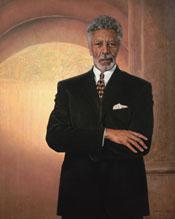
Ronald Dellums
Former U.S. Representative · California District 9 · 1971–1998 · Democratic
Ronald Dellums represented California's District 9 in the United States House of Representatives (1971–1998) for the Democratic party. The page below collects sourced biographical facts, term history, committee roles, and provenance for Dellums.
Bioguide ID: D000222
Key facts
- Full name
- Ronald Dellums
- State
- California
- District
- District 9
- Party
- Democratic
- House service
- 1971–1998
- First House term
- 1971
- Status
- Left office
- Current term ends
- —
- Born
- 1935
- Bioguide ID
- D000222
- Committee assignments
- —
- Dataset version
- 1.20260605
Biographical narrative
957 words · sourced from the Wikipedia REST extract
Ronald V. Dellums was an influential American politician who served as a U.S. Representative for California's 9th congressional district from 1971 until 1998. A member of the Democratic Party, Dellums was notable for being the first African American elected to Congress from Northern California and for his progressive stances on various issues, including foreign policy and civil rights. After his lengthy tenure in Congress, he transitioned to local politics, serving as the Mayor of Oakland from 2007 to 2011. Dellums's career was marked by his advocacy for anti-apartheid legislation and his opposition to military interventions, reflecting his commitment to social justice and human rights.
Early life and career
Ronald Vernie Dellums was born on November 24, 1935, in Oakland, California, to Verney and Willa (Terry) Dellums. His upbringing was influenced by a family deeply involved in labor organizing; his father worked as a longshoreman, and his uncle, C. L. Dellums, was a prominent leader in the Brotherhood of Sleeping Car Porters. Dellums had a younger sister named Theresa. He received his early education at St. Patrick Catholic School, Oakland Technical High School, and McClymonds High School. Following his high school education, he enlisted in the United States Marine Corps, serving from 1954 to 1956.
After his military service, Dellums pursued higher education, earning an Associate of Arts degree from Oakland City College (now Merritt College) in 1958. He continued his studies at San Francisco State University, where he received a Bachelor of Arts degree in 1960, followed by a Master of Social Work from the University of California, Berkeley, in 1962. Dellums became a psychiatric social worker and began his political activism within the African-American community during the 1960s. His commitment to education extended to teaching positions at both San Francisco State University and the University of California, Berkeley.
Dellums's political engagement was also reflected in his membership in the Alpha Phi Alpha fraternity, where he participated in the fraternity's World Policy Council, a think tank aimed at addressing political and social issues. Throughout his personal life, Dellums was married three times. His second marriage was to attorney Leola "Roscoe" Higgs in 1961, which ended in divorce in 1998. He married his third wife, Cynthia Lewis, in 2000. Dellums had six children, including a son, Michael, who was convicted of a drug-related homicide in 1979 and remained incarcerated.
Before his congressional career, Dellums served on the Berkeley City Council from 1967 to 1970, where he was elected after encouragement from fellow activist Maudelle Shirek. This position marked the beginning of his formal political career, setting the stage for his subsequent election to the U.S. House of Representatives.
House tenure
Dellums was elected to the United States House of Representatives in 1970, following a campaign that was supported by anti-Vietnam War activists. He successfully defeated the incumbent, Jeffery Cohelan, in the Democratic primary and went on to win the general election. Dellums's election marked a significant milestone as he became the first African American to represent Northern California in Congress. He served a total of 14 consecutive terms, maintaining his position without interruption for nearly three decades until his departure from office in 1998.
During his tenure, Dellums was known for his progressive stance on numerous issues, which often placed him at odds with more conservative elements within the government. His political activities earned him a spot on President Nixon's enemies list, highlighting the contentious nature of his advocacy and the impact he had on national politics.
In 1972, Dellums was re-elected with a substantial margin over his Republican opponent, Peter D. Hannaford. His electoral success was indicative of his strong support within his district, which he maintained throughout his congressional career. Dellums's legislative focus was characterized by his opposition to military interventions and his commitment to social justice, particularly in relation to foreign policy.
Legislative focus and committees
Throughout his time in Congress, Dellums was a vocal opponent of U.S. military interventions, with the exception of emergency humanitarian relief efforts, such as those in Somalia in 1992. He consistently advocated for the restriction of foreign aid to oppressive regimes in Africa, including countries like Zaire, Burundi, Liberia, and Sudan. His foreign policy positions were rooted in a belief in human rights and social justice, which guided his legislative initiatives.
One of Dellums's most significant contributions was his long-standing campaign against apartheid in South Africa. Beginning in 1972, he worked tirelessly to end the discriminatory policies of the South African government. His efforts culminated in the passage of the Comprehensive Anti-Apartheid Act of 1986, which called for trade restrictions and divestment by American corporations from South Africa. The legislation garnered broad bipartisan support and was notable for being the first instance in the 20th century where Congress overrode a presidential veto concerning foreign policy, specifically that of President Ronald Reagan.
Dellums's commitment to social justice extended beyond South Africa. He was involved in various legislative efforts related to Cold War conflicts in southern Africa, where he faced criticism for his support of certain factions, including those aligned with Fidel Castro. His introduction of legislation aimed at prohibiting economic and military assistance to Zaire highlighted his concern for human rights and governance in the region.
In 1990, Dellums, along with 44 other congressional colleagues, filed a lawsuit against President George H. W. Bush, challenging the administration's military actions. This legal action underscored his commitment to holding the executive branch accountable for its foreign policy decisions.
After leaving Congress, Dellums continued to engage in public service and advocacy, eventually serving as the Mayor of Oakland from 2007 to 2011. His legacy is marked by his dedication to social justice, civil rights, and his influential role in shaping U.S. foreign policy during a transformative period in American history.
Notable legislation
Sponsored and co-sponsored legislation for Ronald Dellums is pending operator curation. The biographical narrative above carries the same provenance trail until per-bill rows are written.
Sources
- [1]https://en.wikipedia.org/wiki/Ron_DellumsWikipedia · retrieved 2026-06-05
Notable quotes
Sourced quotes for Ronald Dellums are pending operator curation. Narrative-scope provenance remains attached below.
Sources
- [1]https://en.wikipedia.org/wiki/Ron_DellumsWikipedia · retrieved 2026-06-05
Key positions
Curated policy positions for Ronald Dellums are pending operator review. The biographical narrative above carries the same provenance trail until per-topic positions are written.
Sources
- [1]https://en.wikipedia.org/wiki/Ron_DellumsWikipedia · retrieved 2026-06-05
Terms served
- 1971–1973U.S. House · Term 1 · Democratic
- 1973–1975U.S. House · Term 2 · Democratic
- 1975–1977U.S. House · Term 3 · Democratic
- 1977–1979U.S. House · Term 4 · Democratic
- 1979–1981U.S. House · Term 5 · Democratic
- 1981–1983U.S. House · Term 6 · Democratic
- 1983–1985U.S. House · Term 7 · Democratic
- 1985–1987U.S. House · Term 8 · Democratic
- 1987–1989U.S. House · Term 9 · Democratic
- 1989–1991U.S. House · Term 10 · Democratic
- 1991–1993U.S. House · Term 11 · Democratic
- 1993–1995U.S. House · Term 12 · Democratic
- 1995–1997U.S. House · Term 13 · Democratic
- 1997–1998U.S. House · Term 14 · Democratic
Sources & provenance
Every attributable claim above carries a per-section [N] marker that resolves to the corresponding URL below. Each entry records the upstream provider, the canonical URL, and the timestamp at which the source was retrieved by the ingest pipeline.
Key facts
- https://bioguide.congress.gov/search/bio/D000222bioguide · retrieved 2026-06-05
- https://www.govtrack.us/congress/members/403364govtrack · retrieved 2026-06-05
Biographical narrative
- https://en.wikipedia.org/wiki/Ron_Dellumswikipedia · retrieved 2026-06-05
Find your representative
Every U.S. state elects representatives by district. Browse California’s delegation, the full former-representative roster, or explore the role and term length.
Related on The Candidate
- Preceded by Cecil WhiteEarlier holder of the California District 9 House seat · Democratic.Open
- Succeeded by Jerry McNerneyLater holder of the California District 9 House seat · Democratic.Open
- Barclay HenleyFormer U.S. Representative · California District 1 · DemocraticOpen
- Charles ClaytonFormer U.S. Representative · California District 1 · RepublicanOpen
- Clarence LeaFormer U.S. Representative · California District 1 · DemocraticOpen
- Clement MillerFormer U.S. Representative · California District 1 · DemocraticOpen