
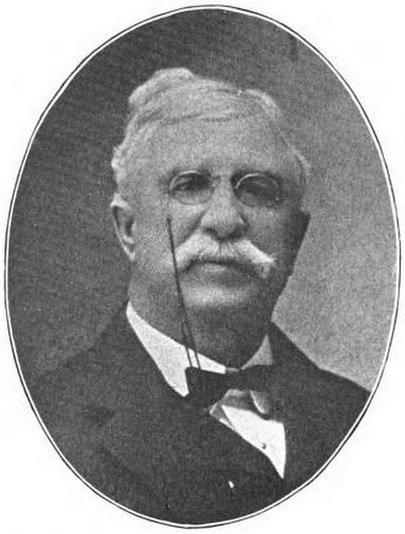
Historical · U.S. House · Colorado · District 1
Hosea Townsend
Former U.S. Representative · Colorado District 1 · 1889–1893 · Republican
Hosea Townsend represented Colorado's District 1 in the United States House of Representatives (1889–1893) for the Republican party. The page below collects sourced biographical facts, term history, committee roles, and provenance for Townsend.
Bioguide ID: T000334
Key facts
- Full name
- Hosea Townsend
- State
- Colorado
- District
- District 1
- Party
- Republican
- House service
- 1889–1893
- First House term
- 1889
- Status
- Left office
- Current term ends
- —
- Born
- 1840
- Bioguide ID
- T000334
- Committee assignments
- —
- Dataset version
- 1.20260606
Biographical narrative
1,003 words · sourced from the Wikipedia REST extract
Hosea Townsend was an American attorney and politician who served as a U.S. Representative for Colorado's 1st congressional district from 1889 to 1893. A member of the Republican Party, Townsend's political career was marked by his involvement in the legal system and his contributions to the development of the Indian Territory. After his time in Congress, he continued to serve in the judiciary, appointed by Presidents William McKinley and Theodore Roosevelt as a United States judge for the southern district of the Indian Territory. Townsend's life spanned significant historical events, including the American Civil War, and his career reflected the complexities of American politics in the late 19th century.
Early life and career
Hosea Townsend was born on June 16, 1840, on a farm in Greenwich, Ohio. He was the son of Hiram and Eliza Townsend, with his father having migrated from Massachusetts to New London, Ohio, in 1816. Townsend's early education took place in common schools, and he later attended Western Reserve College in Cleveland, Ohio, where he was enrolled in 1860. His academic pursuits were interrupted by the outbreak of the American Civil War, which prompted him to enlist in the Second Regiment, Ohio Volunteer Cavalry in 1861. During his military service, he achieved the rank of lieutenant and was stationed at Fort Gibson in the Indian Territory. Unfortunately, his service was cut short when he contracted typhoid fever, leading to his resignation in 1863 due to the resulting disability.
Following his military service, Townsend pursued a career in law. He studied diligently and was admitted to the bar in Cleveland, Ohio, around 1864 or 1865. He began his legal practice in Memphis, Tennessee, in 1865, where he established himself as a prominent attorney. His political career began in earnest when he served as a member of the Tennessee State House of Representatives in 1869. Townsend continued to practice law in Memphis until 1881, during which time he gained valuable experience and built a reputation in the legal community.
In 1879, Townsend relocated to Colorado, settling in Silver Cliff in 1881. His move to Colorado was marked by both opportunity and risk, as he engaged in the mining business, where he experienced significant financial fluctuations, making and losing a fortune. This period of his life reflected the volatile nature of the mining industry during that era, which was characterized by both rapid economic growth and the potential for devastating losses.
House tenure
Hosea Townsend's political career took a significant turn when he was elected as a Republican to the United States House of Representatives. He served two consecutive terms, representing Colorado's 1st congressional district from March 4, 1889, to March 3, 1893. His election to Congress came at a time when Colorado was still establishing its political identity following its admission to the Union in 1876. During his time in the House, Townsend was involved in various legislative matters that reflected the interests and concerns of his constituents.
Despite his initial success in Congress, Townsend faced challenges in securing a renomination for a third term in 1892. His political career in the House concluded after his second term, but he remained active in the Republican Party. He served as a delegate to the Republican National Convention in 1892, where he participated in shaping the party's platform and direction during a pivotal time in American politics.
Legislative focus and committees
During his tenure in the House of Representatives, Townsend's legislative focus encompassed a range of issues pertinent to his constituents and the broader national landscape. As a member of the Republican Party, he aligned himself with the party's priorities, which included economic development, infrastructure improvements, and support for the burgeoning mining industry that was vital to Colorado's economy. His background as a lawyer and businessman informed his perspectives on legislation, and he likely advocated for policies that would benefit the economic interests of his district.
After leaving Congress, Townsend continued to serve the public in a judicial capacity. He was appointed as a United States judge for the southern district of the Indian Territory, a position he held from 1897 to 1907. His judicial appointments were made by Presidents McKinley and Roosevelt, reflecting his standing within the Republican Party and his legal expertise. In this role, Townsend was responsible for overseeing legal proceedings and ensuring justice in a region that was undergoing significant changes, especially with the impending statehood of Oklahoma in 1907.
Townsend's judicial career was notable for its challenges and complexities. He served on the Court of Appeals and was involved in various cases that tested the legal framework of the Indian Territory. His judicial demeanor was characterized by a forceful personality, as evidenced by his handling of courtroom proceedings. In one notable instance, he found a juror in contempt of court for refusing to perform jury duty on a Sunday, demonstrating his strict adherence to courtroom decorum. Conversely, he also exhibited leniency in cases where he deemed it appropriate, such as with a bootlegger whose family relied on him for support.
After Oklahoma achieved statehood and the Indian Territory court was closed, Townsend remained in Ardmore, where he continued to practice law. His legal career persisted beyond his judicial tenure, allowing him to stay engaged in the legal community and contribute to the development of the region.
In his personal life, Townsend married Anna Augusta Barnes on November 28, 1865. The couple had two children, John Barnes Townsend and Anna Bell Townsend. Anna played a significant role in the community of Ardmore, advocating for the establishment of a library. She successfully obtained funding from Andrew Carnegie, leading to the opening of the Ardmore Carnegie Library on October 1, 1906, with the Townsends donating 800 books to the cause.
Hosea Townsend passed away on March 4, 1909, in Ardmore, Oklahoma. He was interred in Woodlawn Cemetery in Norwalk, Ohio. His legacy includes his contributions to the legal and political landscape of the Indian Territory and Colorado, as well as his commitment to public service throughout his career.
Notable legislation
Sponsored and co-sponsored legislation for Hosea Townsend is pending operator curation. The biographical narrative above carries the same provenance trail until per-bill rows are written.
Sources
- [1]https://en.wikipedia.org/wiki/Hosea_TownsendWikipedia · retrieved 2026-06-06
Notable quotes
Sourced quotes for Hosea Townsend are pending operator curation. Narrative-scope provenance remains attached below.
Sources
- [1]https://en.wikipedia.org/wiki/Hosea_TownsendWikipedia · retrieved 2026-06-06
Key positions
Curated policy positions for Hosea Townsend are pending operator review. The biographical narrative above carries the same provenance trail until per-topic positions are written.
Sources
- [1]https://en.wikipedia.org/wiki/Hosea_TownsendWikipedia · retrieved 2026-06-06
Terms served
- 1889–1891U.S. House · Term 1 · Republican
- 1891–1893U.S. House · Term 2 · Republican
Sources & provenance
Every attributable claim above carries a per-section [N] marker that resolves to the corresponding URL below. Each entry records the upstream provider, the canonical URL, and the timestamp at which the source was retrieved by the ingest pipeline.
Key facts
- https://bioguide.congress.gov/search/bio/T000334bioguide · retrieved 2026-06-06
- https://www.govtrack.us/congress/members/410905govtrack · retrieved 2026-06-06
Biographical narrative
- https://en.wikipedia.org/wiki/Hosea_Townsendwikipedia · retrieved 2026-06-06
Find your representative
Every U.S. state elects representatives by district. Browse Colorado’s delegation, the full former-representative roster, or explore the role and term length.
Related on The Candidate
- Preceded by George SymesEarlier holder of the Colorado District 1 House seat · Republican.Open
- Succeeded by Lafe PenceLater holder of the Colorado District 1 House seat · Populist.Open
- Atterson RuckerFormer U.S. Representative · Colorado District 1 · DemocraticOpen
- Benjamin HilliardFormer U.S. Representative · Colorado District 1 · DemocraticOpen
- Byron RogersFormer U.S. Representative · Colorado District 1 · DemocraticOpen
- Dean GillespieFormer U.S. Representative · Colorado District 1 · RepublicanOpen