
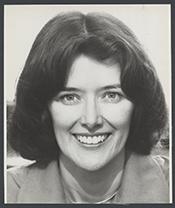
Historical · U.S. House · Colorado · District 1
Patricia Schroeder
Former U.S. Representative · Colorado District 1 · 1973–1997 · Democratic
Patricia Schroeder represented Colorado's District 1 in the United States House of Representatives (1973–1997) for the Democratic party. The page below collects sourced biographical facts, term history, committee roles, and provenance for Schroeder.
Bioguide ID: S000142
Key facts
- Full name
- Patricia Schroeder
- State
- Colorado
- District
- District 1
- Party
- Democratic
- House service
- 1973–1997
- First House term
- 1973
- Status
- Left office
- Current term ends
- —
- Born
- 1940
- Bioguide ID
- S000142
- Committee assignments
- —
- Dataset version
- 1.20260605
Biographical narrative
1,069 words · sourced from the Wikipedia REST extract
Patricia Nell Scott "Pat" Schroeder was an influential American politician who served as a U.S. Representative for Colorado's 1st congressional district from 1973 until 1997. A member of the Democratic Party, she was notable for being the first woman elected to Congress from Colorado. Throughout her twelve terms in the House, Schroeder became known for her advocacy on various social issues, her unique approach to balancing motherhood with her political career, and her contributions to legislative reforms.
Early life and career
Patricia Schroeder was born on July 30, 1940, in Portland, Oregon. She was the daughter of Bernice Scott, a first-grade teacher, and Lee Combs Scott, who was a pilot and owned an aviation insurance company. During her childhood, her family relocated to Des Moines, Iowa. From an early age, Schroeder demonstrated a keen interest in aviation, earning her airman certificate at the age of fifteen. She completed her secondary education at Theodore Roosevelt High School in 1958 and subsequently attended the University of Minnesota. There, she majored in history and became a member of the Chi Omega sorority, graduating with a Bachelor of Arts degree in 1961.
Following her undergraduate studies, Schroeder pursued a legal education at Harvard Law School, where she earned her Juris Doctor in 1964. While at Harvard, she married Jim Schroeder, a fellow law student, on August 18, 1962. After their marriage, the couple moved to Denver, Colorado, where Jim began his legal career. They had two children, Scott William and Jamie Christine. In the early years of her career, Patricia Schroeder worked for the National Labor Relations Board from 1964 to 1966 and later served as legal counsel for Planned Parenthood. Additionally, she taught in public schools in Denver, further establishing her commitment to education and social issues.
Schroeder's entry into politics was somewhat serendipitous. In 1970, her husband ran for a seat in the Colorado General Assembly but lost by a narrow margin. This experience, combined with a conversation about her potential candidacy, prompted her to consider running for Congress. In the lead-up to the 1972 election, she decided to challenge the incumbent in Colorado's 1st congressional district, focusing her campaign on opposition to the Vietnam War, environmental issues, and childcare. Despite being viewed as a long-shot candidate with little support from established political organizations, Schroeder won the election by a margin of just over 8,000 votes, making her the second youngest woman ever elected to Congress at that time.
House tenure
Patricia Schroeder's congressional career began in 1973, and she would serve a total of twelve terms in the U.S. House of Representatives until her departure in 1997. Her election marked a significant shift in Colorado's political landscape, as she became the first woman to represent the state in Congress. Following her initial victory, she was re-elected eleven more times, demonstrating her ability to connect with constituents and maintain their support. Throughout her tenure, she faced only one closely contested election, where she received 53 percent of the vote.
During her time in Congress, Schroeder became known for her strong advocacy on various issues, particularly those affecting women and families. She was the first woman to serve on the House Armed Services Committee, where she pushed for arms control and reduced military spending. Her commitment to family issues was evident in her involvement with the Select Committee on Children, Youth, and Families, established in 1983. Schroeder's unique position as a working mother in Congress allowed her to bring attention to the challenges faced by families, and she famously balanced her congressional duties with motherhood, even bringing diapers to the House floor.
Schroeder's legislative achievements included significant contributions to the Family and Medical Leave Act of 1993 and the Military Family Act of 1985. She was also an advocate for reforming the congressional system itself, challenging the traditional power structures within the House and advocating for greater transparency and accountability. Her efforts to weaken the control of committee chairs and address issues such as the taxation of members living in their offices showcased her commitment to making Congress more responsive to the needs of the public.
Throughout her career, Schroeder was recognized for her independent stance on fiscal issues. She described herself as a "fiscally conservative liberal," often voting against tax cuts proposed by Republican administrations when she believed they were not in the best interest of the country. Her voting record reflected a willingness to diverge from party lines, as she frequently opposed the positions of her fellow Democrats on various issues. For instance, she voted against President Reagan's tax cuts and the 1986 tax-reform bill, advocating instead for more progressive tax rates.
Legislative focus and committees
During her time in the House, Patricia Schroeder focused on a range of legislative issues, with a particular emphasis on women's rights, family issues, and military policy. Her pioneering role as a woman in Congress allowed her to advocate for policies that addressed the needs of women and families, including maternity leave and childcare support. She was instrumental in the passage of the Family and Medical Leave Act, which provided job protection for employees taking leave for family and medical reasons.
Schroeder's work on the House Armed Services Committee was notable for her advocacy of arms control and her efforts to reduce military spending. She was a vocal critic of excessive military expenditures, arguing for a more balanced approach to national security that prioritized diplomacy and humanitarian efforts. Her involvement in the Select Committee on Children, Youth, and Families further underscored her commitment to addressing the needs of vulnerable populations, particularly children and families.
In addition to her legislative work, Schroeder was known for her sharp wit and memorable remarks, which often garnered media attention. Her ability to articulate complex issues in a relatable manner contributed to her reputation as a prominent figure in American politics. She coined the term "Teflon President" to describe Ronald Reagan's ability to maintain popularity despite controversies, illustrating her knack for using humor and metaphor to engage the public in political discourse.
Schroeder's tenure in Congress was marked by her willingness to challenge the status quo and advocate for progressive change. Her legacy includes not only her legislative achievements but also her role in paving the way for future generations of women in politics. As a trailblazer in the U.S. House of Representatives, Patricia Schroeder's contributions to American political life continue to be recognized and celebrated.
Notable legislation
Sponsored and co-sponsored legislation for Patricia Schroeder is pending operator curation. The biographical narrative above carries the same provenance trail until per-bill rows are written.
Sources
- [1]https://en.wikipedia.org/wiki/Pat_SchroederWikipedia · retrieved 2026-06-05
Notable quotes
Sourced quotes for Patricia Schroeder are pending operator curation. Narrative-scope provenance remains attached below.
Sources
- [1]https://en.wikipedia.org/wiki/Pat_SchroederWikipedia · retrieved 2026-06-05
Key positions
Curated policy positions for Patricia Schroeder are pending operator review. The biographical narrative above carries the same provenance trail until per-topic positions are written.
Sources
- [1]https://en.wikipedia.org/wiki/Pat_SchroederWikipedia · retrieved 2026-06-05
Terms served
- 1973–1975U.S. House · Term 1 · Democratic
- 1975–1977U.S. House · Term 2 · Democratic
- 1977–1979U.S. House · Term 3 · Democratic
- 1979–1981U.S. House · Term 4 · Democratic
- 1981–1983U.S. House · Term 5 · Democratic
- 1983–1985U.S. House · Term 6 · Democratic
- 1985–1987U.S. House · Term 7 · Democratic
- 1987–1989U.S. House · Term 8 · Democratic
- 1989–1991U.S. House · Term 9 · Democratic
- 1991–1993U.S. House · Term 10 · Democratic
- 1993–1995U.S. House · Term 11 · Democratic
- 1995–1997U.S. House · Term 12 · Democratic
Sources & provenance
Every attributable claim above carries a per-section [N] marker that resolves to the corresponding URL below. Each entry records the upstream provider, the canonical URL, and the timestamp at which the source was retrieved by the ingest pipeline.
Key facts
- https://bioguide.congress.gov/search/bio/S000142bioguide · retrieved 2026-06-05
- https://www.govtrack.us/congress/members/409650govtrack · retrieved 2026-06-05
Biographical narrative
- https://en.wikipedia.org/wiki/Pat_Schroederwikipedia · retrieved 2026-06-05
Find your representative
Every U.S. state elects representatives by district. Browse Colorado’s delegation, the full former-representative roster, or explore the role and term length.
Related on The Candidate
- Preceded by Mike McKevittEarlier holder of the Colorado District 1 House seat · Republican.Open
- Atterson RuckerFormer U.S. Representative · Colorado District 1 · DemocraticOpen
- Benjamin HilliardFormer U.S. Representative · Colorado District 1 · DemocraticOpen
- Byron RogersFormer U.S. Representative · Colorado District 1 · DemocraticOpen
- Dean GillespieFormer U.S. Representative · Colorado District 1 · RepublicanOpen
- Democratic PartyFederal candidates and office holders on the Democratic line.Open