
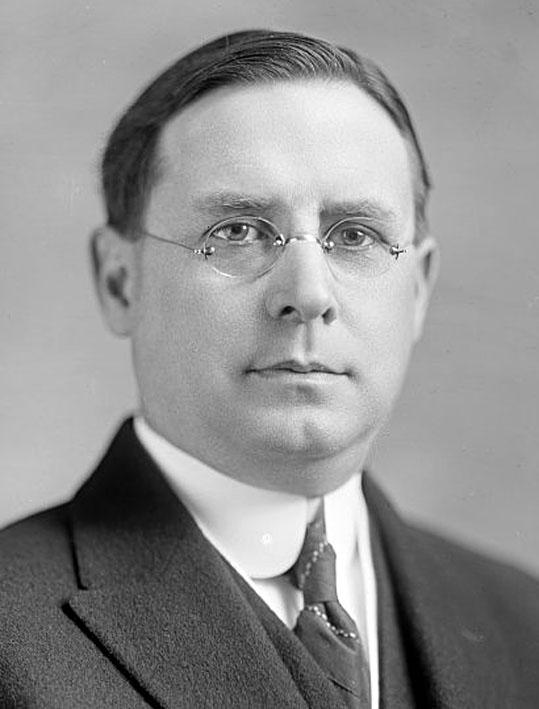
Historical · U.S. House · Colorado · District 3
Edward Keating
Former U.S. Representative · Colorado District 3 · 1913–1919 · Democratic
Edward Keating represented Colorado's District 3 in the United States House of Representatives (1913–1919) for the Democratic party. The page below collects sourced biographical facts, term history, committee roles, and provenance for Keating.
Bioguide ID: K000035
Key facts
- Full name
- Edward Keating
- State
- Colorado
- District
- District 3
- Party
- Democratic
- House service
- 1913–1919
- First House term
- 1913
- Status
- Left office
- Current term ends
- —
- Born
- 1875
- Bioguide ID
- K000035
- Committee assignments
- —
- Dataset version
- 1.20260606
Biographical narrative
985 words · sourced from the Wikipedia REST extract
Edward Keating was a prominent American politician and newspaper editor who served as a U.S. Representative from Colorado's 3rd congressional district from 1913 to 1919. A member of the Democratic Party, Keating was known for his advocacy for labor rights and better working conditions, particularly for children. Following his congressional tenure, he continued to influence labor issues as the editor of the newspaper Labor, which was associated with various railroad unions. His career spanned several decades, during which he engaged in numerous political campaigns aimed at electing pro-labor legislators.
Early life and career
Edward Keating was born on July 9, 1875, to Irish immigrant parents, Stephen Keating and Julia O’Connor Quinlan, near Kansas City, Missouri. His father, a widower, passed away when Edward was young, prompting his mother to relocate the family to various cities in Colorado, including Pueblo, Greeley, and finally Denver. Keating attended public schools in these areas but left formal education at an early age to seek employment. His early career in journalism began when he became a copyholder for the Denver Republican at the age of 14.
Over the years, Keating advanced in the field of journalism, serving as city editor for The Denver Times from 1902 to 1905 and later as the editor of the Rocky Mountain News from 1906 to 1911. In 1912, he expanded his professional endeavors by purchasing the Pueblo Leader, a local newspaper. His involvement in the press community was notable; he held the presidency of the Denver Press Club from 1905 to 1907 and also led the International League of Press Clubs during the same period.
Keating's political engagement began with the Populist Party, but by the mid-1890s, he had transitioned to the Democratic Party, which he remained affiliated with for the rest of his life. His political career included serving as the city auditor of Denver from 1899 to 1901 and participating in the first convention elected to draft a charter for the city of Denver in 1903. Additionally, he held the position of President of the Colorado State Board of Land Commissioners from 1911 to 1913, further establishing his political credentials before entering Congress.
House tenure
Edward Keating was elected to the U.S. House of Representatives as a Democrat, serving three consecutive terms from March 4, 1913, until March 3, 1919. During his time in Congress, he was involved in various legislative efforts and held significant positions within the House. Notably, he served as the chairman of the Committee on Expenditures in the Post Office Department during the 65th Congress.
One of Keating's most significant contributions to labor legislation was his co-sponsorship of the Keating–Owen Child Labor Act of 1916, alongside Senator Robert L. Owen from Oklahoma. This act aimed to restrict the interstate commerce of goods produced by child labor, marking a pivotal moment in the federal government's involvement in child labor regulation. Although the act was later declared unconstitutional in the Supreme Court case Hammer v. Dagenhart, it represented a critical step in the broader movement toward labor reform in the United States. The legislation was notable as it was the first federal intervention addressing child labor, setting a precedent for future laws that would ultimately be upheld by the courts.
In addition to his work on child labor, Keating was also known for his opposition to U.S. involvement in World War I. In April 1917, he was one of only 50 congressmen who voted against the House Resolution for War against Germany. In 1919, he introduced the Keating War Powers Bill, which sought to regulate child labor in specific industries during wartime.
Despite his legislative efforts, Keating was unsuccessful in his bid for re-election in 1918, marking the end of his congressional career. However, his influence on labor issues continued beyond his time in office.
Legislative focus and committees
Throughout his congressional tenure, Edward Keating's legislative focus was primarily centered on labor rights and social welfare. His advocacy for the working class was evident in his support for the Keating–Owen Child Labor Act, which aimed to improve conditions for children in the workforce. This act was part of a broader movement during the early 20th century that sought to address the exploitation of child laborers in various industries.
As chairman of the Committee on Expenditures in the Post Office Department, Keating was responsible for overseeing financial matters related to the department, which played a crucial role in the functioning of the federal government. His leadership in this capacity demonstrated his commitment to ensuring accountability and transparency in government expenditures.
After leaving Congress, Keating continued to engage with labor issues as a member of the Congressional Joint Committee on Reclassification of Salaries for Civilian Employees in the District of Columbia from March 1919 to April 1920. He also served as the campaign manager for the Plumb Plan, which aimed to nationalize the railroads and was sponsored by the Plumb Plan League.
In 1919, Keating became the editor and manager of Labor, a newspaper founded by a coalition of railroad labor organizations. He held this position until his retirement in 1953, during which he contributed significantly to the discourse surrounding labor rights and union activities. Under the pseudonym Raymond Lonergan, he wrote a weekly column for the Chicago Tribune, further extending his influence in the realm of labor journalism.
Keating's later years were marked by his reflections on his experiences in both journalism and politics. He authored several works, including a memoir that recounted his life and career, providing insights into the political landscape of his time.
Edward Keating passed away on March 18, 1965, in Washington, D.C. He was interred at Cedar Hill Cemetery in Suitland, Maryland. Throughout his life, he remained a Roman Catholic and was known for his commitment to labor issues and the rights of workers. His legacy continues to be recognized in discussions about labor reform and child welfare legislation in the United States.
Notable legislation
Sponsored and co-sponsored legislation for Edward Keating is pending operator curation. The biographical narrative above carries the same provenance trail until per-bill rows are written.
Sources
- [1]https://en.wikipedia.org/wiki/Edward_KeatingWikipedia · retrieved 2026-06-06
Notable quotes
Sourced quotes for Edward Keating are pending operator curation. Narrative-scope provenance remains attached below.
Sources
- [1]https://en.wikipedia.org/wiki/Edward_KeatingWikipedia · retrieved 2026-06-06
Key positions
Curated policy positions for Edward Keating are pending operator review. The biographical narrative above carries the same provenance trail until per-topic positions are written.
Sources
- [1]https://en.wikipedia.org/wiki/Edward_KeatingWikipedia · retrieved 2026-06-06
Terms served
- 1913–1915U.S. House · Term 1 · Democratic
- 1915–1917U.S. House · Term 2 · Democratic
- 1917–1919U.S. House · Term 3 · Democratic
Sources & provenance
Every attributable claim above carries a per-section [N] marker that resolves to the corresponding URL below. Each entry records the upstream provider, the canonical URL, and the timestamp at which the source was retrieved by the ingest pipeline.
Key facts
- https://bioguide.congress.gov/search/bio/K000035bioguide · retrieved 2026-06-06
- https://www.govtrack.us/congress/members/406205govtrack · retrieved 2026-06-06
Biographical narrative
- https://en.wikipedia.org/wiki/Edward_Keatingwikipedia · retrieved 2026-06-06
Find your representative
Every U.S. state elects representatives by district. Browse Colorado’s delegation, the full former-representative roster, or explore the role and term length.
Related on The Candidate
- Succeeded by Guy HardyLater holder of the Colorado District 3 House seat · Republican.Open
- Atterson RuckerFormer U.S. Representative · Colorado District 1 · DemocraticOpen
- Benjamin HilliardFormer U.S. Representative · Colorado District 1 · DemocraticOpen
- Byron RogersFormer U.S. Representative · Colorado District 1 · DemocraticOpen
- Dean GillespieFormer U.S. Representative · Colorado District 1 · RepublicanOpen
- Democratic PartyFederal candidates and office holders on the Democratic line.Open