
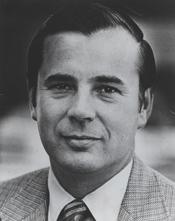
Historical · U.S. House · Colorado · District 4
Jim Johnson
Former U.S. Representative · Colorado District 4 · 1973–1981 · Republican
Jim Johnson represented Colorado's District 4 in the United States House of Representatives (1973–1981) for the Republican party. The page below collects sourced biographical facts, term history, committee roles, and provenance for Johnson.
Bioguide ID: J000148
Key facts
- Full name
- Jim Johnson
- State
- Colorado
- District
- District 4
- Party
- Republican
- House service
- 1973–1981
- First House term
- 1973
- Status
- Left office
- Current term ends
- —
- Born
- 1930
- Bioguide ID
- J000148
- Committee assignments
- —
- Dataset version
- 1.20260605
Biographical narrative
835 words · sourced from the Wikipedia REST extract
James P. (Jim) Johnson was an American politician and lawyer who served as a U.S. Representative for Colorado's 4th congressional district from 1973 to 1981. A member of the Republican Party, Johnson's political career was marked by his involvement in various legal and educational roles, as well as his service in the military during the Korean War. His tenure in Congress included participation in significant legislative discussions and a focus on issues pertinent to his constituents in Colorado.
Early life and career
James Paul Johnson was born on June 2, 1930, in Yankton, South Dakota, to Fred and Evelyn Johnson. He pursued higher education at Northwestern University, where he earned a Bachelor of Arts degree in 1952. Following his undergraduate studies, Johnson enlisted in the United States Marine Corps, serving as a first lieutenant and jet pilot during the Korean War from 1952 to 1956. His military service contributed to his leadership skills and understanding of national defense issues.
After completing his military service, Johnson returned to academia and attended the University of Colorado, where he earned a Bachelor of Laws (LL.B.) degree in 1959. While in law school, he was actively involved in the academic community, serving on the board of editors for the Rocky Mountain Law Review, which is now known as the University of Colorado Law Review. Upon graduating from law school, he was admitted to the Colorado Bar in the same year.
Johnson began his legal career in private practice before transitioning to public service. He served as a deputy district attorney for the Eighth Judicial District of Colorado from 1959 to 1966, where he gained valuable experience in the legal system. Additionally, he held the position of Municipal Judge for Ault, Colorado, from 1962 to 1965, and later became an assistant district attorney from 1964 to 1966. His legal background and community involvement laid a strong foundation for his future political aspirations.
In the realm of education, Johnson was active on the Poudre R-1 School Board in Fort Collins, Colorado, from 1969 to 1971. His commitment to education was evident through his participation in local governance and his engagement with the community. He also served as a delegate to Colorado State Republican conventions from 1960 to 1972, further solidifying his ties to the political landscape in Colorado.
Despite his early political involvement, Johnson faced challenges in his electoral pursuits. He ran unsuccessfully for a seat in the United States House of Representatives in the 1966 election, where he campaigned against the Vietnam War. This experience, however, did not deter him from continuing his political ambitions.
House tenure
Johnson's political career took a significant turn in the 1972 elections when he was elected to the United States House of Representatives. He represented Colorado's 4th congressional district, serving a total of four terms from 1973 until his departure from Congress on January 3, 1981. During his time in the House, Johnson was involved in various legislative initiatives and discussions that reflected the interests and concerns of his constituents.
Throughout his tenure, Johnson was known for his active participation in debates and his willingness to address pressing issues. His political career included a notable moment in February 1978 when he publicly apologized for remarks he made regarding President Jimmy Carter's policies. Johnson's comments suggested that Carter had acted against the interests of the Western United States without a formal declaration of war, which drew attention and necessitated an apology.
Johnson's time in Congress was characterized by his commitment to representing the needs of his district, engaging with constituents, and navigating the complexities of national legislation. His experience as a lawyer and his understanding of legal matters informed his approach to various issues during his time in office.
Legislative focus and committees
During his congressional tenure, Johnson's legislative focus encompassed a range of issues that were pertinent to his constituents and the broader political landscape. While specific details regarding the bills he sponsored or supported are not available, it is understood that his background in law and public service influenced his legislative priorities.
As a member of the House of Representatives, Johnson likely participated in various committees that aligned with his interests and expertise. His legal background would have provided him with insights into legislative processes, and he may have engaged in discussions related to law, public policy, and community development.
After concluding his service in Congress, Johnson returned to Fort Collins, Colorado, where he resumed his legal practice. His commitment to public service continued beyond his congressional career; he served on the Colorado Supreme Court Judicial Nominating Commission from 1984 to 1986 and was a member of the Colorado Water Conservation Board from 1985 to 1987. These roles allowed him to contribute to the legal and environmental landscape of Colorado.
James P. Johnson passed away on November 16, 2023, at the age of 93. His legacy includes his contributions to Colorado's political landscape, his service to the community, and his involvement in various legal and educational initiatives throughout his life.
Notable legislation
Sponsored and co-sponsored legislation for Jim Johnson is pending operator curation. The biographical narrative above carries the same provenance trail until per-bill rows are written.
Sources
- [1]https://en.wikipedia.org/wiki/James_Paul_JohnsonWikipedia · retrieved 2026-06-05
Notable quotes
Sourced quotes for Jim Johnson are pending operator curation. Narrative-scope provenance remains attached below.
Sources
- [1]https://en.wikipedia.org/wiki/James_Paul_JohnsonWikipedia · retrieved 2026-06-05
Key positions
Curated policy positions for Jim Johnson are pending operator review. The biographical narrative above carries the same provenance trail until per-topic positions are written.
Sources
- [1]https://en.wikipedia.org/wiki/James_Paul_JohnsonWikipedia · retrieved 2026-06-05
Terms served
- 1973–1975U.S. House · Term 1 · Republican
- 1975–1977U.S. House · Term 2 · Republican
- 1977–1979U.S. House · Term 3 · Republican
- 1979–1981U.S. House · Term 4 · Republican
Sources & provenance
Every attributable claim above carries a per-section [N] marker that resolves to the corresponding URL below. Each entry records the upstream provider, the canonical URL, and the timestamp at which the source was retrieved by the ingest pipeline.
Key facts
- https://bioguide.congress.gov/search/bio/J000148bioguide · retrieved 2026-06-05
- https://www.govtrack.us/congress/members/406046govtrack · retrieved 2026-06-05
Biographical narrative
- https://en.wikipedia.org/wiki/James_Paul_Johnsonwikipedia · retrieved 2026-06-05
Find your representative
Every U.S. state elects representatives by district. Browse Colorado’s delegation, the full former-representative roster, or explore the role and term length.
Related on The Candidate
- Preceded by Wayne AspinallEarlier holder of the Colorado District 4 House seat · Democratic.Open
- Succeeded by Bob SchafferLater holder of the Colorado District 4 House seat · Republican.Open
- Atterson RuckerFormer U.S. Representative · Colorado District 1 · DemocraticOpen
- Benjamin HilliardFormer U.S. Representative · Colorado District 1 · DemocraticOpen
- Byron RogersFormer U.S. Representative · Colorado District 1 · DemocraticOpen
- Dean GillespieFormer U.S. Representative · Colorado District 1 · RepublicanOpen