
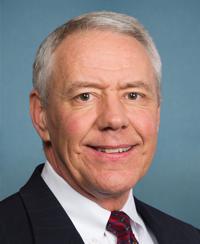
Historical · U.S. House · Colorado · District 4
Ken Buck
Former U.S. Representative · Colorado District 4 · 2015–2024 · Republican
Ken Buck represented Colorado's District 4 in the United States House of Representatives (2015–2024) for the Republican party. The page below collects sourced biographical facts, term history, committee roles, and provenance for Buck.
Bioguide ID: B001297
Key facts
- Full name
- Ken Buck
- State
- Colorado
- District
- District 4
- Party
- Republican
- House service
- 2015–2024
- First House term
- 2015
- Status
- Left office
- Current term ends
- —
- Born
- 1959
- Bioguide ID
- B001297
- Committee assignments
- —
- Dataset version
- 1.20260603
Biographical narrative
1,075 words · sourced from the Wikipedia REST extract
Kenneth Robert Buck is an American lawyer and politician who served as a U.S. Representative for Colorado's 4th congressional district from 2015 until his resignation in March 2024. A member of the Republican Party, Buck has held various roles throughout his career, including serving as the District Attorney for Weld County, Colorado, and chairing the Colorado Republican Party. He is recognized for his strong fiscal conservative stance and his advocacy for antitrust enforcement within the Republican Party.
Early life and career
Ken Buck was born on February 16, 1959, in Ossining, New York. He grew up in a family where both parents, Ruth and James Buck, were lawyers, which likely influenced his career path. Buck has two brothers, and his parents emphasized the importance of higher education, particularly at prestigious institutions. He attended Princeton University, where he earned a Bachelor of Arts degree in politics in 1981. His senior thesis, which was notably extensive at 75 pages, focused on the complexities of Saudi Arabia's geopolitical situation. During his time at Princeton, Buck was also an athlete, playing four years of football for the Princeton Tigers, where he achieved All-Ivy League honors as a punter in his senior year.
After completing his undergraduate education, Buck worked for the state legislative services office in Wyoming. He pursued a legal education at the University of Wyoming College of Law, obtaining his Juris Doctor in 1985. Following his graduation, he took on roles as an instructor at the University of Denver Law School and for the National Institute for Trial Advocacy in Colorado, contributing to the education of future legal professionals.
Buck's legal career began in earnest when he was hired by Congressman Dick Cheney to assist with the Iran-Contra investigation in 1986. This position marked the start of his work in federal law enforcement, as he later became a prosecutor with the U.S. Department of Justice in Washington, D.C. In 1990, he joined the United States Attorney's Office for the District of Colorado, where he eventually became Chief of the Criminal Division. However, his career in the Justice Department faced a setback in 2001 when he was reprimanded for an ethics violation related to a felony case he deemed weak. This incident, which resulted in a formal reprimand and required ethics training, concluded his tenure with the Justice Department.
In 2004, Buck was elected as the District Attorney for Weld County, Colorado. His tenure in this role was marked by a controversial raid on a tax service suspected of facilitating identity theft by undocumented immigrants. The raid, which resulted in the seizure of over 5,000 tax files, led to a lawsuit from the American Civil Liberties Union, which argued that the privacy rights of clients had been violated. The Colorado Supreme Court ultimately ruled the raid unconstitutional, costing the county significant legal expenses. Buck's experiences in law enforcement during this period fueled his ambition to enter politics and pursue legislative office.
House tenure
Ken Buck was first elected to the U.S. House of Representatives in 2014, representing Colorado's 4th congressional district. His first term began in January 2015, and he was re-elected multiple times during his congressional career. Buck's tenure in the House was characterized by his alignment with the Freedom Caucus, a group of conservative Republican members of Congress advocating for limited government and fiscal responsibility. Throughout his time in office, he emerged as a prominent voice for fiscal conservatism, advocating for reduced government spending and lower taxes.
In addition to his fiscal policies, Buck became known for his strong stance on antitrust issues, positioning himself as a leading advocate for antitrust enforcement within the Republican Party. His focus on these issues reflected a broader concern about market competition and the influence of large corporations on the economy. Buck's legislative efforts often aimed to address perceived imbalances in the marketplace and promote fair competition.
During his time in Congress, Buck served on various committees, contributing to discussions and decisions on a range of issues affecting his constituents and the nation. His legislative work included addressing matters related to the economy, public safety, and government accountability. Buck's approach to governance was shaped by his legal background, which informed his understanding of the complexities of law and policy.
In November 2023, Buck announced that he would not seek a sixth term in the House, citing concerns about the narratives within his party that he believed undermined public trust in the legal system. His decision to step away from the electoral arena was indicative of his reflections on the political climate and the challenges facing the Republican Party. Subsequently, on March 12, 2024, he announced his resignation from Congress, effective March 22, 2024. Following his departure, Colorado Governor Jared Polis scheduled a special election to fill the vacancy left by Buck, with the election set for June 25, 2024.
Legislative focus and committees
Throughout his congressional career, Ken Buck's legislative focus was primarily on fiscal conservatism and antitrust enforcement. As a member of the Freedom Caucus, he advocated for policies aimed at reducing government spending and promoting economic growth through free-market principles. Buck's commitment to these issues resonated with constituents who valued limited government intervention in the economy.
In addition to his fiscal policies, Buck's emphasis on antitrust issues set him apart within the Republican Party. He recognized the growing concerns about monopolistic practices and the impact of large corporations on competition and consumer choice. His advocacy for antitrust enforcement reflected a desire to ensure a level playing field for businesses of all sizes, promoting innovation and fair competition in the marketplace.
Buck's committee assignments in the House allowed him to engage with a variety of legislative matters, providing him with a platform to influence policy discussions. His legal background and experience as a prosecutor informed his contributions to debates on public safety and criminal justice reform. He sought to balance the interests of law enforcement with the rights of individuals, advocating for policies that he believed would enhance public safety while respecting civil liberties.
Overall, Ken Buck's tenure in the U.S. House of Representatives was marked by his commitment to fiscal conservatism and antitrust advocacy, as well as his efforts to engage with a range of legislative issues that impacted his constituents and the broader American public. His decision to resign in 2024 marked the end of a significant chapter in his political career, reflecting both personal convictions and the evolving dynamics within the Republican Party.
Notable legislation
Sponsored and co-sponsored legislation for Ken Buck is pending operator curation. The biographical narrative above carries the same provenance trail until per-bill rows are written.
Sources
- [1]https://en.wikipedia.org/wiki/Ken_BuckWikipedia · retrieved 2026-06-03
Notable quotes
Sourced quotes for Ken Buck are pending operator curation. Narrative-scope provenance remains attached below.
Sources
- [1]https://en.wikipedia.org/wiki/Ken_BuckWikipedia · retrieved 2026-06-03
Key positions
Curated policy positions for Ken Buck are pending operator review. The biographical narrative above carries the same provenance trail until per-topic positions are written.
Sources
- [1]https://en.wikipedia.org/wiki/Ken_BuckWikipedia · retrieved 2026-06-03
Terms served
- 2015–2017U.S. House · Term 1 · Republican
- 2017–2019U.S. House · Term 2 · Republican
- 2019–2021U.S. House · Term 3 · Republican
- 2021–2023U.S. House · Term 4 · Republican
- 2023–2024U.S. House · Term 5 · Republican
Sources & provenance
Every attributable claim above carries a per-section [N] marker that resolves to the corresponding URL below. Each entry records the upstream provider, the canonical URL, and the timestamp at which the source was retrieved by the ingest pipeline.
Key facts
- https://bioguide.congress.gov/search/bio/B001297bioguide · retrieved 2026-06-03
- https://buck.house.govhouse.gov · retrieved 2026-06-03
Biographical narrative
- https://en.wikipedia.org/wiki/Ken_Buckwikipedia · retrieved 2026-06-03
Find your representative
Every U.S. state elects representatives by district. Browse Colorado’s delegation, the full former-representative roster, or explore the role and term length.
Related on The Candidate
- Preceded by Betsy MarkeyEarlier holder of the Colorado District 4 House seat · Democratic.Open
- Succeeded by Greg LopezLater holder of the Colorado District 4 House seat · Republican.Open
- Atterson RuckerFormer U.S. Representative · Colorado District 1 · DemocraticOpen
- Benjamin HilliardFormer U.S. Representative · Colorado District 1 · DemocraticOpen
- Byron RogersFormer U.S. Representative · Colorado District 1 · DemocraticOpen
- Dean GillespieFormer U.S. Representative · Colorado District 1 · RepublicanOpen