
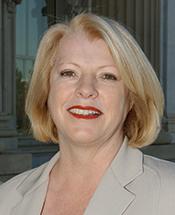
Historical · U.S. House · Colorado · District 4
Marilyn Musgrave
Former U.S. Representative · Colorado District 4 · 2003–2009 · Republican
Marilyn Musgrave represented Colorado's District 4 in the United States House of Representatives (2003–2009) for the Republican party. The page below collects sourced biographical facts, term history, committee roles, and provenance for Musgrave.
Bioguide ID: M001152
Key facts
- Full name
- Marilyn Musgrave
- State
- Colorado
- District
- District 4
- Party
- Republican
- House service
- 2003–2009
- First House term
- 2003
- Status
- Left office
- Current term ends
- —
- Born
- 1949
- Bioguide ID
- M001152
- Committee assignments
- —
- Dataset version
- 1.20260605
Biographical narrative
919 words · sourced from the Wikipedia REST extract
Marilyn N. Musgrave is a former American politician who served as a Republican member of the United States House of Representatives from 2003 to 2009, representing Colorado's 4th congressional district. She was notable for being the first Republican woman elected to Congress from Colorado and for her strong conservative stance on various social issues. Musgrave's political career began at the local level and progressed through state politics before her election to the U.S. Congress, where she focused on agricultural and small business issues, as well as social conservatism.
Early life and career
Marilyn Neoma Musgrave was born on January 27, 1949, in Greeley, Colorado. She completed her high school education at Eaton High School in 1968 and subsequently attended Colorado State University (CSU) in Fort Collins. Musgrave graduated from CSU in 1972 with a Bachelor of Arts degree in social studies. While pursuing her studies, she married Steve Musgrave, and the couple later settled in Fort Morgan, Colorado, where they operated a bale stacking business. In addition to her entrepreneurial endeavors, Musgrave also worked as a school teacher. The Musgraves raised four children and have eight grandchildren.
Musgrave's political career began in 1991 when she was elected to the Fort Morgan School Board for a single term. During her time on the board, she advocated for changes to the local sex education curriculum, promoting an abstinence-only approach. Her involvement in local politics continued as she became active in the Fort Morgan Right To Life chapter, eventually serving as its president. In 1992, she was elected to the Colorado State House of Representatives, where she served until her successful campaign for a seat in the Colorado State Senate in 1998. While in the state senate, Musgrave was appointed as the Senate Republican Caucus Chairman, further establishing her leadership within the party.
In 2002, Musgrave sought to advance her political career by running for the U.S. House of Representatives, aiming to succeed Bob Schaffer, who was retiring from Congress. She won the Republican nomination and subsequently defeated her Democratic opponent in the general election, marking the beginning of her tenure in the U.S. Congress.
House tenure
Marilyn Musgrave's congressional career began with her election to the House of Representatives in 2002. She served three consecutive terms, with her first term commencing in January 2003 and concluding in January 2009. During her time in office, Musgrave was an active member of the Agriculture and Small Business Committees. In the 110th Congress, she held the position of Ranking Minority member on the Specialty Crops, Rural Development, and Foreign Agriculture subcommittee. Additionally, she served as the Region Two representative for the Republican Steering Committee, further solidifying her role within the party's leadership structure.
Musgrave's election history reflects her strong conservative base, particularly in rural areas of Colorado. In her initial campaign for the House, she defeated Democratic State Senate President Stan Matsunaka in November 2002, securing approximately 55% of the vote. Her subsequent re-elections in 2004 and 2006 were marked by increasingly competitive races, with Musgrave facing challenges from Democratic candidates who sought to capitalize on her social conservatism and perceived neglect of constituent services.
In 2004, Musgrave faced Matsunaka again, winning the election with 51% of the vote. The race was characterized by Matsunaka's criticisms of Musgrave's focus on social issues, particularly her opposition to same-sex marriage. Despite losing some key counties, Musgrave managed to retain her seat by achieving significant margins in rural areas.
The 2006 election proved to be even more competitive, as Musgrave faced Democratic state representative Angie Paccione. Musgrave won her third term by a narrow margin, receiving approximately 45.61% of the vote compared to Paccione's 43.12%. The election highlighted Musgrave's challenges in urban areas, particularly in Larimer County, where she continued to lose ground.
In 2008, Musgrave sought a fourth term but was ultimately defeated by Democratic challenger Betsy Markey, who garnered 56% of the vote to Musgrave's 44%. This election marked a significant shift in the political landscape of Colorado's 4th district, as Musgrave lost key support in both Larimer and Weld Counties, which had previously been crucial to her electoral success.
Legislative focus and committees
Throughout her congressional tenure, Marilyn Musgrave was known for her strong conservative positions, particularly on social issues. She was a vocal opponent of same-sex marriage and civil unions, aligning herself with the more conservative factions within the Republican Party. Her legislative agenda often focused on issues pertinent to agriculture and small businesses, reflecting the interests of her constituents in Colorado's rural areas.
Musgrave's work on the Agriculture Committee allowed her to advocate for policies that benefited farmers and ranchers, while her role on the Small Business Committee highlighted her commitment to supporting local enterprises. She was involved in authoring legislation aimed at reducing taxes for small businesses and exempting farm equipment dealers from sales tax, which were significant issues for her constituents.
In addition to her committee work, Musgrave was recognized for her leadership within the Republican Party. As a member of the Republican Steering Committee, she played a role in shaping party strategy and direction, particularly concerning issues that resonated with conservative voters.
After her departure from Congress in 2009, Musgrave continued her involvement in political advocacy, particularly in support of anti-abortion initiatives. She took on a role with the Susan B. Anthony List, a non-profit organization dedicated to electing pro-life women to political office. Musgrave's career reflects a commitment to conservative values and a focus on issues that resonate with her constituents, particularly in rural Colorado.
Notable legislation
Sponsored and co-sponsored legislation for Marilyn Musgrave is pending operator curation. The biographical narrative above carries the same provenance trail until per-bill rows are written.
Sources
- [1]https://en.wikipedia.org/wiki/Marilyn_MusgraveWikipedia · retrieved 2026-06-05
Notable quotes
Sourced quotes for Marilyn Musgrave are pending operator curation. Narrative-scope provenance remains attached below.
Sources
- [1]https://en.wikipedia.org/wiki/Marilyn_MusgraveWikipedia · retrieved 2026-06-05
Key positions
Curated policy positions for Marilyn Musgrave are pending operator review. The biographical narrative above carries the same provenance trail until per-topic positions are written.
Sources
- [1]https://en.wikipedia.org/wiki/Marilyn_MusgraveWikipedia · retrieved 2026-06-05
Terms served
- 2003–2005U.S. House · Term 1 · Republican
- 2005–2007U.S. House · Term 2 · Republican
- 2007–2009U.S. House · Term 3 · Republican
Sources & provenance
Every attributable claim above carries a per-section [N] marker that resolves to the corresponding URL below. Each entry records the upstream provider, the canonical URL, and the timestamp at which the source was retrieved by the ingest pipeline.
Key facts
- https://bioguide.congress.gov/search/bio/M001152bioguide · retrieved 2026-06-05
- http://musgrave.house.govhouse.gov · retrieved 2026-06-05
Biographical narrative
- https://en.wikipedia.org/wiki/Marilyn_Musgravewikipedia · retrieved 2026-06-05
Find your representative
Every U.S. state elects representatives by district. Browse Colorado’s delegation, the full former-representative roster, or explore the role and term length.
Related on The Candidate
- Preceded by Bob SchafferEarlier holder of the Colorado District 4 House seat · Republican.Open
- Succeeded by Betsy MarkeyLater holder of the Colorado District 4 House seat · Democratic.Open
- Atterson RuckerFormer U.S. Representative · Colorado District 1 · DemocraticOpen
- Benjamin HilliardFormer U.S. Representative · Colorado District 1 · DemocraticOpen
- Byron RogersFormer U.S. Representative · Colorado District 1 · DemocraticOpen
- Dean GillespieFormer U.S. Representative · Colorado District 1 · RepublicanOpen