
Historical · U.S. House · Connecticut · District 1
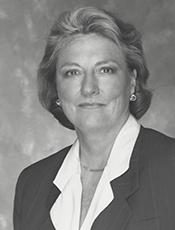
Barbara Kennelly
Former U.S. Representative · Connecticut District 1 · 1981–1999 · Democratic
Barbara Kennelly represented Connecticut's District 1 in the United States House of Representatives (1981–1999) for the Democratic party. The page below collects sourced biographical facts, term history, committee roles, and provenance for Kennelly.
Bioguide ID: K000118
Key facts
- Full name
- Barbara Kennelly
- State
- Connecticut
- District
- District 1
- Party
- Democratic
- House service
- 1981–1999
- First House term
- 1981
- Status
- Left office
- Current term ends
- —
- Born
- 1936
- Bioguide ID
- K000118
- Committee assignments
- —
- Dataset version
- 1.20260605
Biographical narrative
997 words · sourced from the Wikipedia REST extract
Barbara B. Kennelly is a former American politician who served as a Democratic member of the United States House of Representatives, representing Connecticut's First Congressional District. Her congressional career spanned nearly two decades, during which she was involved in various legislative initiatives and held significant positions within the House. Kennelly's political journey is marked by her commitment to public service and her contributions to social welfare programs.
Early life and career
Barbara Bailey Kennelly was born on July 10, 1936, in Hartford, Connecticut. She was raised in a politically active family; her father, John M. Bailey, was a prominent Democratic Party leader in the state. This environment likely influenced her early interest in politics and public service. Kennelly's education began at St. Joseph Cathedral School, followed by her graduation from Mount St. Joseph Academy in West Hartford in 1954. She pursued higher education at Trinity College in Washington, D.C., where she earned a Bachelor of Arts degree in 1958. Kennelly furthered her education by obtaining a certificate from the Harvard-Radcliffe Program in Business Administration in 1959, and later, in 1971, she completed a master's degree from Trinity College in Connecticut.
Kennelly's professional career in politics began in earnest in 1975 when she was elected to the Hartford Court of Common Council, a position she held until 1979. This role marked her entry into local governance, providing her with valuable experience in public administration. Following her tenure on the council, she served as the Secretary of the State of Connecticut from 1979 until 1982. This position further solidified her reputation as a dedicated public servant and prepared her for her future role in Congress.
In 1982, Kennelly was elected to the United States House of Representatives in a special election to fill the vacancy left by the death of William R. Cotter. Her election marked the beginning of a significant congressional career that would last for nearly two decades.
House tenure
Kennelly's tenure in the U.S. House of Representatives began on January 12, 1982, and continued until January 3, 1999. During this time, she was elected to serve a total of nine terms, reflecting her strong support within her constituency. Throughout her congressional career, Kennelly was known for her active participation in various legislative efforts and her commitment to addressing the needs of her constituents in Connecticut's First Congressional District.
During the 98th Congress, she was appointed to the influential Ways and Means Committee, which is responsible for overseeing taxation and social welfare programs. Within this committee, she served on the Subcommittees on Human Resources and Select Revenue Measures, where she focused on issues related to social services and revenue generation. Her work on these subcommittees allowed her to play a crucial role in shaping policies that affected the welfare of many Americans.
In addition to her work on the Ways and Means Committee, Kennelly was appointed to the Permanent Select Committee on Intelligence in 1987. This position underscored her involvement in national security matters and her commitment to ensuring the safety and security of the nation. Her experience in this committee provided her with insights into the complexities of intelligence and security issues, which were particularly relevant during a time of significant geopolitical change.
Kennelly's leadership abilities were recognized when she became Vice-Chair of the Democratic Caucus during the 103rd Congress. This role placed her in a position of influence within her party, allowing her to contribute to the strategic direction of the Democratic agenda in the House.
In 1998, Kennelly chose not to seek re-election for her House seat. Instead, she ran for Governor of Connecticut, facing off against the incumbent Republican Governor John G. Rowland. Despite her extensive political experience and support, she was not successful in this bid for higher office.
Legislative focus and committees
Throughout her congressional career, Barbara Kennelly focused on a range of issues, particularly those related to social welfare, healthcare, and national security. Her work on the Ways and Means Committee allowed her to advocate for policies that aimed to improve the lives of her constituents and address pressing social issues. She was particularly interested in matters concerning human resources, which included social services, healthcare, and education.
Kennelly's involvement in the Permanent Select Committee on Intelligence highlighted her commitment to national security and intelligence oversight. This committee's work was crucial during a period marked by significant global changes and challenges, and her participation reflected her dedication to ensuring that the United States remained secure and well-informed.
After leaving Congress, Kennelly continued her public service career in various capacities. In 1999, she was appointed by President Bill Clinton as Associate Commissioner and Counselor to the Commissioner at the Social Security Administration. This role allowed her to further influence social welfare policies at a national level. She later joined the law firm Baker & Hostetler, where she continued to engage in public policy discussions.
From 2002 to 2011, Kennelly served as President of the National Committee to Preserve Social Security and Medicare, advocating for the protection and enhancement of these vital programs. Her expertise in social welfare issues made her a prominent voice in discussions surrounding healthcare and retirement security.
In 2006, she was appointed by Nancy Pelosi to the Social Security Advisory Board, where she continued to provide insights and recommendations on social security matters. Kennelly's commitment to education and public service was further demonstrated when she accepted a position as a distinguished professor of political science at Trinity Washington University in 2011.
As of 2015, Kennelly has been involved with the International Foundation for Electoral Systems, a non-profit organization that assists with elections in various countries. Additionally, she serves as the president of the United States Association of Former Members of Congress, contributing to the ongoing dialogue about governance and public service.
In recognition of her contributions to public service, the Barbara B. Kennelly Post Office Building in Hartford was named in her honor, reflecting her legacy and impact on her community and the state of Connecticut.
Notable legislation
Sponsored and co-sponsored legislation for Barbara Kennelly is pending operator curation. The biographical narrative above carries the same provenance trail until per-bill rows are written.
Sources
- [1]https://en.wikipedia.org/wiki/Barbara_B._KennellyWikipedia · retrieved 2026-06-05
Notable quotes
Sourced quotes for Barbara Kennelly are pending operator curation. Narrative-scope provenance remains attached below.
Sources
- [1]https://en.wikipedia.org/wiki/Barbara_B._KennellyWikipedia · retrieved 2026-06-05
Key positions
Curated policy positions for Barbara Kennelly are pending operator review. The biographical narrative above carries the same provenance trail until per-topic positions are written.
Sources
- [1]https://en.wikipedia.org/wiki/Barbara_B._KennellyWikipedia · retrieved 2026-06-05
Terms served
- 1981–1983U.S. House · Term 1 · Democratic
- 1983–1985U.S. House · Term 2 · Democratic
- 1985–1987U.S. House · Term 3 · Democratic
- 1987–1989U.S. House · Term 4 · Democratic
- 1989–1991U.S. House · Term 5 · Democratic
- 1991–1993U.S. House · Term 6 · Democratic
- 1993–1995U.S. House · Term 7 · Democratic
- 1995–1997U.S. House · Term 8 · Democratic
- 1997–1999U.S. House · Term 9 · Democratic
Sources & provenance
Every attributable claim above carries a per-section [N] marker that resolves to the corresponding URL below. Each entry records the upstream provider, the canonical URL, and the timestamp at which the source was retrieved by the ingest pipeline.
Key facts
- https://bioguide.congress.gov/search/bio/K000118bioguide · retrieved 2026-06-05
- https://www.govtrack.us/congress/members/406284govtrack · retrieved 2026-06-05
Biographical narrative
- https://en.wikipedia.org/wiki/Barbara_B._Kennellywikipedia · retrieved 2026-06-05
Find your representative
Every U.S. state elects representatives by district. Browse Connecticut’s delegation, the full former-representative roster, or explore the role and term length.
Related on The Candidate
- Preceded by Emilio DaddarioEarlier holder of the Connecticut District 1 House seat · Democratic.Open
- Charles ChapmanFormer U.S. Representative · Connecticut District 1 · WhigOpen
- Dwight LoomisFormer U.S. Representative · Connecticut District 1 · RepublicanOpen
- Edward FennFormer U.S. Representative · Connecticut District 1 · RepublicanOpen
- Edward HenryFormer U.S. Representative · Connecticut District 1 · RepublicanOpen
- Democratic PartyFederal candidates and office holders on the Democratic line.Open