
Historical · U.S. House · Connecticut · District 1
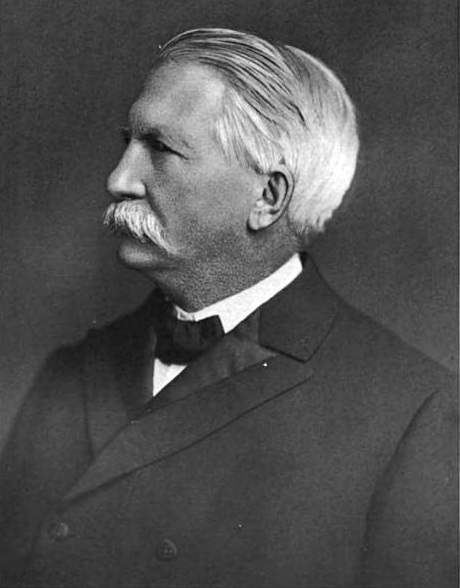
Edward Henry
Former U.S. Representative · Connecticut District 1 · 1895–1913 · Republican
Edward Henry represented Connecticut's District 1 in the United States House of Representatives (1895–1913) for the Republican party. The page below collects sourced biographical facts, term history, committee roles, and provenance for Henry.
Bioguide ID: H000505
Key facts
- Full name
- Edward Henry
- State
- Connecticut
- District
- District 1
- Party
- Republican
- House service
- 1895–1913
- First House term
- 1895
- Status
- Left office
- Current term ends
- —
- Born
- 1836
- Bioguide ID
- H000505
- Committee assignments
- —
- Dataset version
- 1.20260606
Biographical narrative
902 words · sourced from the Wikipedia REST extract
Edward Henry was an American businessman and politician who served as a Republican member of the United States House of Representatives for Connecticut's 1st congressional district from 1895 until 1913. His political career spanned nearly two decades, during which he held various significant roles, including state treasurer and mayor of Rockville, Connecticut. Henry was known for his involvement in agricultural issues and his support for protectionist policies.
Early life and career
Edward Henry was born on February 10, 1836, in Gill, Massachusetts, as the eldest of six children in his family. At the age of 13, he relocated with his parents to Rockville, Connecticut, a move that would shape his future both personally and professionally. He received his education in the local public schools, which laid the foundation for his future endeavors in business and politics.
At 19, Henry entered the dry-goods business, marking the beginning of his career in commerce. His entrepreneurial spirit led him to become an organizer of the People's Saving Bank in Rockville, where he served as treasurer from 1870 until his death in 1921. In addition to his banking career, he was also engaged in agriculture, working as a farmer and livestock breeder, which would later influence his political focus on agricultural issues.
Henry's political career began in the early 1880s when he served in the Connecticut House of Representatives in 1883. He subsequently moved on to the Connecticut Senate, where he served from 1887 to 1888. His involvement in state politics continued as he was a delegate at large to the Republican National Convention in 1888. In 1889, he was elected as the 44th treasurer of Connecticut, a position he held until 1893. During his tenure as state treasurer, he made notable contributions, including the abolition of the state tax, which reflected his fiscal policies and priorities.
Following his term as treasurer, Henry became the third mayor of Rockville, serving from 1894 to 1895. His local governance experience further solidified his reputation as a dedicated public servant and prepared him for his subsequent election to the U.S. Congress.
House tenure
Henry's congressional career began when he was elected to the 54th Congress in 1894, representing Connecticut's 1st congressional district. He served in the House of Representatives for a total of nine terms, concluding his service on March 3, 1913. Throughout his time in Congress, he was a member of the House Committee on Agriculture, which aligned with his interests and background in farming and agricultural policy.
His legislative focus included advocating for agricultural interests, reflecting the needs of his constituents and the broader agricultural community. Henry was also known for his protectionist stance, supporting policies that favored domestic industries and producers. His commitment to these issues was evident in his introduction of the Oleomargarine Act, commonly referred to as the Henry Bill, which aimed to regulate the imitation of butter and protect dairy farmers.
In addition to his work on the Agriculture Committee, Henry served as chairman of the Committee on Expenditures on Public Buildings during the 60th and 61st Congresses. This role allowed him to influence decisions related to federal building projects and expenditures, further extending his impact on national policy.
Despite his long tenure and active participation in legislative matters, Henry chose not to seek renomination in 1912, marking the end of his congressional career. After leaving office, he returned to Rockville, where he resumed his mercantile pursuits, continuing to be involved in local business and community affairs.
Legislative focus and committees
During his time in the House of Representatives, Edward Henry's legislative focus was primarily on agricultural issues and economic policies that supported domestic production. His background as a farmer and businessman informed his approach to legislation, making him a proponent of measures that benefitted the agricultural sector.
As a member of the House Committee on Agriculture, Henry played a significant role in shaping policies that affected farmers and agricultural practices. His commitment to protecting the interests of farmers was evident in his support for the gold standard, which he believed would stabilize the economy and benefit agricultural producers.
Henry's introduction of the Oleomargarine Act exemplified his dedication to protecting the dairy industry from competition posed by imitation products. This legislation aimed to ensure that consumers were informed about the quality of the products they purchased, thereby supporting local dairy farmers and promoting fair competition in the market.
In addition to his work on agricultural issues, Henry's chairmanship of the Committee on Expenditures on Public Buildings allowed him to oversee federal spending related to public infrastructure. This position was crucial during a time when the United States was expanding its infrastructure, and Henry's leadership contributed to the efficient allocation of resources for public projects.
Overall, Edward Henry's legislative focus and committee work reflected his commitment to the agricultural community and his belief in the importance of protecting domestic industries. His contributions during his nine terms in the House of Representatives left a lasting impact on the policies that shaped the agricultural landscape of his time.
After concluding his congressional service, Henry returned to Rockville, Connecticut, where he continued his business activities until his passing on October 10, 1921. He was interred in Grove Hill Cemetery, leaving behind a legacy of public service and community involvement. In recognition of his contributions, Henry Park in Rockville is named in his honor, serving as a reminder of his impact on the local community.
Notable legislation
Sponsored and co-sponsored legislation for Edward Henry is pending operator curation. The biographical narrative above carries the same provenance trail until per-bill rows are written.
Sources
- [1]https://en.wikipedia.org/wiki/E._Stevens_HenryWikipedia · retrieved 2026-06-06
Notable quotes
Sourced quotes for Edward Henry are pending operator curation. Narrative-scope provenance remains attached below.
Sources
- [1]https://en.wikipedia.org/wiki/E._Stevens_HenryWikipedia · retrieved 2026-06-06
Key positions
Curated policy positions for Edward Henry are pending operator review. The biographical narrative above carries the same provenance trail until per-topic positions are written.
Sources
- [1]https://en.wikipedia.org/wiki/E._Stevens_HenryWikipedia · retrieved 2026-06-06
Terms served
- 1895–1897U.S. House · Term 1 · Republican
- 1897–1899U.S. House · Term 2 · Republican
- 1899–1901U.S. House · Term 3 · Republican
- 1901–1903U.S. House · Term 4 · Republican
- 1903–1905U.S. House · Term 5 · Republican
- 1905–1907U.S. House · Term 6 · Republican
- 1907–1909U.S. House · Term 7 · Republican
- 1909–1911U.S. House · Term 8 · Republican
- 1911–1913U.S. House · Term 9 · Republican
Sources & provenance
Every attributable claim above carries a per-section [N] marker that resolves to the corresponding URL below. Each entry records the upstream provider, the canonical URL, and the timestamp at which the source was retrieved by the ingest pipeline.
Key facts
- https://bioguide.congress.gov/search/bio/H000505bioguide · retrieved 2026-06-06
- https://www.govtrack.us/congress/members/405368govtrack · retrieved 2026-06-06
Biographical narrative
- https://en.wikipedia.org/wiki/E._Stevens_Henrywikipedia · retrieved 2026-06-06
Find your representative
Every U.S. state elects representatives by district. Browse Connecticut’s delegation, the full former-representative roster, or explore the role and term length.
Related on The Candidate
- Preceded by Lewis SperryEarlier holder of the Connecticut District 1 House seat · Democratic.Open
- Succeeded by Peter OakeyLater holder of the Connecticut District 1 House seat · Republican.Open
- Barbara KennellyFormer U.S. Representative · Connecticut District 1 · DemocraticOpen
- Charles ChapmanFormer U.S. Representative · Connecticut District 1 · WhigOpen
- Dwight LoomisFormer U.S. Representative · Connecticut District 1 · RepublicanOpen
- Edward FennFormer U.S. Representative · Connecticut District 1 · RepublicanOpen