
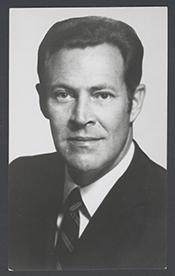
Historical · U.S. House · Connecticut · District 1
William Cotter
Former U.S. Representative · Connecticut District 1 · 1971–1983 · Democratic
William Cotter represented Connecticut's District 1 in the United States House of Representatives (1971–1983) for the Democratic party. The page below collects sourced biographical facts, term history, committee roles, and provenance for Cotter.
Bioguide ID: C000799
Key facts
- Full name
- William Cotter
- State
- Connecticut
- District
- District 1
- Party
- Democratic
- House service
- 1971–1983
- First House term
- 1971
- Status
- Left office
- Current term ends
- —
- Born
- 1926
- Bioguide ID
- C000799
- Committee assignments
- —
- Dataset version
- 1.20260605
Biographical narrative
1,088 words · sourced from the Wikipedia REST extract
William R. Cotter was an American politician who served as a Democratic member of the United States House of Representatives for Connecticut's 1st congressional district. His tenure in Congress spanned from 1971 until his death in 1981, during which he was elected to six consecutive terms. Cotter's career in public service was marked by his commitment to his constituents and his involvement in various roles at both the local and state levels before his election to Congress. His contributions to Connecticut's political landscape and his legacy continue to be recognized, particularly through the naming of a federal building in his honor.
Early life and career
William R. Cotter was born on July 18, 1926, in Hartford, Connecticut. He pursued higher education at Trinity College, where he graduated in 1949. His early life in Hartford, a city known for its rich history and as a center of insurance and finance, likely influenced his later career in public service and politics. Following his graduation, Cotter began his professional journey in local government. In 1953, he was elected to the Hartford Court of Common Council, which marked the beginning of his active engagement in civic affairs. This position allowed him to gain valuable experience in governance and community issues.
From 1955 to 1957, Cotter served as an aide to Governor Abraham Ribicoff, a prominent figure in Connecticut politics. This role provided him with insight into state-level governance and the workings of the executive branch. Following his time as an aide, Cotter transitioned to the insurance sector, where he held significant positions that would shape his future political career. He served as Connecticut's deputy insurance commissioner from 1957 to 1964, a role that involved overseeing the state's insurance regulations and policies. His expertise in this field led to his appointment as the state’s insurance commissioner, a position he held from 1964 until 1970. During his tenure as insurance commissioner, Cotter was involved in various initiatives aimed at reforming and improving the insurance industry in Connecticut.
Cotter's experience in local government and state administration laid a strong foundation for his subsequent election to the U.S. House of Representatives. His background in public service, particularly in areas related to governance and regulatory oversight, positioned him as a knowledgeable candidate when he decided to run for Congress.
House tenure
William R. Cotter was elected to the United States House of Representatives in 1970, beginning his first term on January 3, 1971. He represented Connecticut's 1st congressional district, which encompasses parts of Hartford and its surrounding areas. Cotter's election was part of a broader Democratic wave during that period, and he quickly established himself as a dedicated representative for his constituents. Over the course of his six terms in office, Cotter focused on various issues that were pertinent to the people of Connecticut and the nation.
During his time in Congress, Cotter was known for his active participation in legislative discussions and his commitment to addressing the needs of his district. He served on several committees, which allowed him to influence policy in key areas. His legislative work included efforts to improve healthcare, education, and social services, reflecting the priorities of his constituents. Cotter's dedication to public service was evident in his willingness to engage with local issues and advocate for federal support to address them.
Cotter's tenure in the House was marked by his ability to navigate the complexities of federal legislation while remaining attuned to the specific needs of his district. He was known for his approachability and willingness to listen to the concerns of his constituents, which helped him maintain a strong connection with the community he represented. His commitment to public service extended beyond legislative duties, as he often participated in local events and initiatives aimed at improving the quality of life for residents in Connecticut.
Tragically, Cotter's time in Congress was cut short when he passed away from pancreatic cancer on September 8, 1981, at the age of 55. His death marked the end of a significant chapter in Connecticut's political history, as he had become a respected figure in the House. Following his passing, the state and his constituents mourned the loss of a dedicated public servant who had worked tirelessly on their behalf.
Legislative focus and committees
Throughout his six terms in the U.S. House of Representatives, William R. Cotter focused on a range of legislative issues that were critical to his constituents and the broader American public. His work encompassed various areas, including healthcare, education, and social welfare, reflecting the pressing needs of the communities he represented. Cotter's commitment to these issues was evident in his participation in relevant committees, where he worked to shape policy and advocate for federal resources to support local initiatives.
Cotter's involvement in healthcare legislation was particularly notable. He recognized the importance of accessible and affordable healthcare for all Americans, and he sought to address disparities in health services. His efforts in this area were aligned with the broader Democratic agenda during the 1970s, which emphasized the need for healthcare reform and expanded access to medical services. Cotter's work in this domain contributed to ongoing discussions about the role of government in providing healthcare and the need for regulatory oversight of the healthcare industry.
In addition to healthcare, Cotter was also engaged in issues related to education. He understood the significance of education in fostering economic opportunity and social mobility. His legislative efforts aimed to secure federal funding for education programs and initiatives that would benefit students and educators in Connecticut. By advocating for educational reforms, Cotter sought to enhance the quality of education and ensure that all children had access to the resources they needed to succeed.
Social welfare was another area of focus for Cotter during his time in Congress. He was committed to supporting programs that provided assistance to vulnerable populations, including low-income families and individuals in need. His advocacy for social services reflected a broader Democratic commitment to addressing poverty and inequality, and he worked to ensure that federal resources were allocated to support these essential programs.
In recognition of his contributions to public service and his dedication to the people of Connecticut, the William R. Cotter Federal Building in Hartford was named in his honor in 1982. This tribute serves as a lasting reminder of his legacy and the impact he had on his community and the state of Connecticut. Cotter's career in public service exemplified a commitment to addressing the needs of constituents and advocating for policies that promoted social welfare and economic opportunity.
Notable legislation
Sponsored and co-sponsored legislation for William Cotter is pending operator curation. The biographical narrative above carries the same provenance trail until per-bill rows are written.
Sources
- [1]https://en.wikipedia.org/wiki/William_R._Cotter_(politician)Wikipedia · retrieved 2026-06-05
Notable quotes
Sourced quotes for William Cotter are pending operator curation. Narrative-scope provenance remains attached below.
Sources
- [1]https://en.wikipedia.org/wiki/William_R._Cotter_(politician)Wikipedia · retrieved 2026-06-05
Key positions
Curated policy positions for William Cotter are pending operator review. The biographical narrative above carries the same provenance trail until per-topic positions are written.
Sources
- [1]https://en.wikipedia.org/wiki/William_R._Cotter_(politician)Wikipedia · retrieved 2026-06-05
Terms served
- 1971–1973U.S. House · Term 1 · Democratic
- 1973–1975U.S. House · Term 2 · Democratic
- 1975–1977U.S. House · Term 3 · Democratic
- 1977–1979U.S. House · Term 4 · Democratic
- 1979–1981U.S. House · Term 5 · Democratic
- 1981–1983U.S. House · Term 6 · Democratic
Sources & provenance
Every attributable claim above carries a per-section [N] marker that resolves to the corresponding URL below. Each entry records the upstream provider, the canonical URL, and the timestamp at which the source was retrieved by the ingest pipeline.
Key facts
- https://bioguide.congress.gov/search/bio/C000799bioguide · retrieved 2026-06-05
- https://www.govtrack.us/congress/members/402918govtrack · retrieved 2026-06-05
Biographical narrative
- https://en.wikipedia.org/wiki/William_R._Cotter_(politician)wikipedia · retrieved 2026-06-05
Find your representative
Every U.S. state elects representatives by district. Browse Connecticut’s delegation, the full former-representative roster, or explore the role and term length.
Related on The Candidate
- Preceded by Emilio DaddarioEarlier holder of the Connecticut District 1 House seat · Democratic.Open
- Barbara KennellyFormer U.S. Representative · Connecticut District 1 · DemocraticOpen
- Charles ChapmanFormer U.S. Representative · Connecticut District 1 · WhigOpen
- Dwight LoomisFormer U.S. Representative · Connecticut District 1 · RepublicanOpen
- Edward FennFormer U.S. Representative · Connecticut District 1 · RepublicanOpen
- Democratic PartyFederal candidates and office holders on the Democratic line.Open