
Historical · U.S. House · Connecticut · District 2
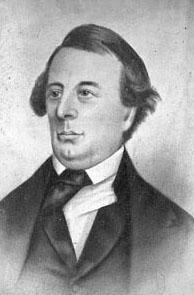
Samuel Hubbard
Former U.S. Representative · Connecticut District 2 · 1845–1849 · Whig
Samuel Hubbard represented Connecticut's District 2 in the United States House of Representatives (1845–1849) for the Whig party. The page below collects sourced biographical facts, term history, committee roles, and provenance for Hubbard.
Bioguide ID: H000889
Key facts
- Full name
- Samuel Hubbard
- State
- Connecticut
- District
- District 2
- Party
- Whig
- House service
- 1845–1849
- First House term
- 1845
- Status
- Left office
- Current term ends
- —
- Born
- 1799
- Bioguide ID
- H000889
- Committee assignments
- —
- Dataset version
- 1.20260606
Biographical narrative
821 words · sourced from the Wikipedia REST extract
Samuel Hubbard was a prominent figure in 19th-century American politics, serving as a U.S. Representative from Connecticut's 2nd congressional district as a member of the Whig Party. His congressional career spanned two terms from 1845 to 1849, during which he engaged in various legislative activities. In addition to his role in Congress, Hubbard also held the position of Postmaster General under President Millard Fillmore, contributing to the administration's efforts in postal reform. His life and career reflect the political and economic developments of his time, particularly in the context of Connecticut's evolving landscape.
Early life and career
Samuel Dickinson Hubbard was born on August 10, 1799, in Middletown, Connecticut. He grew up in a region that was becoming increasingly significant in the early United States, both politically and economically. Hubbard pursued a classical education at Yale College, where he completed his studies and graduated in 1819. Following his graduation, he embarked on a legal career, practicing law from 1823 until 1837. This legal background provided him with a foundation in governance and public policy, which would later inform his political career.
In 1824, Hubbard transitioned from law to manufacturing, co-founding the Russell Manufacturing Company with Samuel Russell. This venture marked his entry into the business world and contributed to the industrial growth of Connecticut. The company specialized in producing textiles, which was a significant industry during that era. Hubbard's involvement in manufacturing not only showcased his entrepreneurial spirit but also positioned him as a key player in the economic development of the region.
Hubbard's growing prominence in business and his legal expertise eventually led him to engage in politics. His initial foray into public service culminated in his election to the Twenty-ninth United States Congress in 1844. This election marked the beginning of his legislative career, which would see him represent the interests of his constituents in Washington, D.C.
House tenure
Samuel Hubbard's congressional career began on March 4, 1845, when he was elected to represent Connecticut's 2nd congressional district in the U.S. House of Representatives. He served two consecutive terms, concluding his service on March 3, 1849. During his time in Congress, Hubbard was a member of the Whig Party, which was known for its opposition to the policies of the Democratic Party and its advocacy for economic modernization and infrastructure development.
As a congressman, Hubbard participated in various legislative initiatives that reflected the priorities of the Whig Party. The Whigs were particularly focused on issues such as internal improvements, including transportation infrastructure, and the promotion of economic growth through manufacturing and commerce. Hubbard's background in manufacturing likely influenced his legislative priorities, as he understood the importance of fostering a favorable environment for businesses.
Hubbard's tenure in Congress occurred during a period of significant change in the United States, characterized by debates over slavery, territorial expansion, and economic development. While specific details of his legislative actions are not documented, it can be inferred that he contributed to the discussions and decisions that shaped the nation's policies during this transformative era.
Legislative focus and committees
During his time in the House of Representatives, Samuel Hubbard's legislative focus aligned with the broader goals of the Whig Party, which included promoting economic growth and advocating for infrastructure improvements. Although specific committee assignments and legislative achievements are not detailed in the available records, it is reasonable to assume that his background in law and manufacturing informed his contributions to discussions on economic policy and development.
The Whig Party's platform during Hubbard's tenure emphasized the need for internal improvements, such as the construction of roads, canals, and railroads, which were essential for facilitating commerce and connecting different regions of the country. Hubbard's experience in the manufacturing sector likely provided him with insights into the challenges faced by businesses and the importance of government support in fostering economic growth.
In addition to his legislative work, Hubbard's political career extended beyond his time in Congress. After completing his terms in the House, he was appointed by President Millard Fillmore as the United States Postmaster General in 1852. This role allowed him to influence postal policy and reform, further demonstrating his commitment to public service and governance.
Hubbard's contributions to American politics were recognized beyond his legislative work. In 1853, he was elected as a member of the American Antiquarian Society, an organization dedicated to the study and preservation of American history and culture. This membership reflects his interest in historical scholarship and his engagement with the intellectual currents of his time.
Samuel Hubbard passed away on October 8, 1855, at the age of 55, in his hometown of Middletown, Connecticut. His life and career encapsulate the complexities of American politics in the 19th century, highlighting the interplay between business, law, and public service. Through his roles as a congressman and Postmaster General, Hubbard contributed to the shaping of policies that would influence the trajectory of the nation during a pivotal period in its history.
Notable legislation
Sponsored and co-sponsored legislation for Samuel Hubbard is pending operator curation. The biographical narrative above carries the same provenance trail until per-bill rows are written.
Sources
- [1]https://en.wikipedia.org/wiki/Samuel_Dickinson_HubbardWikipedia · retrieved 2026-06-06
Notable quotes
Sourced quotes for Samuel Hubbard are pending operator curation. Narrative-scope provenance remains attached below.
Sources
- [1]https://en.wikipedia.org/wiki/Samuel_Dickinson_HubbardWikipedia · retrieved 2026-06-06
Key positions
Curated policy positions for Samuel Hubbard are pending operator review. The biographical narrative above carries the same provenance trail until per-topic positions are written.
Sources
- [1]https://en.wikipedia.org/wiki/Samuel_Dickinson_HubbardWikipedia · retrieved 2026-06-06
Terms served
- 1845–1847U.S. House · Term 1 · Whig
- 1847–1849U.S. House · Term 2 · Whig
Sources & provenance
Every attributable claim above carries a per-section [N] marker that resolves to the corresponding URL below. Each entry records the upstream provider, the canonical URL, and the timestamp at which the source was retrieved by the ingest pipeline.
Key facts
- https://bioguide.congress.gov/search/bio/H000889bioguide · retrieved 2026-06-06
- https://www.govtrack.us/congress/members/405735govtrack · retrieved 2026-06-06
Biographical narrative
- https://en.wikipedia.org/wiki/Samuel_Dickinson_Hubbardwikipedia · retrieved 2026-06-06
Find your representative
Every U.S. state elects representatives by district. Browse Connecticut’s delegation, the full former-representative roster, or explore the role and term length.
Related on The Candidate
- Preceded by John StewartEarlier holder of the Connecticut District 2 House seat · Democratic.Open
- Succeeded by Walter BoothLater holder of the Connecticut District 2 House seat · Free Soil.Open
- Barbara KennellyFormer U.S. Representative · Connecticut District 1 · DemocraticOpen
- Charles ChapmanFormer U.S. Representative · Connecticut District 1 · WhigOpen
- Dwight LoomisFormer U.S. Representative · Connecticut District 1 · RepublicanOpen
- Edward FennFormer U.S. Representative · Connecticut District 1 · RepublicanOpen