
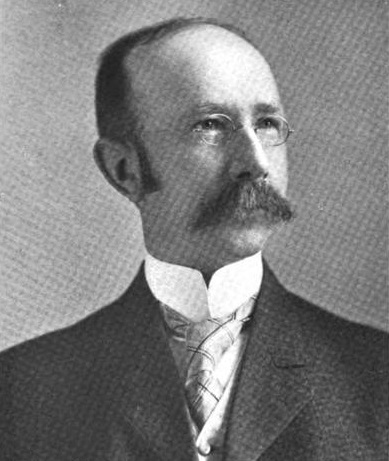
Historical · U.S. House · Connecticut · District 2
William Higgins
Former U.S. Representative · Connecticut District 2 · 1933–1937 · Republican
William Higgins represented Connecticut's District 2 in the United States House of Representatives (1933–1937) for the Republican party. The page below collects sourced biographical facts, term history, committee roles, and provenance for Higgins.
Bioguide ID: H000580
Key facts
- Full name
- William Higgins
- State
- Connecticut
- District
- District 2
- Party
- Republican
- House service
- 1933–1937
- First House term
- 1933
- Status
- Left office
- Current term ends
- —
- Born
- 1867
- Bioguide ID
- H000580
- Committee assignments
- —
- Dataset version
- 1.20260605
Biographical narrative
943 words · sourced from the Wikipedia REST extract
William Higgins was an American politician and physician who served as a U.S. Representative for Connecticut's 2nd congressional district from 1933 to 1937. A member of the Republican Party, Higgins had a diverse career that included significant roles in both state and local government prior to his tenure in Congress. His background in medicine and his extensive involvement in public service reflected his commitment to his community and the state of Connecticut.
Early life and career
William Lincoln Higgins was born on March 8, 1867, in Chesterfield, Massachusetts. He received his early education in the public schools of Chesterfield and Northampton, as well as at Deerfield Academy, a well-known preparatory school. Following his secondary education, Higgins pursued a career in medicine, which led him to graduate from the medical department of the University of the City of New York in 1890. Upon completing his medical education, he began practicing medicine in Willington, Connecticut, the same year he graduated. This marked the beginning of a professional journey that would see him become a respected figure in both the medical and political realms.
In 1891, Higgins relocated to South Coventry, Connecticut, where he continued his medical practice. His involvement in the community extended beyond his medical career; he became actively engaged in local governance and politics. His political career began in earnest when he was elected to the Connecticut House of Representatives, where he served multiple non-consecutive terms between 1905 and 1927. His legislative work during this period laid the groundwork for his later political aspirations.
Higgins's political career included a variety of roles that showcased his leadership abilities. He served in the Connecticut State Senate from 1909 to 1911, further solidifying his reputation as a dedicated public servant. Additionally, he held the position of first selectman of Coventry from 1917 to 1932, a role that involved overseeing the town's administration and ensuring the welfare of its residents. His responsibilities as first selectman allowed him to influence local policy and contribute to the development of his community.
In conjunction with his role as first selectman, Higgins also served as a county commissioner for Tolland County from 1921 to 1932. His extensive experience in local government provided him with a deep understanding of the needs and concerns of his constituents. This experience would later inform his work at the federal level.
In 1929, Higgins was appointed Secretary of the State of Connecticut, a position he held until 1933. As Secretary of State, he was responsible for overseeing various administrative functions, including the management of elections and the maintenance of public records. This role further enhanced his visibility in state politics and established him as a prominent figure within the Republican Party. Higgins's involvement in the party was underscored by his participation as a delegate to the Republican National Conventions in 1928, 1932, and 1936, where he contributed to the party's platform and direction.
House tenure
Higgins's congressional career began when he was elected as a Republican to the Seventy-third Congress, which convened on March 4, 1933. He served in this capacity until January 3, 1937, during which time he was re-elected to the Seventy-fourth Congress. His tenure in the U.S. House of Representatives was marked by his commitment to addressing the issues facing his constituents in Connecticut's 2nd congressional district.
During his time in Congress, Higgins was involved in the legislative process during a period of significant national challenges, including the aftermath of the Great Depression. As a member of the House, he participated in discussions and debates on various policies aimed at economic recovery and social welfare. Although specific legislative achievements during his tenure are not detailed in the available records, Higgins's background in medicine and public service likely influenced his perspectives on health care and community welfare.
Despite his contributions, Higgins faced challenges in maintaining his congressional seat. He was an unsuccessful candidate for re-election in 1936 to the Seventy-fifth Congress. Following his defeat, he concluded his time in federal office and returned to his medical practice in Coventry, Connecticut. His departure from Congress did not diminish his commitment to serving his community, as he continued to be involved in local affairs.
Legislative focus and committees
While specific details regarding Higgins's legislative focus and committee assignments during his time in Congress are not extensively documented, his background as a physician and his experience in state government likely shaped his areas of interest. Given the context of the 1930s, it is reasonable to infer that Higgins may have been concerned with issues related to health care, economic recovery, and social services, which were critical topics during the Great Depression.
His medical training and experience would have provided him with valuable insights into public health matters, potentially influencing his legislative priorities. Additionally, his extensive background in local governance may have led him to advocate for policies that supported local communities and addressed the needs of constituents in Connecticut.
After leaving Congress, Higgins returned to his medical practice, continuing to serve the community that had supported him throughout his political career. His life after politics was characterized by a return to the profession he had pursued for many years, reflecting a commitment to the well-being of his patients and the broader community.
William Higgins passed away on November 19, 1951, in Norwich, Connecticut, at the age of 84. His remains were cremated and interred in Chesterfield Center Cemetery in Chesterfield, Massachusetts, marking the end of a life dedicated to public service and medicine. His legacy includes his contributions to both the medical field and the political landscape of Connecticut, as well as his involvement in local governance that impacted the lives of many residents.
Notable legislation
Sponsored and co-sponsored legislation for William Higgins is pending operator curation. The biographical narrative above carries the same provenance trail until per-bill rows are written.
Sources
- [1]https://en.wikipedia.org/wiki/William_L._HigginsWikipedia · retrieved 2026-06-05
Notable quotes
Sourced quotes for William Higgins are pending operator curation. Narrative-scope provenance remains attached below.
Sources
- [1]https://en.wikipedia.org/wiki/William_L._HigginsWikipedia · retrieved 2026-06-05
Key positions
Curated policy positions for William Higgins are pending operator review. The biographical narrative above carries the same provenance trail until per-topic positions are written.
Sources
- [1]https://en.wikipedia.org/wiki/William_L._HigginsWikipedia · retrieved 2026-06-05
Terms served
- 1933–1935U.S. House · Term 1 · Republican
- 1935–1937U.S. House · Term 2 · Republican
Sources & provenance
Every attributable claim above carries a per-section [N] marker that resolves to the corresponding URL below. Each entry records the upstream provider, the canonical URL, and the timestamp at which the source was retrieved by the ingest pipeline.
Key facts
- https://bioguide.congress.gov/search/bio/H000580bioguide · retrieved 2026-06-05
- https://www.govtrack.us/congress/members/405442govtrack · retrieved 2026-06-05
Biographical narrative
- https://en.wikipedia.org/wiki/William_L._Higginswikipedia · retrieved 2026-06-05
Find your representative
Every U.S. state elects representatives by district. Browse Connecticut’s delegation, the full former-representative roster, or explore the role and term length.
Related on The Candidate
- Preceded by Richard FreemanEarlier holder of the Connecticut District 2 House seat · Republican.Open
- Succeeded by William FitzgeraldLater holder of the Connecticut District 2 House seat · Democratic.Open
- Barbara KennellyFormer U.S. Representative · Connecticut District 1 · DemocraticOpen
- Charles ChapmanFormer U.S. Representative · Connecticut District 1 · WhigOpen
- Dwight LoomisFormer U.S. Representative · Connecticut District 1 · RepublicanOpen
- Edward FennFormer U.S. Representative · Connecticut District 1 · RepublicanOpen