
Historical · U.S. House · Connecticut · District 3
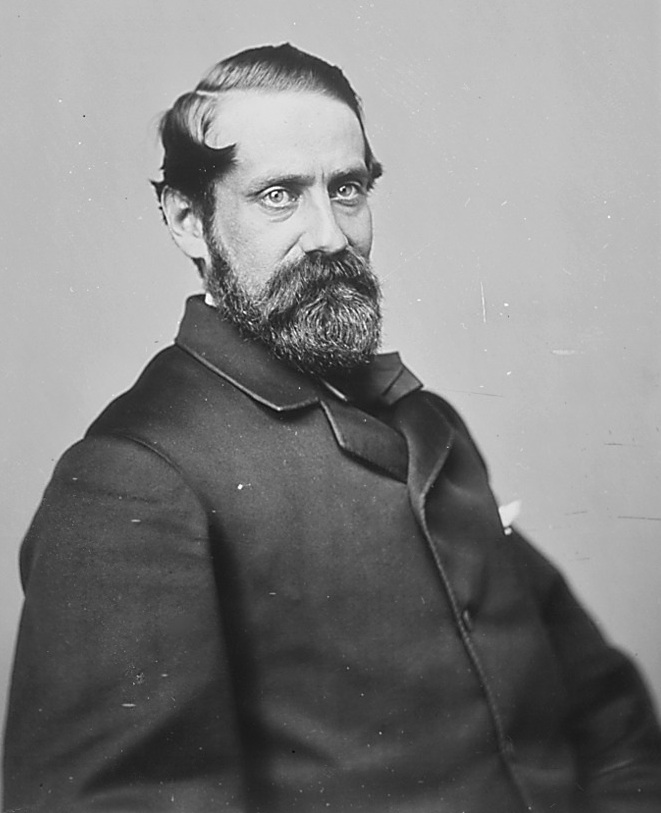
Augustus Brandegee
Former U.S. Representative · Connecticut District 3 · 1863–1867 · Republican
Augustus Brandegee represented Connecticut's District 3 in the United States House of Representatives (1863–1867) for the Republican party. The page below collects sourced biographical facts, term history, committee roles, and provenance for Brandegee.
Bioguide ID: B000768
Key facts
- Full name
- Augustus Brandegee
- State
- Connecticut
- District
- District 3
- Party
- Republican
- House service
- 1863–1867
- First House term
- 1863
- Status
- Left office
- Current term ends
- —
- Born
- 1828
- Bioguide ID
- B000768
- Committee assignments
- —
- Dataset version
- 1.20260606
Biographical narrative
1,109 words · sourced from the Wikipedia REST extract
Augustus Brandegee was an American lawyer and politician who served as a U.S. Representative for Connecticut's 3rd congressional district during the tumultuous years of the Civil War and Reconstruction. A member of the Republican Party, he was known for his strong abolitionist stance and his commitment to the Union cause. Brandegee's political career spanned two terms in the House of Representatives, where he played a significant role in various legislative efforts and committees. His contributions to the political landscape of Connecticut and the nation are marked by his advocacy for civil rights and his involvement in key legislative decisions during a pivotal era in American history.
Early life and career
Born on July 15, 1828, in New London, Connecticut, Augustus Brandegee was the son of John Brandegee and Mary Ann Deshon Brandegee. His father had a diverse career, initially working as a cotton broker in New Orleans before returning to New London, where he became involved in the whaling industry and other business ventures. Brandegee received his early education at Union Academy in New London and later at Hopkins Grammar School in New Haven, where he laid the groundwork for his future academic pursuits.
In 1845, Brandegee enrolled at Yale University, where he became an active member of the Delta Kappa Epsilon fraternity and the prestigious Skull and Bones society. He graduated in 1849 and subsequently pursued legal studies at Yale Law School. Completing his education in the office of Andrew C. Lippitt in 1850, Brandegee was admitted to the bar in 1851 and began practicing law in partnership with Lippitt.
Brandegee's political career began in earnest when he was elected to the Connecticut House of Representatives in 1854. Despite his youth, he was appointed to the influential judiciary committee and chaired a select committee that managed a bill aimed at countering the Fugitive Slave Law in Connecticut. His commitment to social justice was further demonstrated when he chaired the committee responsible for passing Connecticut's version of the Maine liquor law, which prohibited the sale of alcoholic beverages.
From 1857 to 1859, Brandegee served as the Judge of New London's city court, during which time he gained recognition as a compelling speaker advocating for the abolition of slavery. He traveled extensively throughout Connecticut, delivering speeches to rally public support for the Union cause. In 1860, he was elected as one of Connecticut's electors for the Republican ticket headed by former Governor Roger Sherman Baldwin, casting his vote for Abraham Lincoln and Hannibal Hamlin when Lincoln won the state.
Brandegee returned to the Connecticut House of Representatives in 1858 and was re-elected in 1859, although he declined the position due to the death of his father. He was elected Speaker of the Connecticut House in 1861, where he successfully navigated the political landscape of the time, maintaining favor with both Democrats and Republicans. His impartiality earned him recognition, culminating in a silver service presented to him by Henry C. Deming, the leader of the Democrats in the House.
House tenure
Brandegee's tenure in the United States House of Representatives began in 1863, after he was elected to represent Connecticut's 3rd congressional district. As the youngest member of the House at that time, he quickly established himself as an influential figure. He was appointed to several important committees, including the House Committee on Naval Affairs and the Military Affairs Committee. Additionally, he served on the Committee on Naval Accounts and chaired a special committee focused on constructing a post office and military route between New York City and Washington, D.C.
Throughout his congressional career, Brandegee was recognized for his strong abolitionist views and his close association with President Abraham Lincoln. He played a critical role in the passage of the 13th Amendment, which abolished slavery in the United States. His support for this landmark legislation was significant, as it represented a major shift in the nation's approach to civil rights and social justice.
In 1864, Brandegee participated in the National Republican Convention held in Baltimore, where he supported Lincoln's re-nomination for the presidency and the nomination of Andrew Johnson for vice president. His involvement in these national political events underscored his commitment to the Republican Party and its platform during the Civil War. Brandegee continued to serve in Congress throughout the Reconstruction Era, actively participating in discussions and decisions that would shape the future of the nation.
In 1866, he attended the National Union Convention in Philadelphia, which aimed to promote unity among various factions of the Republican Party. However, he chose not to seek re-election in 1866, and his congressional term concluded on March 3, 1867.
Legislative focus and committees
During his time in the House of Representatives, Augustus Brandegee's legislative focus was primarily on issues related to the Civil War, naval affairs, and civil rights. His membership on the House Committee on Naval Affairs allowed him to contribute to discussions surrounding the military and naval needs of the nation during a time of conflict. His role on the Military Affairs Committee further emphasized his commitment to supporting the Union's efforts in the Civil War.
Brandegee's advocacy for abolition and civil rights was a defining aspect of his legislative career. His vote in favor of the 13th Amendment was a testament to his dedication to ending slavery in the United States. This commitment to social justice was not only a personal conviction but also reflected the broader Republican agenda of the time, which sought to promote equality and civil rights for formerly enslaved individuals.
In addition to his work on civil rights, Brandegee's involvement in local governance and law also shaped his legislative focus. His earlier experiences in the Connecticut House of Representatives, particularly his leadership roles and committee chairmanships, equipped him with the skills necessary to navigate complex legislative processes at the national level. His ability to build coalitions and maintain bipartisan support was evident during his time as Speaker of the Connecticut House, and this skill translated into his work in Congress.
After leaving Congress, Brandegee continued to engage in public service and legal practice. He served as the Mayor of New London and was involved in various Republican National Conventions. His legal career flourished as he co-founded a prominent law firm in New London, further establishing his legacy in the legal and political arenas.
Augustus Brandegee passed away on November 10, 1904, in New London, Connecticut. His contributions to American politics, particularly during a critical period in the nation's history, are remembered for their impact on civil rights and governance. His commitment to social justice and his role in shaping legislation during the Civil War and Reconstruction era remain significant aspects of his legacy.
Notable legislation
Sponsored and co-sponsored legislation for Augustus Brandegee is pending operator curation. The biographical narrative above carries the same provenance trail until per-bill rows are written.
Sources
- [1]https://en.wikipedia.org/wiki/Augustus_BrandegeeWikipedia · retrieved 2026-06-06
Notable quotes
Sourced quotes for Augustus Brandegee are pending operator curation. Narrative-scope provenance remains attached below.
Sources
- [1]https://en.wikipedia.org/wiki/Augustus_BrandegeeWikipedia · retrieved 2026-06-06
Key positions
Curated policy positions for Augustus Brandegee are pending operator review. The biographical narrative above carries the same provenance trail until per-topic positions are written.
Sources
- [1]https://en.wikipedia.org/wiki/Augustus_BrandegeeWikipedia · retrieved 2026-06-06
Terms served
- 1863–1865U.S. House · Term 1 · Republican
- 1865–1867U.S. House · Term 2 · Republican
Sources & provenance
Every attributable claim above carries a per-section [N] marker that resolves to the corresponding URL below. Each entry records the upstream provider, the canonical URL, and the timestamp at which the source was retrieved by the ingest pipeline.
Key facts
- https://bioguide.congress.gov/search/bio/B000768bioguide · retrieved 2026-06-06
- https://www.govtrack.us/congress/members/401727govtrack · retrieved 2026-06-06
Biographical narrative
- https://en.wikipedia.org/wiki/Augustus_Brandegeewikipedia · retrieved 2026-06-06
Find your representative
Every U.S. state elects representatives by district. Browse Connecticut’s delegation, the full former-representative roster, or explore the role and term length.
Related on The Candidate
- Preceded by Alfred BurnhamEarlier holder of the Connecticut District 3 House seat · Republican.Open
- Succeeded by Henry StarkweatherLater holder of the Connecticut District 3 House seat · Republican.Open
- Barbara KennellyFormer U.S. Representative · Connecticut District 1 · DemocraticOpen
- Charles ChapmanFormer U.S. Representative · Connecticut District 1 · WhigOpen
- Dwight LoomisFormer U.S. Representative · Connecticut District 1 · RepublicanOpen
- Edward FennFormer U.S. Representative · Connecticut District 1 · RepublicanOpen